No-Nos in Hanamenu Bay

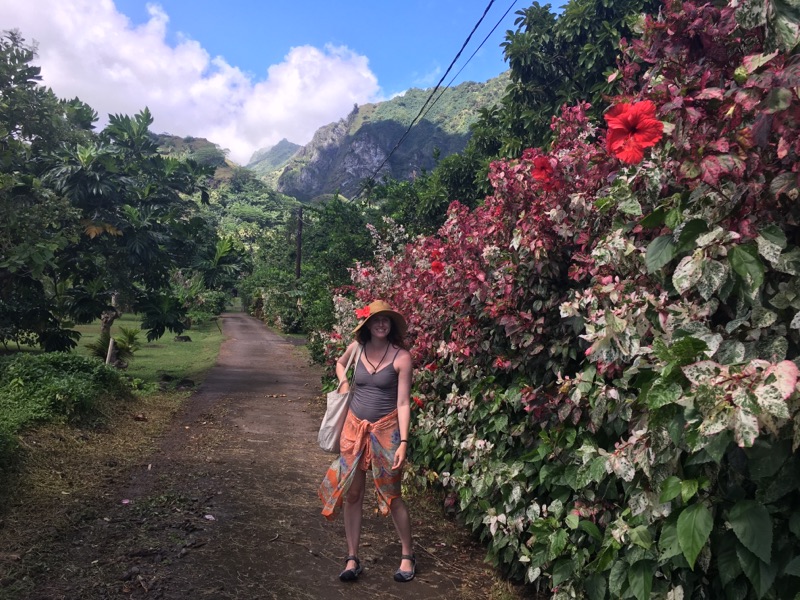
The devilish mini-mosquitos that you can’t hear, feel, or barely see: these are the infamous No-Nos (also know as no-see-ums). They plague some of the beaches in the Marquesas.

Only the following day, you’ll feel hundreds of bites on your back. It feels like a book written in Braille, and itches like heck. Such was our fate after visiting Hanamenu in the evening, a picturesque cove with a river and fresh water spring.

The spring was directed into a pool of cold water, which was positively delightful. We met the caretaker of the property, Leon, who was walking out with a shotgun.

“I’m going hunting for pig,” Leon told us, and promptly excused himself. The pigs were coming down from the hills where they sleep by day, and he had to be ready in his tree stakeout.

  
We retreated back to the boat and woke up the next day with hundreds of tiny itchy bumps on our back. We decided it was time to move on…

Sailing to Hiva Oa’s north coast

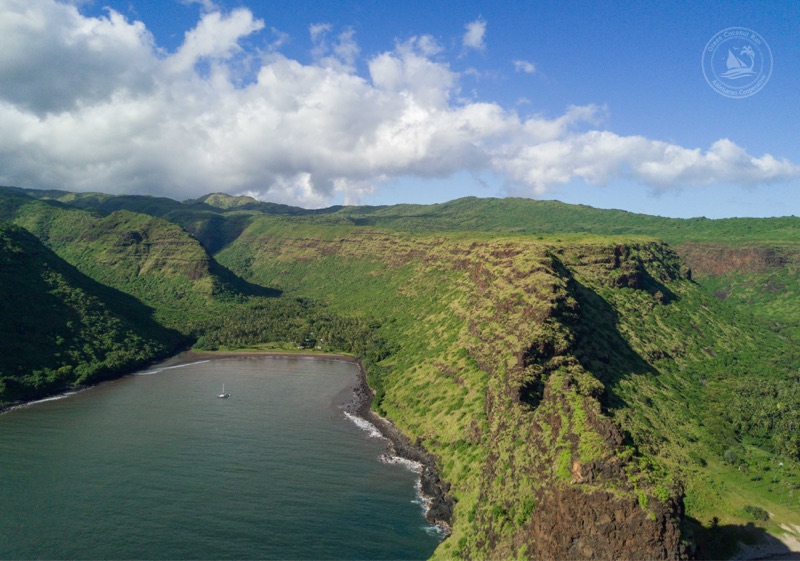
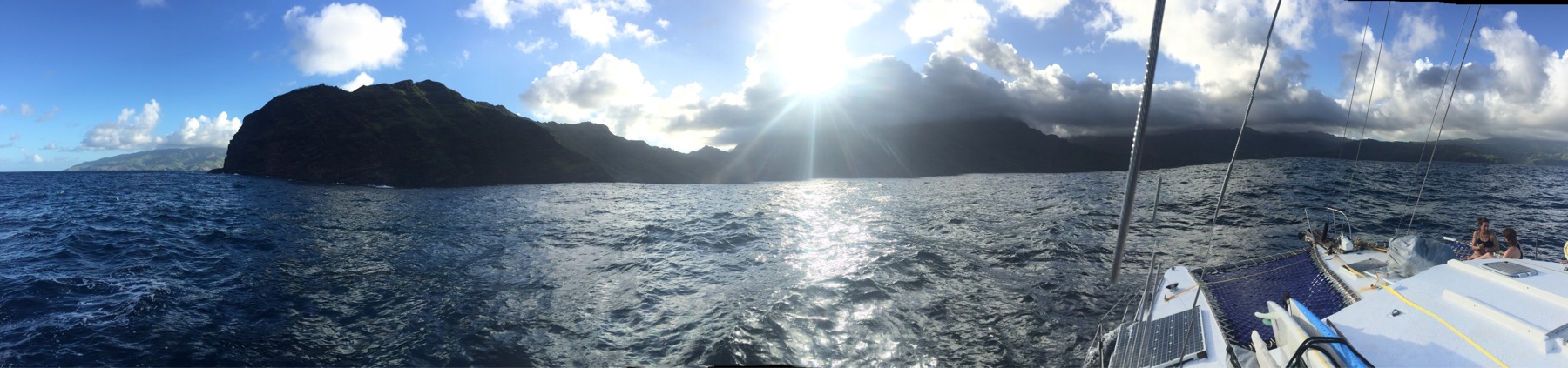
Waterfalls cascaded down the steep cliffs of Hiva Oa’s western edge, some of them plummeting directly into the water. It’s an incredible sight after the consistent rain we’ve had. To get there, it took us a lovely 1.5 hour downwind sail from the island Tahuata.

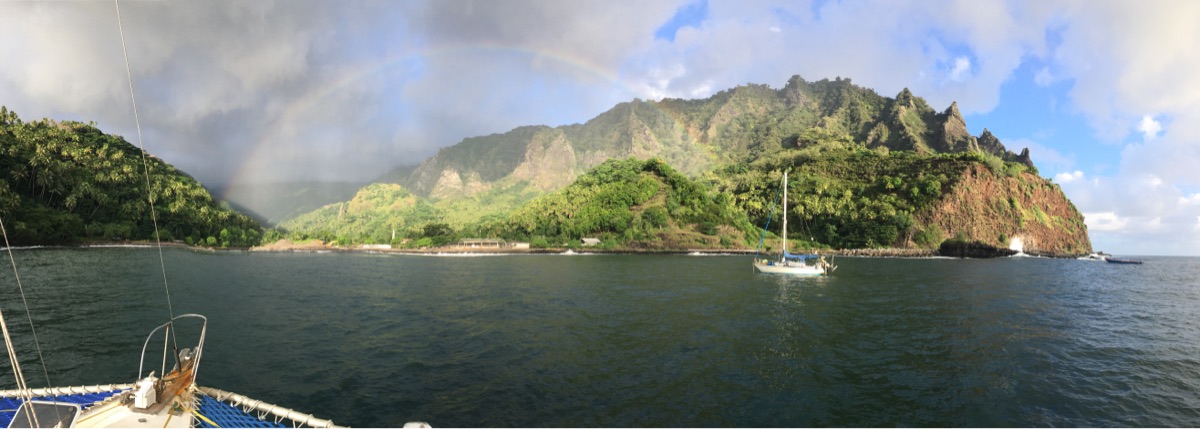
After that, we turned the corner into Hiva Oa’s north coast, and were surprised to encounter turbulent seas – the easterly wind chop was wrapping around the island causing terrible “speed bumps” for Aldebaran. After an hour of slow pounding, we tucked into the first bay, called Hanamemu.

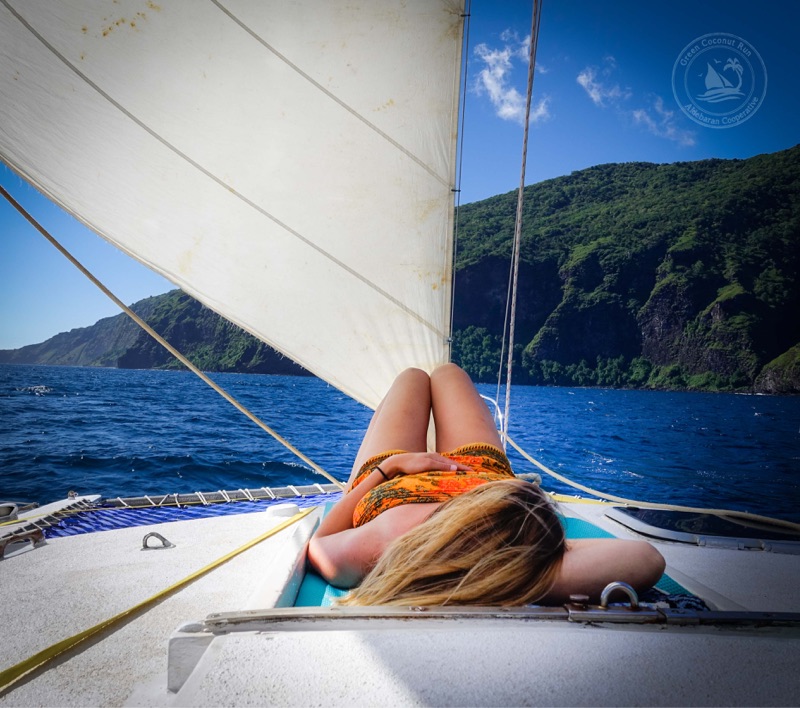
Photo: Timeless pic of Lianna as we sail downwind along Hiva Oa’s coastline.

Beach time in Hanamoenoa Bay

“One of the best anchorages in Marquesas” say some cruisers about Hanamoenoa Bay, a series of largely uninhabited coves just north of the village of Vaitahu. Only one or two houses are found in this bay, which are used primarily as a temporary base for copra harvesting.

White sandy beaches are uncommon in Marquesas, which is one of the appealing qualities of this area… along with the lack of nearby rivers, which makes the water more clear than other places around this sediment-rich archipelago.

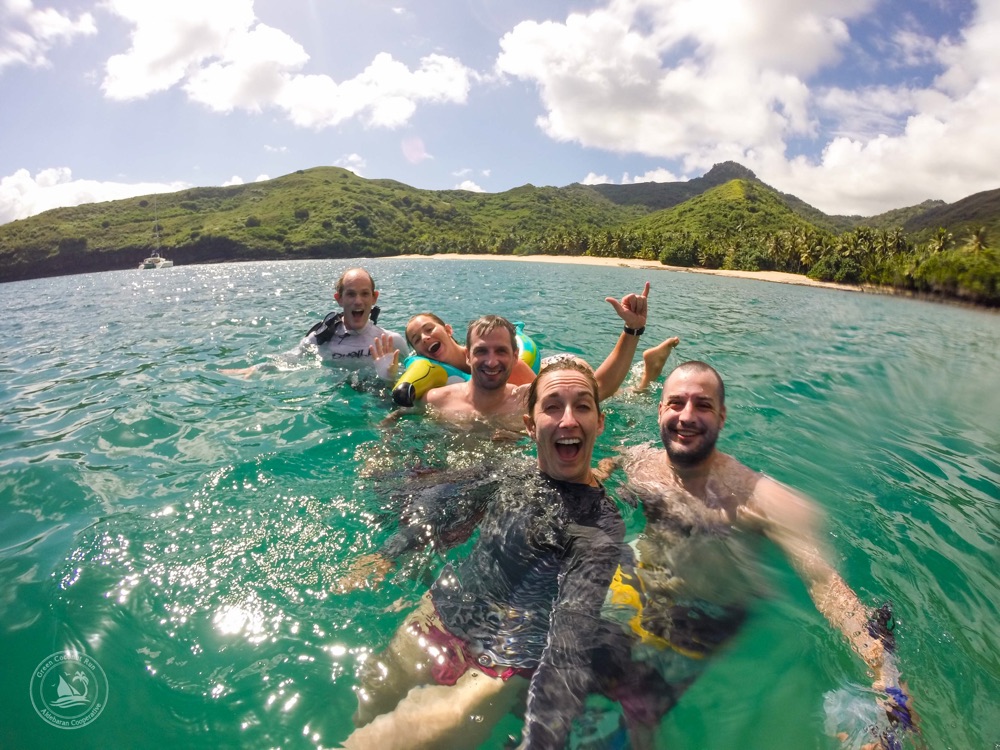
We snorkeled along the rock walls, hung out at the beach, relaxing for a moment from the tough cruising life.

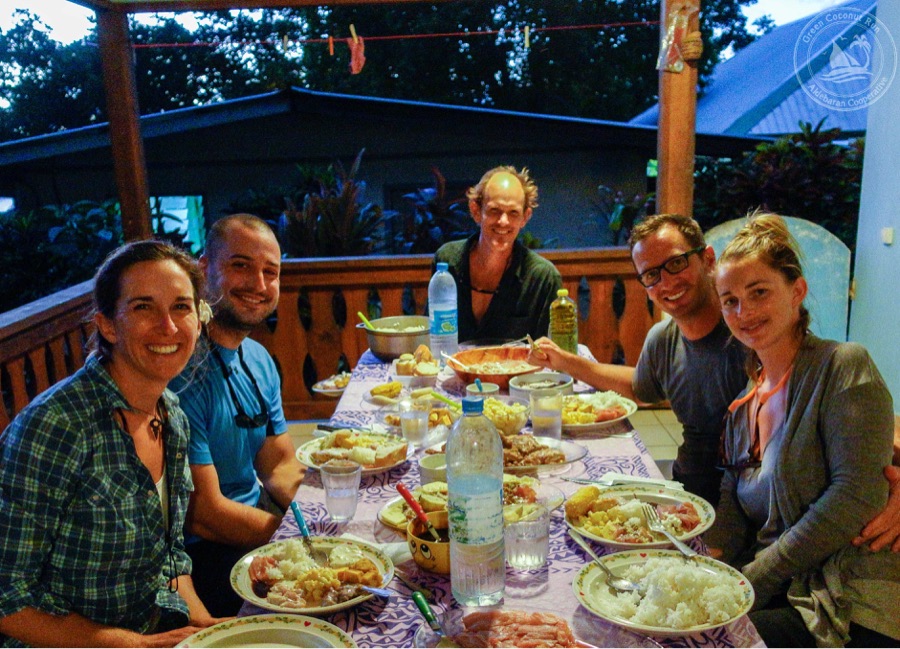
Photo shows the crew aboard Aldebaran for this leg of the voyage around Hiva Oa and Tahuata islands, in southern Marquesas: Chris, Pierre and Lianna, Sabrina and Kristian.

Gifts from the Vaitahu School

Homework for the kids: go fetch fruit for Mr. Littée and the trimaran!

We returned the following morning to receive a big box of fruit in appreciation for the lesson that Pierre taught. There were several big pamplemousse (the sweet Polynesian grapefruit), limes, oranges, and a pile of “pommes”, which reminds us of an apple mixed with a jicama.

The class’ teacher Felix is also the school director. In a casual lime green singlet, with the ubiquitous Marquesan tattoo on his forearm, he invited Pierre and crew to his office, where he made a proposal: “Pierre, let’s swap roles for a semester! I’ll teach your class in America, and you come to Vaitahu to be school director.”

Pierre wasn’t quite ready to migrate to Tahuata – after all, he wasn’t sure if Felix would be able to pour drinks at Cavallo Point, which is Pierre’s night job. They compromised and decided to connect their two classrooms as pen pals. The kids are looking forward to practicing their English with new friends in California!

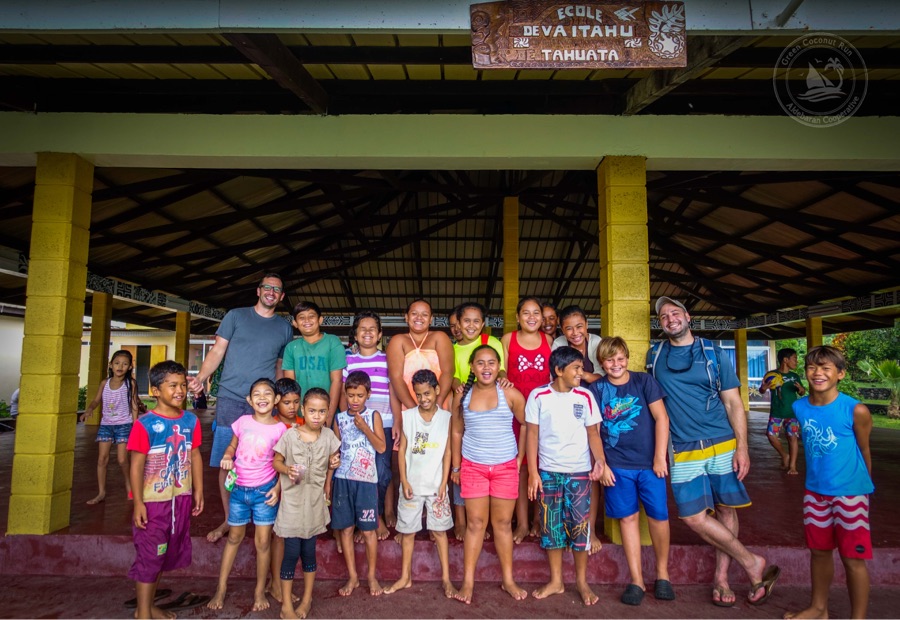
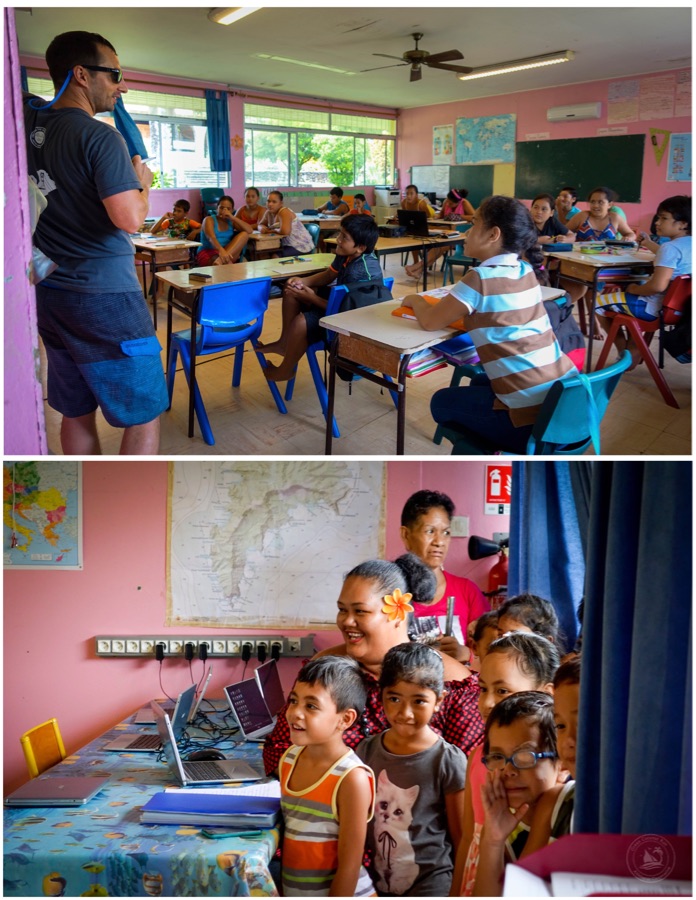
Photo: Pierre and Chris with the Vaitahu class. Chris is also a teacher in middle school English in Monterey, CA.

Mr. Littée visits the Vaitahu School

It was just supposed to be a brief school visit to meet the kids. Next thing you know, Pierre took over and began teaching a class to the oogle-eyed 8 year olds.

Do you guys know the Fibonacci series? asked Mr. Littée. No? Well heres how it goes, he scribbled in animated style on the white board, alternating between English (which they were learning) and French (which the kids speak at school). The class teacher and school Principal, named Felix, would chime in occasionally in Marquesan to add explanations.

We were in Vaitahu, the main village of the island of Tahuata. It is located just North of Hapatoni, about a mile up, nestled in a large open bay. The class was a mix of 3rd to 5th graders; Pierre happens to be a third grad teacher back at San Rafael, California. Within a few minutes there was a crowd of kids from the next door classroom coming to watch Mr. Littée.

The kids were loving it! Our little meet-and-greet had turned into a 45 minute classroom experience. Leave it to Mr. Littée to share his love of teaching everywhere he goes.

Feast à la Marquises

Some meals get etched into our memory banks. This is one of them!

Tahina made us a Marquesan extravaganza with four fish dishes, each better than the last: poisson cru, grilled fish, sashimi, and tuna carpaccio. The side dishes included a delicious breadfruit salad and fei (the local variety of plantain).

All the food came from around the island and was simply divine. Talk about “moan of approval”…

To complete the five star service, we all got showers and fresh laundry. How often do you leave a restaurant smelling better than when you arrived?!

The night was capped with card games, magician tricks by Pierre, ukulele songs by Tahina, and Captain K passing out from food coma on the hostess’ bed. All very reminiscent of a fine Thanksgiving feast back home!

Ps. Deena and Spencer met Tahina during our first visit to Hapatoni, island of Tahuata. You guys were here with us in spirit!

Madam Tahina

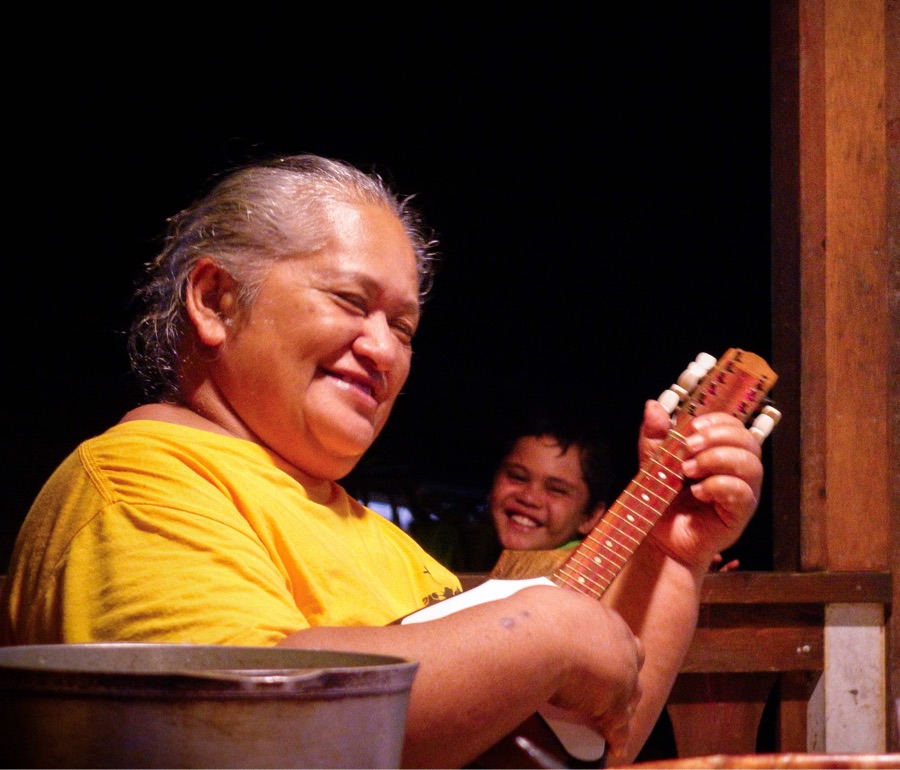
This sweet lady made us a true feast for dinner. Tahina worked in a restaurant in Tahiti for several years and is a incredible chef… She returned to her native village of Hapatoni when her sister fell ill. She also did a few loads of our laundry in exchange for perfume and lotion! Here she is shown strumming the ukelele with her nephew singing along. The village of Hapatoni feels like a big happy family.

Hapatoni: View from the Mountain

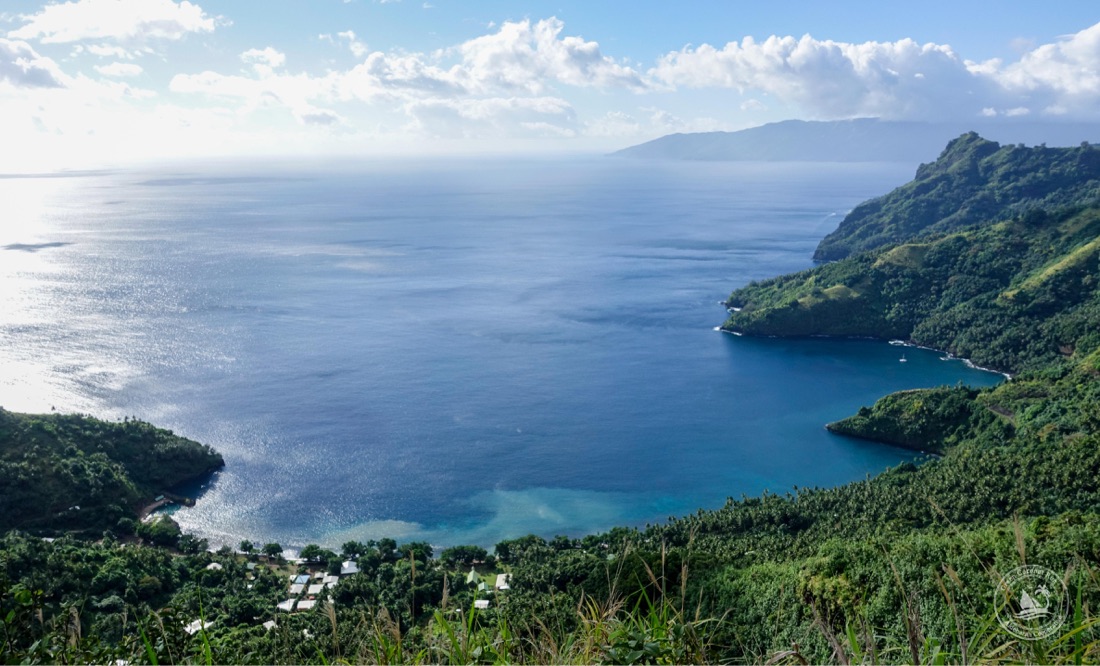
The village of Hapatoni, on the south-western tip of Tahuata Island, is known for its artisans, especially wood and bone carvers. We were coming for other reasons: to pick up our laundry and eat food! To build up an appetite, we hiked up the mountain. The village is on the bottom left, with a wharf for small boats. Aldebaran is anchored on the right side of the picture, over a mile away; elsewhere in this bay is too deep for comfortable anchoring. The steep mountainsides that surround this village plummet into the ocean. In the distance to the north, the island of Hiva Oa is visible.

Not Monterey

Summer vacations: one of the nicest perks of being a school teacher! Chris looks like he’s as far from his home in Monterey, CA, as is possible… 80 degree water and air temperatures being the notable differences, along with the coconut trees on the beach. First day in Tahuata Island, Marquesas Archipelago

Washing Machine, à la French Polynesia

Doing laundry is a genuine battle in French Polynesia!

After our three week passage from Galapagos, we landed in Gambier, in dire need of clean clothes. Only one person in the entire town was willing to do our washing: an alcoholic, inhospitable German guy who refused to run his machine on the proper setting, despite charging us $30 ($10/load) for allowing us to use his machine.

The clothes were still dirty after going through the 20min quick-spin cycle he set, so Sabrina and Spencer were left scrubbing them in his shower. Irritating to say the least!

While anchored in storms, we began collecting extra buckets of rainwater to wash clothes (in a limited fashion) on the deck of Aldebaran. We longed for the days of Central America, where we happily paid $1/pound for perfectly folded and lovely-smelling laundry.

Two months after leaving Galapagos, we reached the civilized island of Hiva Oa. Laundry was available here, but the cost was nearly $20 per small load of laundry! In our desperate state, we almost paid $150 to wash everything we needed, but it was so absurd we refused.

Our solution: we actually left our clothing in another island. Well be back in 5 days! we told Tahina, a lovely lady in the tiny village of Hapatoni, population ~100. She said the cost would be $30 ($10/load) or, she offered, we could work out a trade if we had any perfumes or body lotions. Perfect!

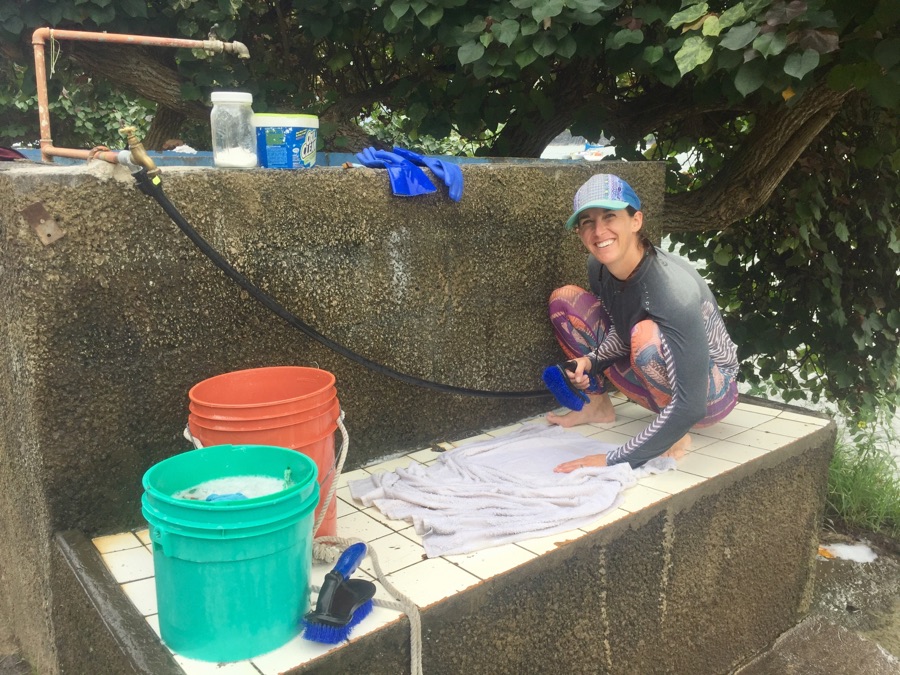
For the bulkier items like our sheets, blankets, and towels we washed them by hand in Atuona. There is a good washing station with plenty of fresh water next to the dock. We spent an entire sunny day scrubbing and hanging clothes. plus the next two days nursing our sore forearms. I never knew this was so much work!

Honey, how much does it cost to have a washing machine for our boat? Such is the type of question we previously thought was ludicrous, but now appears wholly reasonable, should we spend any length of time here in French Polynesia.

Atuona’s Scenery

The anchorage may be chaotic, but the scenery is awesome! Clouds constantly pile up against the tall mountain peak that overlooks Atuona. After a heavy rain, five waterfalls plunge down its vertical sides. We spent the weekend cleaning the boat, inspecting the food stocks, drying the bilges. During our 7 passage from Gambier, one of the benches got wet due to a leaky hatch gasket (which we are now trying to fix, again) so several cans of food were damaged. A disheartening job! Every so often we’d stop and stare at the mountain’s atmospheric display.

Manta Rays!

Manta Rays are sometimes very shy, and sometimes very gregarious. We’ve had the best luck spotting them when we are paddling around. Perhaps they aren’t too keen on the sound of the boat motor.

In Hanavave, Sabrina and I were paddling our SUPs in the early morning and came across a school of 6-8 Manta Rays, feeding in the shallows by the point. We wished we had our snorkel and masks!

That afternoon all four of us went looking for them aboard the Lambordinghy. No luck! We snorkeled around a big arch, watching small colorful fish around the rock walls.

We went to the opposite side of the bay to look for Mantas. The fish were very sparse. Furthermore, the water was fairly turbid due to river sediment. This seems typical near shore in the Marquesas; hence this archipelago is not well-known for snorkeling.

On the other hand, the currents at this latitude bring a lot of plankton to the surface. This doesn’t help the visibility, but it attracts a lot of pelagic (open ocean) marine life. This is why Manta Rays are fairly common here, along with deeper water fish like tuna.

As the light was fading, we were just going to have a final swim. Our skiff was drifting along and Sabrina jumped in the water. She immediately poked her head out of the water:

“Mantas, directly below us!”

I plunged into the water. Deena and Spencer quickly fumbled and put on their masks, leaning precariously over the dinghy’s edge. We all saw the two Manta Rays just six feet below Sabrina. They did a slow sweep by her, then gently flipped upside down and went into deeper water.

“Whoa!” We all exclaimed. “They were so close!” It was wonderful to have a brief moment in the proximity of the elusive Manta Rays.

[no gallery]

Night Snorkeling

Although the Marquesas isn’t well known for its diving, there is one marine animal that loves to cruise its steep shorelines: the Manta Ray.

We heard Mantas were around Tahuata, but they remained elusive. We wanted to try a new strategy here: use night lights to attract the plankton, Mantas’ favorite food.

This was also Deena’s first time snorkeling at night. It is always exciting to jump into the dark ocean, so full of foreboding mysteries and scary critters that you can’t see. Like the boogies monster under the bed, however, such fears are usually unfounded, and we get to see a new twilight world underwater.

Schools of fish were attracted to our lights. A tiny juvenile fish (called a moorish idol) deciding to be our friend; he kept trying to scamper into Spencer’s shorts. A weird marine worm came hitchhiking in Sabrina’s wetsuit, the cause of a long study afterwards.

Although we didn’t find the Mantas on this snorkel, the night time discoveries didn’t disappoint!

[no gallery]

Escape to Tahuata

The island of Tahuata is a perfect escape from Atuona Harbor, just 7 nautical miles away. We spent a very relaxing four days there. Between its uninhabited bays and two villages, which are renown for their fine craftsmanship, there is a bit of everything.

Tahuata is a small island lacking large rivers. With less sediment flowing, water clarity is better and several beaches are sandy and idyllic. This is somewhat rare in the Marquesas, a land of extreme topography!

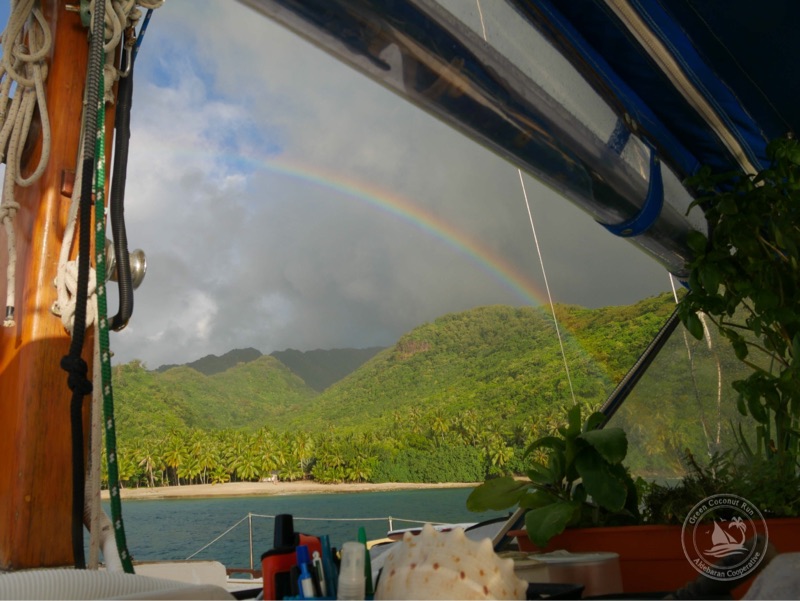
What isn’t rare around here are rainbows. We’ve never seen so many…! Almost every afternoon the sun sets in the west and illuminates the dark rain clouds piling in the eastern slopes of the mountains.

Rainbows are in a special category – no matter how many you’ve seen, they never get old. Every rainbow is a joy to witness, especially from the comfort of our cockpit.

The Atuona Harbor

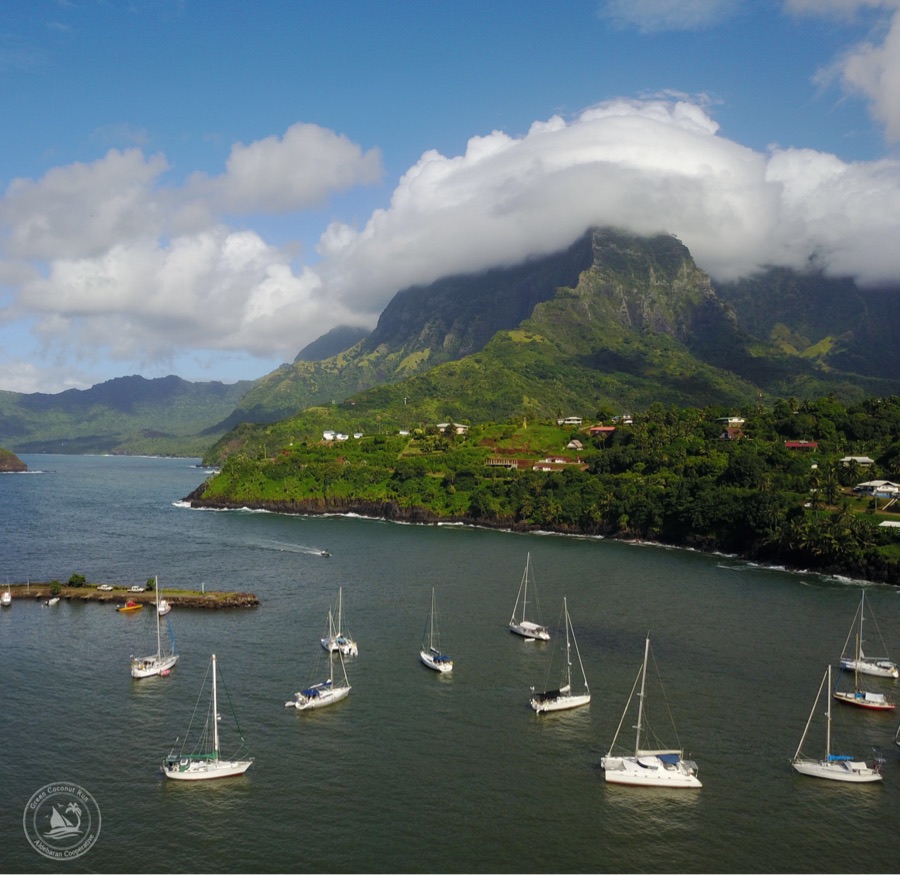
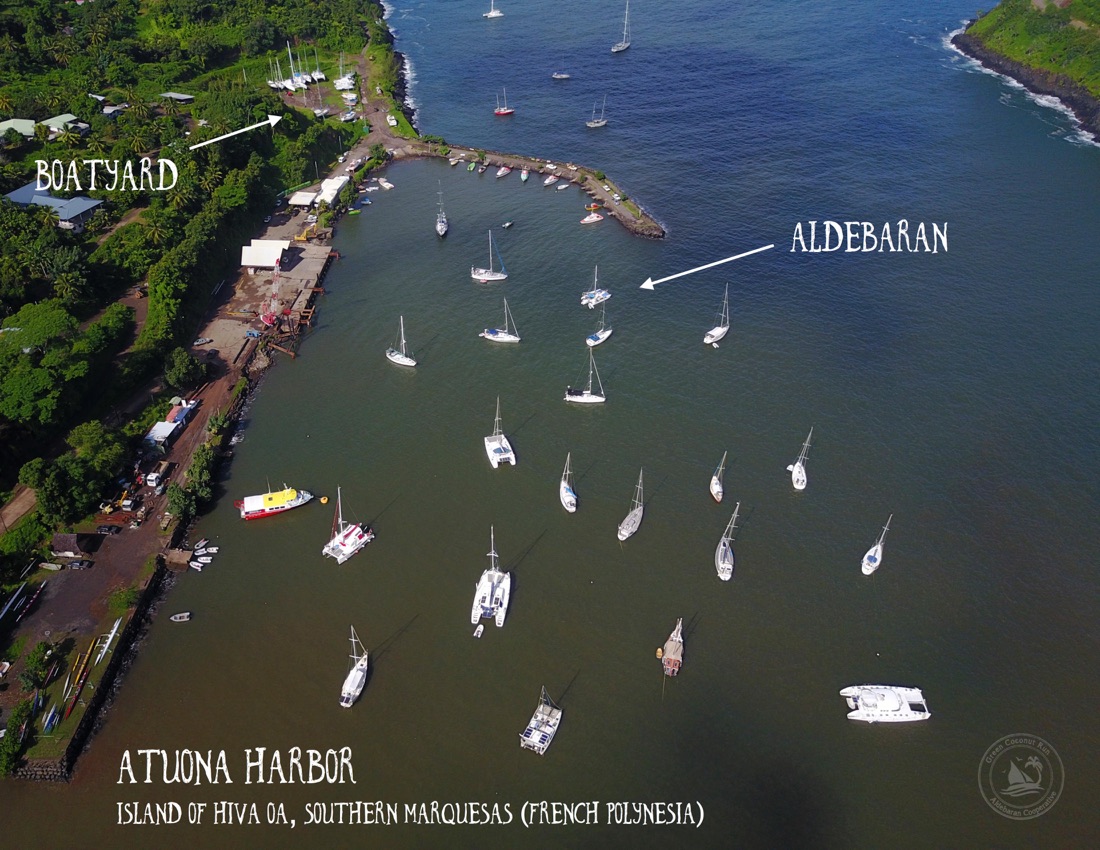
Talk about a cluster of boats! Check out the aerial view of the Atuona “harbor”, in Hiva Oa, the largest island in the southern Marquesas. Note the boatyard on the top left of the picture.

Most of the sailboats crowd inside the breakwater, while a few sturdy souls choose to anchor outside for more space (and a lot more swell).

Half of the boats, nearest the bottom of the screen, have bow & stern anchors, which basically fixes them in place. The other half (like Aldebaran, near the breakwater) are “spinning” on one hook.

The wind swirls all day and boats can get uncomfortably close to each other. Anchors are dropped on top of other boat anchors, which suddenly “fouls” them. We had to ‘push’ a monohull out of the way with our dinghy, just to pull up our anchor and leave!

We began to affectionately call it the ‘Toilet Bowl’ anchorage, for its swirly, and occasionally smelly nature. The stagnant muddy river water mixing with the ocean water adds to the visual effect.

The discomfort extends to other senses. At 7am every day the construction begins on the wharf with jackhammers. The diesel smell from all the trucks and boats gets stuck in the narrow cove.

Luckily, once every two weeks, the large cargo/passenger ship Aranui pays a visit and the upper half of boats must clear out– this purges the toilet bowl!

The mass exodus of sailboats go to the nearby island of Tahuata, which has the closest smooth anchorage, or they carry on with their voyages.

Despite these problems, Atuona is one of the primary landing destinations for all the boats crossing the Pacific. The northern islands of Marquesas are downwind, so it is easier for sailors to come here first.

Unfortunately for the new arrivals, the gendarme (police/port captain) are fairly stressed with all their busy work. This just compounds to the lack of appeal of this harbor.

For our trip across the Pacific, we chose to avoid landing in the Marquesas. Instead, we took the route across the Pacific via the south, to Pitcairn and Gambier. Those islands get more stormy weather, but boy are we glad we landed there first!

Hiva Oa is stunningly beautiful; but it is not the most relaxing place to land after a long ocean passage.

Now we appreciate even more, after three weeks at sea, how wonderful it was to arrive to the warm welcome in Bounty Bay; and check into French Polynesia via the quiet, hibiscus-lined gendarme in Rikitea.

All those criticisms aside, Atuona is still the Marquesas. And that means two things: remarkably friendly people, and extraordinary landscapes. We would grow to enjoy this place for these two redeeming qualities!

Hiva Oa Salvation?

After loading the boat with piles of fruit, we set sail at 8:30pm from Fatu Hiva. With the ESE trade wind, it is a nice broad reach to Hiva Oa, the hub of the southern islands in Marquesas.

We sailed all night with just the 110 genoa, purposefully going slow at 3-4.5 knots, to take it gentle on the damage to our port wing fiberglass. The moonlight and bright stars made a perfect night of sailing, with dark clouds in the distance.

We arrived at first light with the sun shining over the impressive mountains of Hiva Oa. Is anywhere in the Marquesas not impressive??

Our plan: visit the boatyard in the town of Atuona (which has the only haul out facility in Marquesas) to determine if they can help us repair our boat.

Petroglyphs in Omoa

In the 1930s, Thor Heyerdahl lived around Omoa during most of his time in Fatu Hiva, which he relates in his book (of the same name).

In his map of the island he pointed out rock art petroglyphs near Omoa. We asked Dolina’s dad, Leon, about this and he took us to see the area.

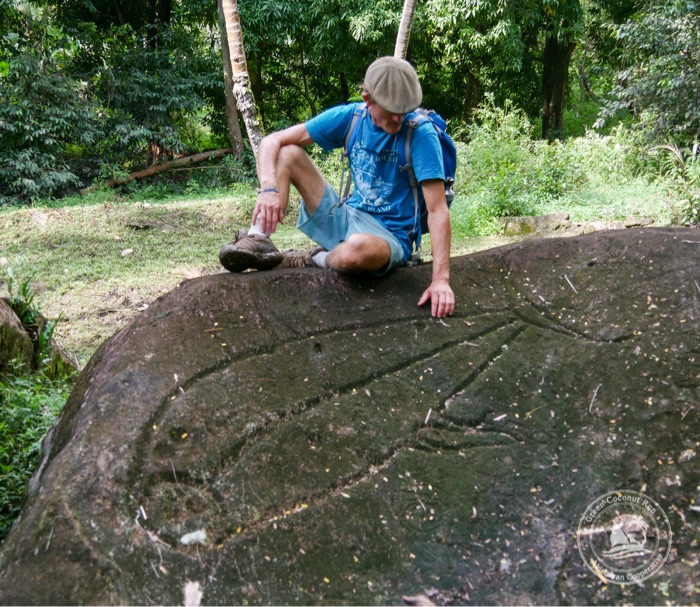
A somewhat muddy, 30 minute trail uphill landed us at a clearing with a large flat rock. Leon brushed away coconut palm fronds to reveal a number of carvings etched directly into the stone’s surface.

Besides some tikis drawn into the rock, there was also the largest: this fish, perhaps a tuna, although Leon called it a dolphin.

“The ancients spent a lot of time here,” Leon said. The wind blew through the trees in the valley and we imagined the ancient Polynesians 1000 years ago. Perhaps there were no coconut trees back then, but the same stone was below our feet.

Polynesian Generosity

Dolina and her family are some of the sweetest people we’ve met.

As if making us two feasts wasn’t enough, each day they sent us back to the boat with a wheelbarrow full of fruit (!) including pamplemousse, breadfruit, papaya, limes, starfruit, bananas, fei (red bananas), and an entire bag of home-grown ginger.

On top of that, when it was time to leave, they told us to each pick a tapa as a gift! We felt showered with presents.

The Polynesian spirit of generosity is legendary; but to experience such kindness and thoughtfulness in real life is very moving!

The people we have met in remote islands, accessible only by boat – Pitcairn, Taravai, Reao Atoll, and now Fatu Hiva – are grateful to have your company, since visiting them is so difficult. Their openness is remarkable. Whatever they have, they are willing to share in abundance. We are incredibly inspired by this spirit of generosity, and hope to keep it alive with us forever.

Feast at Dolina’s

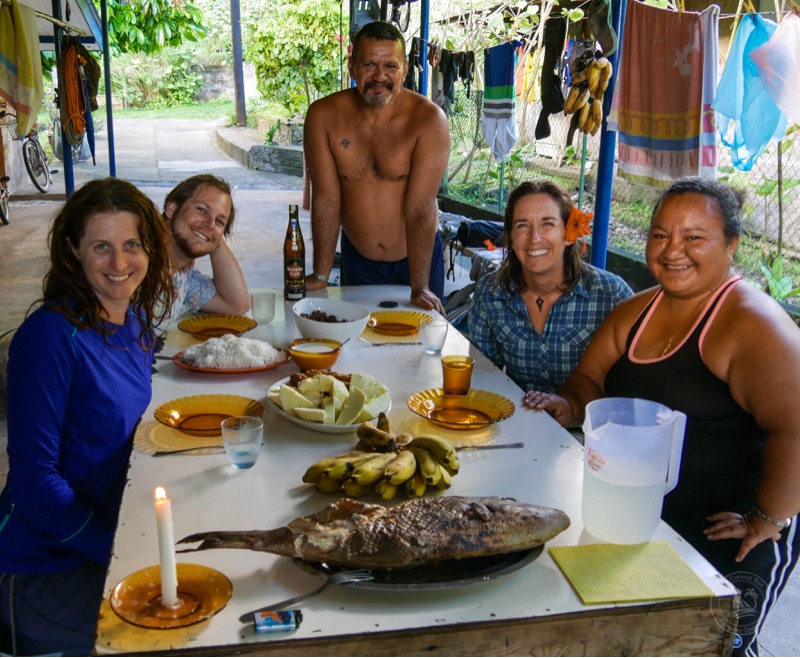
After purchasing Tapas and wood carvings from Dolina’s family, we arranged to eat a meal at their house. Or should we say, “A Marquesan Feast”!

The first course was ‘poisson cru chinoix’ from yellowfin tuna that her dad had caught. Poisson cru is raw fish, typically marinated in coconut milk with lime juice and salt. We had ours with vinaigrette and fresh ginger; it was the most delicious one we’d ever tasted.

The second course was wild caught chicken – which Dolina catches using traps – sautéed in coconut milk; plus fire roasted breadfruit, and steamed “fei” (a local variety of plantain).

For this feast, Dolina charged us an incredibly low $5 per person, instead of the usual $20 per person asked throughout French Polynesia. We loved it so much we asked for another meal the next day!

On the second day, everyone was in heaven… but especially Spencer. Dolina served us wild boar that her dad caught the previous week in the mountains. This was one of Spencer’s dream experiences for the South Pacific. Dolina roasted the wild boar in an fantastic soy-ginger sauce. She also served grilled fish, along with a plethora of accoutrements.

We had not anticipated a culinary extravaganza here in Fatu Hiva- but that is exactly what we received!

Tapas, step 3

The final product of the Tapas are hand drawn paintings on the parchment paper, made from the tree bark.

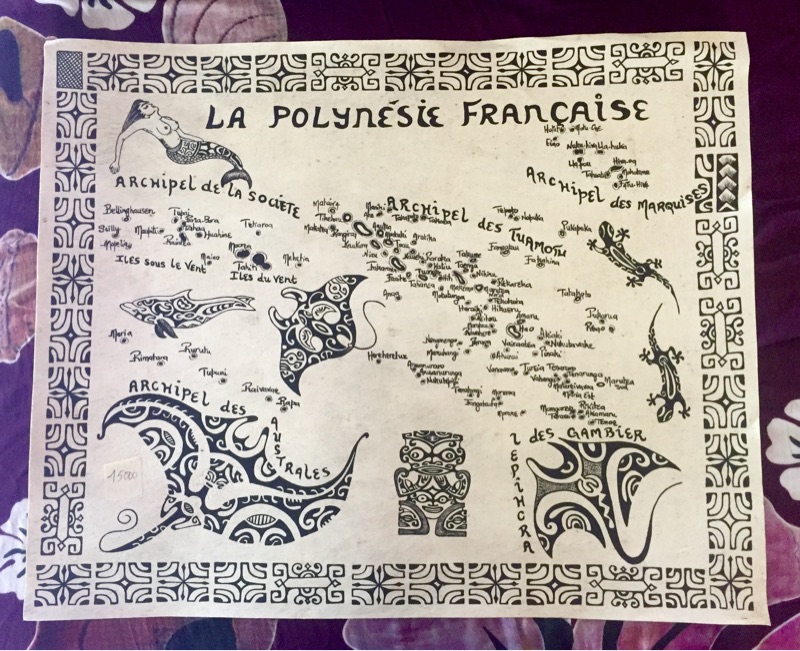
Often the drawings are Tikis, manta rays, turtles, or story-telling motifs from the Polynesian tradition.

Interestingly, the paint brushes have typically been made from the hair of the artist!

Tapas, step 2

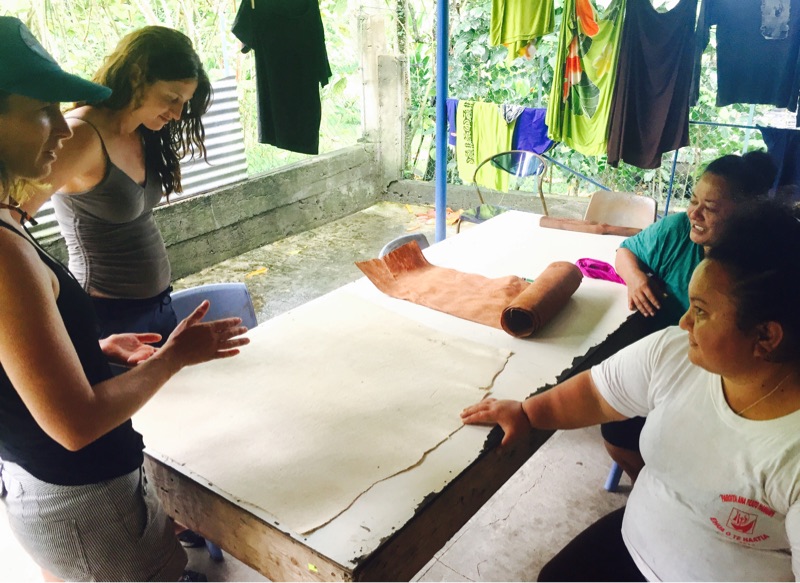
Originally, Tapas were made from tree bark solely for clothing. Since tattoos covered the bodies, the Tapa cloth was left blank – that is, without painted designs. The cloth was thin and supple for comfortable wearing.

Once cotton cloth became prevalent, Tapas were made thicker as parchment paper for paintings. Polynesian motifs were inscribed on the Tapas as part of a new art form.

With modernity, this technique has been largely lost – except for a few places in Polynesia. Thanks to the art revival in Marquesas, the village of Omoa in Fatu Hiva is now ones of the few hubs for the renewal of the Tapa tradition.

Photo: Dolina and her mom Marie Noelle show us blank tapas, before they are inscribed with paint. The white cloth comes from the mulberry tree, and the brown cloth comes from the banyan tree.

Tapas, step 1

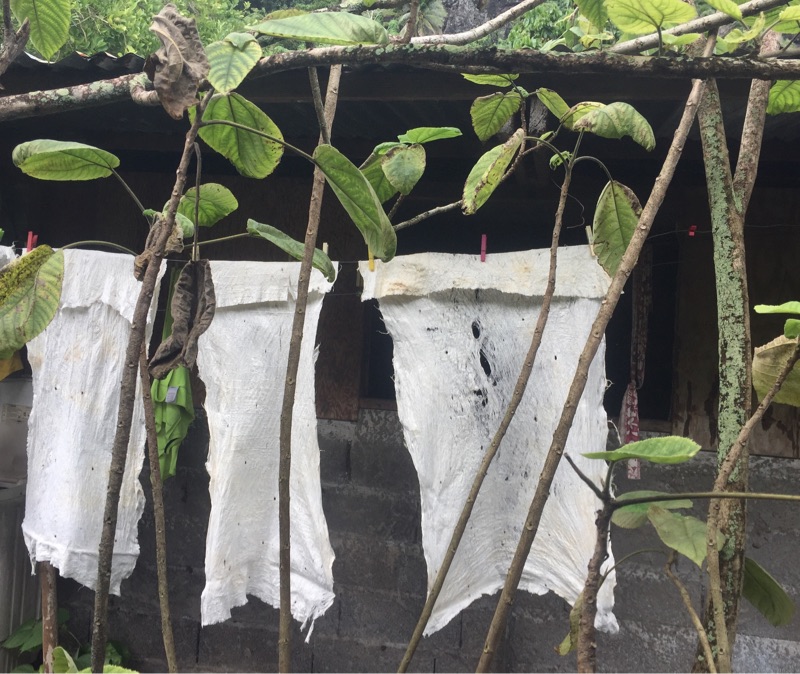
What looks like white rags drying on the neighbor’s line is actually the bark of a tree, pounded like parchment paper.

The village of Omoa is the Polynesian center for the revival of the art of making cloth (or paper) from bark, called “Tapas”. They are so-named (we think!) after the 1000 times one must whack a wooden mallet to soften and flatten the bark: “tap-tap-tap-tap”. This is the gentle monodrome that echoes through the valley of Omoa.

(Nope, these Tapas have nothing to do with appetizer foods sold in Spain and now popular in American bistros!)

The mulberry tree, shown in the picture, is used for its bark, which produces a Tapa with a pleasant off-white color. This was at the house of Dolina, whose Tapas we were here to look at.

Omoa’s Mellow Feel

Omoa lies just 3 miles south of Hanavave, but it has a very different vibe. The valley is more open, dissipating the powerful winds that spill over the mountain range. The sun shines on the flowers and fruit trees that line the streets. Overall the energy here felt more tranquil and peaceful. The girls were happy exploring town to search out some local artisanal crafts…

Rainbows in Omoa

Omoa is the anchorage south of Hanavave; they are the two villages in Fatu Hiva, set in the lush river valleys.

Rainbows seem to be a daily fact of life here. The afternoon sun shines on the perpetual rainclouds hanging over the mountain peaks; the sun’s rays refract into rainbows that seem to start… right over… there.

Time to find the pot of gold!