What we found in 2 years of micro plastic sampling

Hello Friends:   We’ll be LIVE on facebook on Friday Feb 3, 1pm PST talking about our participation with Adventure Scientists during the last few seasons… tune in at their page.  Learn in this blog post — originally published on Adventure Scientists “Field Notes” — what we discovered from sampling micro-plastics from Mexico to Ecuador along our sailing voyage.

Continue reading

New Video Episode about Scorpion Bay – from Boat breakdowns to Perfect Waves

Finally!  Our all-new Video Series!   Thanks to support from our new Patrons we’re able to tell the full Green Coconut Run story.

This Episode is about our misadventures leaving Turtle Bay, glorious sailing conditions down Baja Peninsula, our first major engine breakdown, and then sweet redemption discovered at Scorpion Bay, in the form of loooooong waves!

Enjoy the new Episode  here.

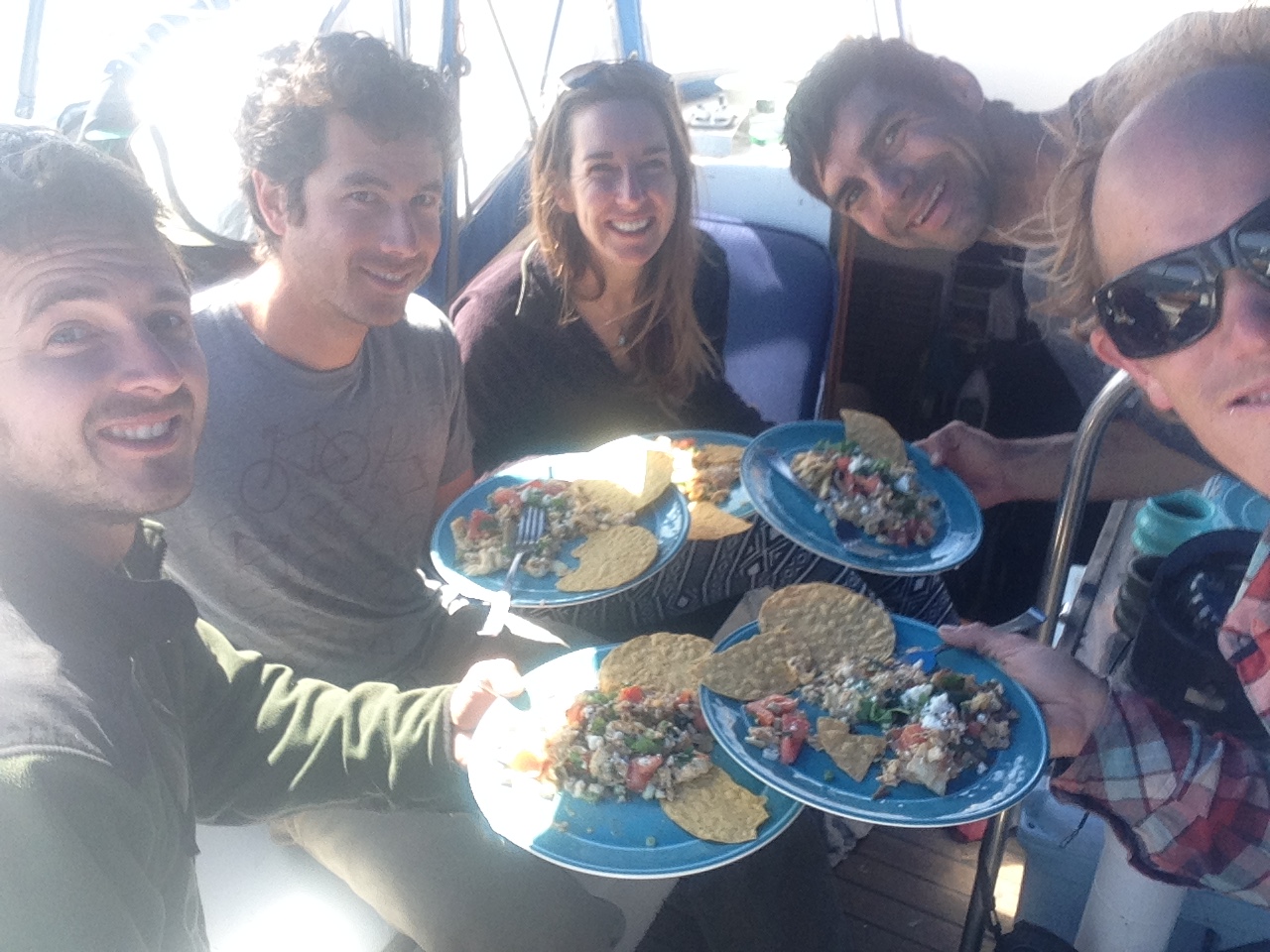
Our motto -- Eating well, no matter what the tribulations at sea

Our motto — Eating well, no matter what the tribulations at sea

ps. A note about prior videos: Our new episodes will be 10 minutes, which allows us to share the full story of our trip. Our previous videos (2-3 min) were experimental.  From now on we’ll produce only full episodes on Patreon; and short 15 sec Instagram teasers.  Many thanks!

Pirate for a week

By Guest Crew: Angelica Almazan

(Voyage Leg: From Huatulco, Oaxaca to Marina Chiapas.) 

IMG_5574-sml-Lr

Land Ho!

Since the first time I saw the Aldebaran, I knew that I had to travel on it; no matter how, no matter where, but I felt first sight love for that little sailboat.

The crew sailing south along the coast. I couldn't wait to join this family and sail with them!

The crew sailing south along the coast. I couldn’t wait to join this family and sail with them!

The crew were four of the most beautiful and interesting people I’ve ever met. Captain Kristian Beadle arrived in Mazunte with his girlfriend and first mate Sabrina Littee and their friends and skippers Ryan Smith and Michael Chiacos, after traveling for two months from California to Oaxaca, as part of The Green Coconut Run, a journey through the Pacific Ocean to visit protected marine areas, dive, surf and do environmental research.

The Salty Crew of Aldebaran (left to right: Sabrina, Ryan, Michael, myself, and Kristian. Our friend Dania is front and center, hanging out with us all.

The Salty Crew of Aldebaran (left to right: Sabrina, Ryan, Michael, myself, and Kristian). Our friend Dania is front and center, hanging out with us as well. You can also just barely see Kristian’s sister in back of Ryan.

They anchored off Playa Rinconcito. “How do you get to shore in the morning?” I asked them. Ryan explained laughing, “we swim with our fins and hide them under a palapa on the beach. Kristian and Sabrina paddle the big blue board in together.” After visiting the town and the people, at night they swam back to sleep in their 42 ft trimaran with everything necessary to sleep in it: dormitories, a kitchen with propane stove, bathroom, water desalinization system and solar panels to provide electric energy.

Some people take buses to work, or drive cars....these guys paddle their surfboards with dry bags to get to shore and back.

Some people take buses to work, or drive cars….these guys paddle boards with dry bags to get to shore.

I met this group of modern pirates thanks to my neighbor and good Brazilian friend Samara, Kristian’s sister. “My birthday party will be on the boat!” she told me. I was very excited, since I was looking forward to a chance to go aboard. That birthday trip from Mazunte to Puerto Ángel intrigued me as I learned how life is on the boat, seeing the variety of surf boards on deck, along with the pictures of diving and fishing sessions, all convinced me that I wanted to be part of that fascinating adventure.

My dear friend Samara, with her brother Captain Kristian.

My dear friend and neighbor Samara, with her brother Captain Kristian, celebrate her birthday on the boat!

“Where is your next destination?” I asked them. I was disappointed to hear it was El Salvador, because unfortunately I didn’t have a passport. “But you don’t need a passport to go to Puerto Chiapas” said Kristian “we need to stop there before leaving Mexico. Would you like to join us?”

That was the invitation I was hoping for. It would be a relatively short trip, from Huatulco in Oaxaca to the border with Guatemala, 250 miles, but they would take a week to get there. They needed to wait for a good weather window to cross the Gulf of Tehuantepec, and would spend those few days exploring the beaches of the National Park Bahias de Huatulco, and working on the boat. The crew agreed that I could travel with them if I paid for my meals and helped with the work.

My floating home for a week

My floating home for a week

Michael jokingly warned me, “Doing a crossing isn’t as easy and fun as parties on the boat – this is supposed to be one of the roughest passages in Mexico. But it’ll probably be amazing as well.” I assumed I’d get seasick at some point going through turbulence along the Gulf of Tehuantepec, but I didn’t hesitate for one second on my intention to go on that trip.

It was a great boat party for Samara's birthday!

It was a great boat party we had celebrating Samara’s birthday!

Blissful freedom. Ryan leaps into the ocean to play.

Blissful freedom. Ryan leaps into the ocean to play.

A few days later, I met the boat and crew at Marina Chahue, joining one of the most amazing experiences of my whole life.

Our first mission was to catch fish for dinner before we went into the natural protected area. We anchored a few miles away from Chahue Beach and while Ryan and Michael dived armed with their harpoons (spearguns), I did some snorkeling, watching in awe schools of surgeon fish and other species of all sizes and colors. The guys came back with yummy ones, and explained patiently which species was each one and how they caught them, and they showed me how to scale and fillet them.

Does it get any better than this!?

Does it get any better than this!?

We went to Tangolunda Bay, next to the Club Med and other luxury resorts. It wasn’t the greatest since the lights from the hotels didn’t let us see too many stars, and we could hear the music from the clubs until late night, with an entertainer shouting “Tequila! Tequila! Margarita!” to tell the guests which dance step they had to follow.

But, the crew needed to use their phone internet and work on the boat, so that is why we went there. “This is cruising, Angelica!” smiled Sabrina. “Working on your boat in exotic places.”

Before we jumped into action, they had a meeting to distribute the chores, and I was surprised by the capacity of organization of these people. Every decision is taken democratically, the obligations are taken equitably and each one is responsible to finish their mission on schedule. Some of my chores were to grease the wood on deck, to take out some nets and – my favorite one- to get underwater to clean the bottom of the boat to take away the mud and seashells. I felt like a real pirate working hard while watching the beautiful sunset.

All smiles here, getting ready to clean the bottom of Aldebaran

All smiles here, getting ready to clean the bottom of Aldebaran

Sabrina and Kristian inspect the nice clean hulls of our beautiful ship

Sabrina and Kristian inspect the nice clean hulls of our beautiful ship – two thumbs up!!

Another thing that caught my attention was the order needed to live on a boat. Since there is not too much space, everything needs to have its place, and everyone needs to know where to put things at all time. They pointed out that I was new and wasn’t familiar with the strict order, but Sabrina explained that every time someone leaves stuff out of their place, they had to pay a fine of pushups or sit-ups, and I testified that not even the captain was excused to escape that rule.

“That’s why the crew is so fit,” said Michael. And the truth is that life on the boat is very physically challenging: the water pumping system is made out of pedals and levers, so you have to exercise even when flushing the toilet or washing the dishes!

The Aldebaran has salt water and fresh water faucets, same as a complex desalination and purification system to get drinking water, which Sabrina was kind enough to show and explain to me. All the crew was always happy to answer every question that I had, and explain all the details I needed to know about the life on the boat.

Work hard to play harder!

Work hard to play harder! Welcome to paradise… says Captain Kristian

It's amazing to find such stunning bays all to ourselves!

It’s amazing to find such stunning bays all to ourselves!

Done with internet for now, we decided to go to a more quiet and lonely place, so we anchored at Playa El Organo in the national park. It was a lonely and gorgeous beach, and when we arrived we saw a fox resting on the shore. The reef is beautiful there, and I loved to snorkel there and watch a spotted ray, along with several species of fish and coral.

A beautiful spotted eagle ray glided by us!

A beautiful spotted eagle ray glided by

This was a neat coral crevace with tons of fish around

This was a neat coral crevace with tons of fish around

That night I slept on the net. I can’t describe the incredible feeling of sleeping under the stars, with the water underneath me, and waking up with the sunrise on my face. Absolute happiness is to wake up and jump right from your bed to the sea for a morning swim, and be called for breakfast with the call of the conch.

Food was absolutely fabulous every time. From the fancy dinners consisting of fish in a ginger and garlic sauce, mashed potatoes and grilled vegetables, to the Baja style fish tacos, going through the eggs on toasts for breakfast, the kimchi salad, and every one of the healthy and delicious snacks I tried that week.

I was welcomed in like family. Here we are at Organico, so happy to be together in such a beautiful bay

I was welcomed in like family. Here we are at Playa el Organo, so happy to be together in this beautiful bay!

The next days we lived an ecstasy of virgin bays in the middle of forest and cliffs that can only be reached on a boat. In Chachacual I saw a lot of butterflies, as I’ve never seen before in a beach, and Riscalillo had hermit crabs with shells of all sizes and designs. For the first time in my life I did some Stand Up Paddling and we made a concert on the boat, when the guys took out all their music instruments and we sang along Gracias a la vida with a guitar, maracas and a ukulele.

Gracias a la vida.

Gracias a la vida: “Thanks to life, for you have given me so much…”

After going to Huatulco city to buy final groceries for the next months, on June 28th we launched at 3 am and started the 48 hour sail trip to Puerto Madero in Chiapas. The first stop we did was in Punta San Diego for Michael and Ryan to do some surfing, and I had the chance to behold the amazing spectacle of seeing them “flying” on the waves.

Michael flying in the surf

Michael flying in the surf. I hope to one day be as graceful as them when I surf!

When underway again, the fishing pole caught something. “I hope it is a Mahi mahi!” exclaimed Michael, as he jumped to deck. Indeed, they captured a big beautiful dorado, which amazed me with its colors and big head. That day was very prolific for fishing: aside from the Mahi mahi, we caught an Agujon (needlefish) more than 4 feet long and even I had the chance to reel in a fish for the first time — I ended up taking out of the ocean a giant almost 5 ft barracuda!

The mahi mahi fish are so beautifully colored with bright yellows and greens. And boy are they Delicious!

The mahi mahi fish are so beautifully colored with bright yellows and greens. And boy are they Delicious! Sabrina lifts this guy out of the ocean on the deck where the crew helps to control the fish.

This is a great Pacific Needlefish. They are also really tasty, but some people get turned off by the green flesh. We didn't mind at all.

This is a great Pacific Needlefish. They are also really tasty, but some people get turned off by the green flesh. We didn’t mind at all.

This was my first time reeling in a fish - and I landed a massive barracuda just as the sun was setting! It was so exciting! Sabrina helped me hold it up for the photo to remember the moment forever!!

This was my first time reeling in a fish – and I landed a massive barracuda just as the sun was setting! It was so exciting! Sabrina helped me hold it up for the photo to remember the moment forever!!

After dinner they distributed the shifts for steering through the night. I offered to keep Sabrina company during her shift, and it was a magical night, watching the sails glowing with the moon light and chatting with a beautiful mermaid, and she told me a little about her life and travels, her career as a nurse and how she met her great love, captain Kristian.

Sabrina and Kristian are so happy together!

What a happy couple!

Next day we saw beaches with huge sand dunes, and we stopped near Chipehua to surf. This time I had the chance to go with the guys using a body board and feel the adrenaline of catching some waves. I also had the honor of learning to drive the boat and to follow the compass to keep the course. Even when I made the boat spin 360 degrees, no one got upset and kindly taught me the right way to steer. Before I noticed I was driving, happy and relaxed, as if I had been doing that for years.

It was an interesting coastline we sailed past! Ryan shows off the great view from the bow.

It was an interesting coastline we sailed past! Ryan shows off the beautiful sand dunes from the bow.

That evening we saw several turtles mating in the sea, and the sunset gave me the spectacle that I was longing the most to see: a group of dolphins followed our boat for miles, while I watched them from the bow.

OLYMPUS DIGITAL CAMERA

This beautiful sunset lit up the sky.

At twilight, we started to see a lot of dark clouds coming our way: lightning shone on the ocean and a strong wind started to blow, splashing the inside of the cabin with a powerful breeze. Even though the boat started to shake violently, the crew remained calm. Kristian put the sails away, Michael grilled barracuda steaks, Sabrina made mashed potatoes and Ryan washed the dishes. We had dinner warm in our rain coats and tried not to touch the metal parts from the cabin. After a while the storm stopped and the sea calmed, even the full moon peeked through the clouds for moments.

It was a wild storm, and I felt more and more like a real pirate!

It was a wild storm, with rough seas and lots of rain….It made me feel more and more like a real pirate!

I woke up early next morning to take my shift to steer, and I drove by myself for more than two hours while the crew slept. These were sublime moments, listening to music, observing the seagulls fly with only seas all around.

Couple hours later we arrived in Puerto Chiapas and anchored at the Marina, where the crew registered with the guards and asked for information about the papers needed to get out of Mexico. Watching small rays swimming next to the boat, I had my last fish tacos on the Aldebaran, and then I had to say goodbye to my dear friends and take my bus to Tapachula.

I can say that my week on the Aldebaran was one of the happiest times of my life; I learned a lot about the ocean, life and about myself. Living on a sailboat is a dream that many people have and I am glad that I had the opportunity to live it, and to see that it takes a lot of organization, work and optimism.

I will never forget this dream....

I will never forget this dream….

I can testify that when chasing a common dream, a group of people can live together 24/7 and get along. It isn’t easy to have a functional and organized society, even when it’s a very small one and this trip gave me a lot of clues of what is needed to reach that goal. Everybody was always positive and kind to each other, acting like brothers, putting the welfare of the group first, never letting the fun aside.

Those moments will be saved in my memory forever. I hope someday I will have the chance to sail on new seas with these amazing people again. I was a pirate for a week, but I will be a mermaid for the rest of my life.

"I was a pirate for a week, but I will be a mermaid for the rest of my life"

“I was a pirate for a week, but I will be a mermaid for the rest of my life.”

Dodging Hurricanes, part 2: Lightning, Blanca, and Carlos

DCIM140GOPRO

Like a sitting duck

A false sense of security overcame us after Hurricane Andres passed to the north.

Untroubled clouds puffed in the horizon. Light offshore wind groomed the powerful rivermouth waves. After surfing all morning, sore and sunburnt, we lounged under the village palapas and sipped coconut water.  Then in the afternoon, grey dark masses built over the distant landscape.

chacahua burraca bar

All seemed well during the mid-day break at “La Burraca Bar”

As we prepared our fish dinner aboard Aldebaran, stir frying vegetables and sauteeing the fish in soy-ginger sauce, a quiet expectation grew, like a mirror to the potential energy of the atmosphere.

The flat wetlands of Lagunas de Chacahua span towards the Cordillera Occidental, which is the dividing range between the coast and the higher valleys of Oaxaca City. The mountains brewed up the clouds seemingly from nowhere, and lightning began shooting down.

chacahua sat image

Satellite image of the massive Lagunas de Chacahua wetland region.

Bolts zig zagged the sky in the evening after glow. They blasted down to the earth several miles inland. We counted the time between lightning and thunder: 20 seconds.  That means they were 4 miles away.

Lightning_Formation

How lightning is formed. If you hear thunder 5 seconds after lightning, it is 1 mile away. Source: Unknown.

The Mexican Bureau of Meterology had forecast : “alta actividad electrica”. As it turns out, Hurricane Andres was spitting out tropical disturbances which didn’t show up in wind maps. We may have dodged its track, but Andres was getting the last laugh.

IMG_3630

The Acapulco marina gave us this forecast on May 27. We decided to keep heading south, overnighting to Chacahua.

Lightning was getting closer. We counted 10 seconds until we heard thunder — meaning it was now only 2 miles away. The dark village on shore flashes in strobe-like silhouettes. Anchored with our 45 foot mast sticking out of the ocean like a lightning rod, pathetically vulnerable, we watch and wait.

Boooomm!!   4 seconds away, means lightning is less than 1 mile away. Bolts pierce the sky, horizontally, vertically. I shut off the boat’s electrical system. Who knows if that actually helps but I’ve heard it’s worth a try. Our multi-colored solar-battery Lucy lights keep us company in the stifling, dead calm heat.

“Holy smokes,” someone says. Half second. Lightning is very close. No touching metal parts I remind everyone. The distant waves blaze in brightness with the flashes. The air is breathless, charged.

Craaaack!!!  It is right over us. The bolt reverberates like a cosmic door slamming directly above, blinding brightness. Out here on the ocean, exposed and unable to respond, we feel as out of control as we ever have on the ocean. There’s simply nothing to do.

OLYMPUS DIGITAL CAMERA

Lightning brings out momentary boldness — then everyone hunkers down in the cabin scared as heck when it gets too close!

It continues for the longest time, blasting all around us. A general feeling of impotence pervades; which breeds calmness. Eventually we go to sleep despite the muggy heat and adrenaline.

At 3am, I felt rain drops on my face. “Hum, that’s odd,” I wonder. “I thought the hatch was closed.” The loud fans we recently installed drown out any sounds. The boat, I notice, is pitching and swaying more than usual.

I open the hatch and a gust of wind stings my face with raindrops. “Geezz…!” is all I can say. I put on foul weather gear, the adrenaline building. Sabrina stirs in bed, asks, ” whats going on?” I respond, “Squall…”

The rain saturates the pitch black, the wind howls and shakes the rigging. Our trimaran is exceptionally stable but even she is getting tossed around as the wind blows onshore 30knots, with building fetch. The nighttime red lights from my headlamp gives the storm an eerie feel.

I sweep the cockpit clean and put away the dishes. If we need the move, the less stuff than can fall and break, the better. On our chart plotter, I record a waypoint- it tells me exactly how far the boat has moved, to indicate whether the anchor might be dragging.

I consider: if the anchor does drag, the next step will be to turn on the engine, motor at a 45degree angle to our chain, and drop the second anchor, a 35lb delta, which is ready to deploy at the bow roller. If it’s still dragging, we can put the motor into forward gear to help keep us in position.

It holds firm. Our over-size 66lb bruce anchor and 200ft of chain, considered too heavy by multi-hull sailors, seems pretty adequate right now… we want it all.The rain belts down hard with stinging wind, but by 5:30am, with breaking tinges of sunrise grey, the wind backs down, and turns glassy by 8am.

chacahua lineup sab watching ry

Sabrina watches from the breakwater – she wanted no part of the “Bucking Bronco”!

What else were we to do?  We went surfing. With stiff offshore wind, which cleaned up the waves remarkably well, we went back out as if nothing had happened. Trading waves, steering around huge backwashes of the “Bucking Bronco”, as we nicknamed the wave, we blew the pent-up energy from the intense night with our aquatic exercise.

What’s happening out there, I wondered. The next weather check, as we were motoring overnight to Mazunte and picked up cel signal, was both uplifting and demoralizing.

Blanca swell and track

Uplifting.. because on the heels of Andres, another storm was building (to-be Hurricane Blanca), which was going to miss us completely because we had made the push to go south. Relief!

Demoralizing… because on the heels of Blanca was a third depression  (to-be Hurricane Carlos) was moving north straight towards Huatulco, our destination.  Bummer.

Carlos heat image schedule

Category 1 Hurricane Carlos skirting the coast of Mexico. The tropical depression originated off the coast of El Salvador and tracked north towards Huatulco before veering north west beginning of June. Source: Weather Nation.

Carlos was extremely slow moving, and we spent a few days anchored in glassy calm of Mazunte before hunkering down in Huatulco for the storm. Two days before landfall, the storm veered north-west, out towards open ocean, as most storms do in this part of the coast. Buckets of rain came down for five days, but since we were on the periphery of the storm’s path, there was minimal wind.

Carlos prediction landfall

So much for the dry season!  This El Niño wet season had just begun with a serious bang. We had simultaneously weathered our first lightning storm and squall. It motivated us to study the statistics and protection systems for lightning; which ultimately persuaded us to change our plans further south.

Given Huatulco’s clear historical record and tucked-in marina, we felt very safe. We spent 3 weeks in cozy Marina Chahue and nearby eastern points, hosting our co-op members like the Hope Family with 3 year old Tessa, the San Francisco duo of Deena and Cristina, and Seattle-lites Dan and Sam. By the end of June, we were eyeing the weather to make our transit across the infamous Gulf of Tehuantepec, enroute to Chiapas.

Video Shorts #3, 4: Magic Log & Huatulco Seascapes

Moving at the pace of a leisurely beach cruiser (6-10 mph), the sailboat allows us to take in the subtleties of the landscape and seize the rare glimpses of nature otherwise inaccessible with other forms of travel. These two shorts provide a window into an underwater heaven that keeps surprising the Aldebaran crew — they are under 1min teasers for the in depth videos we hope to make during the off-season.

———–

Video Shorts: Magic Log (1min)… an oasis in the ocean desert. By Ryan Smith

We expected an uneventful 2 day transit, this time in the hot, calm waters 30 miles off the Michoacan coast. It was 5000 feet deep, with nothing as far as the eye could see. Luckily, Michael was keenly watching the surface of the ocean, and suddenly shouted “Floating Log! Look, there’s turtles! Let’s check it out!” A veteran Mahi Mahi hunter from his days on the Big Island (a story he’s want to recount to any virgin ears) he religiously scans the water for debris which can harbor fish. Before Captain could even halt the engine Michael had jumped in the water with mask and snorkle. He couldn’t believe what he saw!  Underwater was an explosion of life, organized around this random floating log. Like giddy school children, we spent the afternoon tethered to what we termed the “Magic Log”, a wonderland rife with turtles, small sharks, countless juvenile Mahi Mahis and fish swarming around this lone structure in the ocean desert. This is just a tiny snippet of one of the most incredible underwater experiences of our lives.

Short: Magic Log

————-

Video Short: Huatulco Seascapes (26 seconds)… the details of underwater life. By Ryan Smith

The southern state of Oaxaca is one of the most charming, diverse and beautiful regions of Mexico. From the culturally rich city of Oaxaca whose markets burst with color; the magnificent ancient ruins of Monte Alban; to the stunning coastline and national park of Huatulco; this region holds innumerable gems to explore. We quickly fell in love with the beautiful bays of Huatulco, spending weeks sailing, diving and imbibing in this tropical splendor. The time-lapse macro imagery of Huatulco Seascapes captures some of the wonders that we came across. We’ve learned that to look closely is to be surprised and amazed!

Short: Huatulco Seascapes

Video short #2: Flying Spinner Dolphins

We thought it was going to be a boring day! We were crossing the Sea of Cortez, a two night passage; with ocean on all sides we came across a massive pod of spinner dolphins riding our bow and flying into wild aerials. The crew included Eric Lohela and Brian Rossini who joined us to dive the Cortez leg

These dolphins would even impress famed snowboarder Shaun White, known for his dizzying spins.

Jaws agape, we watched the most virtuosic acrobatics we’ve seen outside the Cirque du Soleil. To capture the majesty of the dolphins underwater, Ryan dangled himself from the bow crossbars (note the blown out starboard net– it had torn the night before sailing with the Corumel south winds out of Isla Espiritu Santo). 

Even mundane days can throw something splendid at you — what delights can we find by going outside and watching the world unfold?

Short: Flying Spinner Dolphins

Dodging Hurricanes, part 1: Zihuatanejo, Andres

US history and 2015 storms

We broke two important rules of cruising… at the same time.

Rule number one: “don’t cruise during the rainy season”.

Hurricanes, rain deluges, floating logs, and intense lightning are some of the hazards that keep nearly all cruising sailboats in port during the wet season. We headed south from Santa Barbara on March 26, and hurricane season runs mid-May to mid-November.

Rule number two: “don’t keep a schedule”.

Weather trumps all in sailing. If the winds are bad, wait. If the winds are good, go. Having a schedule can prevent sailors from following that time-honored wisdom. Furthermore, that’s why it’s called cruising… sailors don’t want a schedule during their vacation.

But this really isn’t exactly a vacation…

The Green Coconut Run was crowd-funded by almost 40 friends and fellow ocean lovers, banking time on coming aboard; people back home needed a schedule, and we would do our best to make it happen.

What is the “conventional” way to cruise?  The majority of sailors on cruising boats are either retired in their 60s, or are young with small boats. Neither of those models would give us what we wanted – a boat capable of taking us to remote dive sites and surf breaks throughout the whole Pacific, while we were still young with minimal money in the bank!

DCIM140GOPRO

To pull off a scheduled approach on the edge of hurricane season (that timeline being unfortunately the same as prime surf season) required both bravado and naivety – both qualities that the “surfer-sailor” has in abundant supply.

Logic helps us feel better about our decisions. We analyzed historical storm statistics and determined that most near-shore hurricanes occurred in August-October. If we arrived in Huatulco, which is far south-east of most storms, by early June, we should be fine, right?

That simplistic assumption was now being questioned as Aldebaran’s crew sat in a sweaty taco shop in Zihuatanejo looking at the computer models for the 5 day weather forecast. With great apprehension, we saw the animation on PassageWeather.com of satellite images showing the swirls of a tropical depression forming offshore, with potential to turn into a nasty storm.

5 day forecast with ports

This is the 5 day wind forecast that we saw while at the sweaty taco shop in Zihuatanejo.

That disturbance would become Cat 4 Hurricane Andres, only the 6th hurricane to form in mid-May on record. Strong south-east winds were forecast in 2-3 days to plague the coastline… even if the hurricane stayed offshore.

Was there enough time to get south, away from the mayhem before the beast found its strength?  It would theoretically go away from the coast, as most storms do in the Eastern Pacific.

zihuat fisherman friend

Michael (front) and fisherman friend in Zihuat, who insisted that there would be no storm, “it hasn’t even rained yet this year!” We went with NOAA’s opinion on the matter.

We calculated our transit times from Zihuatanejo to Huatulco, in southern Mexico. If we hustled, we would get far enough south (and east, because that is how the coastline bends) to avoid the storm’s effects. If we stayed, we might actually be in a worse position in a week. “Let’s go for it!” we decided.

In a show of cosmic support – as if to encourage our choice to push south – just 30min after we left Zihuatanejo, we had our greatest animal encounter yet. We hooked a fish… a BIG fish. The kind of fish that people spend years searching for on charter sport boats.

Serendipitously, it was exactly the two month celebration of the Green Coconut Run; it was May 26.

OLYMPUS DIGITAL CAMERA

He was little too big for our bellies. Time for catch and release!

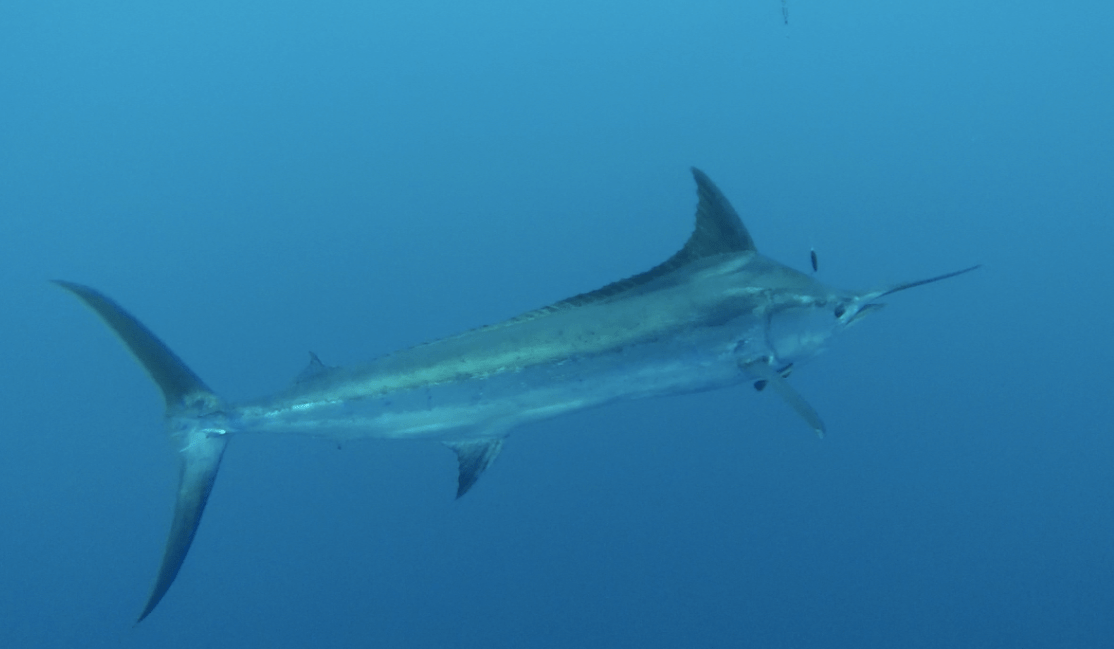
A flash of blue shone as he crested the waves: “oh my God it’s a Marlin!” With disbelief, over the course of an hour, we pulled in a majestic Blue Marlin close to 8ft long (from eye to base of tail), possibly as much as 300 lbs.  We must have snagged him in some sensitive area, otherwise he would have broken our 30 pound test line in a flash. Michael described our small battle with the marlin in his blog post about fishing in Mainland Mexico.

After coming alongside the boat three times, the blue marlin took one last look at us, and with a slight wave of his noble bill, plunged back into the depths and finally broke our line. Even if we had the skill, here was an animal that we didn’t want to conquer; its power was in its living.

Dumbfounded, we laughed that such novice fishers like us lucked into such an encounter. We were ecstatic!  The powerful omen gave us confidence to sail through the night, ahead of the building tropical depression.

chacahua sunrise closeup

Red sky in the morning, sailors take warning

The next morning in Acapulco, the sky showed signs of the developing low pressure system. Ominous winds were freshening when we stopped to re-fuel. We reviewed the Mexican government’s meteorological report: it painted a glum picture, with heavy lightning and strong SE winds in the forecast. The tropical storm was very far offshore, but it could turn towards the coast at anytime.

OLYMPUS DIGITAL CAMERA

The Acapulco Skyline. Just looking at it costs $$$. Everything was expensive including the uncomfortably warm swimming pool. Storm or not, after a few hours we were back on the move! 

There would be no harbor protection for 250 nautical miles… which equates to 2 nights underway. A lot could happen in that time frame. Yet, our intuition was that Huatulco would be safer, if we made it there.

Who could we ask for an opinion? Sailors were mostly parked for the season. Fishermen live day by day. Port authorities recited the official report. Our research and weather forecasts were as good as anything, I figured.

 “Keep going!” we decided.

After motoring through the night in lumpy seas and variable winds, we arrived in the state of Oaxaca. Our gamble paid off — conditions were improving the further east we went. Using our cel phone internet, the weather update showed that Tropical Storm Andres was beginning to whip 25 knot south east winds around Acalpuco, and the storm center was now past us to the north.

chacahua wave

Both the lighthouse and the wave are attractive navigational aids for Aldebaran. 

What a relief!  Were we in the clear?

We celebrated with a stop at the gorgeous Lagunas de Chacahua. We surfed the “bucking bronco” at the rivermouth, which was crazy with its backwash but mighty fun. The estuary is beautiful, and we enjoyed drinking coconuts from the beach vendors with no tourists around.

That decision to stay wasn’t without its repercussions, though!  It gave us our first real scare of the trip, as relayed in the next part of this story.

chacahua aldebran

The “bucking bronco” was challenging to surf because of intense backwash, which was probably why nobody else was there. Ah.. and the lightning storm in the forecast, that’s right, I forgot about that!

Video Short #1: “Dreams of Cortez”

Our video “shorts” are about delightful little moments that we come across during our sailing trip. Consider them teasers for our longer episodes (due in the next few months!)

Enjoy these nuggets of beauty. Get inspired to go outside, jump in the water, watch the sunset — you never know when you’ll find something remarkable.

Video short: “Dreams of Cortez” (56 seconds) … where sea lions dance and play with bubbles. By Ryan Smith. 

Dreams of Cortez pulls from two great SCUBA dives in the Sea of Cortez. Fifty miles offshore from La Paz sits the exposed rock reef – Arricefe de foca (seal reef).  Playful seals beckoned us to this rock spit, a spot that had claimed at least one ship still visible 80’ down in the gin clear water. We were amazed at the magnificent features and acrobatic creatures! (err.. including ourselves?)

Another 50 miles to the north, on the tip of the phenomenal Isla Espiritu Santu (Island of the Holy Ghost), the granite cathedral spires of the Islotes rise out of the Cortez. This surreal backdrop makes for a wild dive that is once again guarded by curious seals. These gentle beasts took a particular liking to Michael, sipping air bubbles from his regulator as he sat in wonder on the sea floor.

National Geographic shares the Green Coconut Run story

We’re popping the corks!  It’s not everyday our adventure-loving voyage gets covered on Nat Geo. You wondering how it came about?

It began with Green Coco joining forces with a non-profit called ASC (Adventurers and Scientists for Conservation) to sample micro-plastics along our route. 

Featured in Nat Geo for video pic_cropped

This basically means we collect sea water from different locations, so scientists can analyze how much micro-plastic is in the water column. These are miniature pieces of plastic (originally from bottles, toys, or whatever) that pervade the ocean after decades of breakdown. Scientists are now trying to understand their wide-ranging impact.

Green Coco is visiting remote locations that are challenging for scientists to gather data from; so this was a great opportunity for us to assist in this new field of science.

Tessa ASC

At 3 years of age, our youngest crew member Tessa used floating toys in her quest to contribute to science! Check out other fun moments in our Instagram feed.

Here’s the interesting parallel: whereas Green Coco is a unique crowd-funded adventure, ASC has a unique crowd-sourced model for helping scientists. By having adventurers in far-flung destinations gather data, everyone (including the Aldebaran crew) gets to lend a hand in scientific understanding.

Read the full story in the Nat Geo “Voices” link!


eric lohela asc

Crew mate Eric shows the water sampling technique taken at the “Islotes” — a rocky outcropping and SCUBA site just north of Isla Espiritu Santo. Check out Eric & Brian’s post about their remarkable Sea of Cortez voyage leg.


En Español: Crowd-funding Reservas Marinas

Green Coconut Run goes biligual!

We’re excited to share a spanish translation of our popular post, “Crowd-funding Marine Reserves”… A small snippet follows below; the full text is in our new “Blog en Español” page.

Cuatro Flechas se dio a la tarea de recaudar fondos. Ríe al recordar su primer experimento en crowd-funding: “Alguien había conseguido un millón de dólares en Kickstarter para hacer una hielera; así que supuse que podíamos conseguir el dinero para nuestra pequeña reserva. No existía la categoría “ambiental” en Kickstarter, así que etiqueté a nuestro proyecto como “mariscos” ¡y alcanzamos nuestra meta en cuatro semanas!”

Este acto inocente – de conectar nuestro amor por comer mariscos con la protección del océano – fue un golpe imprevisto de ingenio. Ahí estaba el eslabón perdido que nos ayudó a definir nuestro propio viaje.  leer mas

This translation is courtesy of Angelica Almazan – a teacher from Michoacan, Mexico – who we met in Mazunte, Oaxaca. She joined us aboard Aldebaran for a week during our passage across the infamous Tehuantepec Gulf. Read about her experiences aboard and how she became a Pirate for a week!

One Big, Happy Family

By Guest Crew: Keri, Bryan, and Tessa Hope

One Big Happy Family

Boating isn’t ALL work and wave-hunting. Here we are building sand castles!

Hello, fellow Green Coconut enthusiasts! We are Keri, Bryan, and Tessa Hope, a family of ocean- and adventure-loving souls. We joined the Aldebaran cooperative to be a small part of something bigger than ourselves—exploration, raw exposure to the elements, and once-in-a-lifetime travels with old friends and new.

Satellite image of Huatulco's harbor, Marina Chahue (green circle). Happy family explored the coast just east for 5 days. For the interactive map, check the Google map and click on "Huatulco"

Satellite image of Huatulco’s harbor, Marina Chahue (green circle). Happy family explored the coast just east for 5 days. For the interactive map, check the Google map and click on “Huatulco” on the left menu .

We have been lucky to experience all of these things, whether first-hand at sea or indirectly through the shared stoke of the blog posts, youtube videos, and borderline-obsessive checks of the spot tracker (we can’t be the only ones, right?). Here is our rendition of 6 days spent bobbing along the wind-chopped coast of Eastern Oaxaca with the Aldebaran family in early June of 2015.

group pic

The cockpit of Aldebaran… Tessa was a natural at the helm, even though she couldn’t see over the dashboard 😉

Bryan: What a trip, 2 weeks in Oaxaca –oneth by land and oneth by sea! I’ve been eyeing this coastline of Mexico since Google has been providing satellite images for map geeks like me. The multitude of right hand points with wrapping waves is visible even from space. If you’re a surfer, you’ve certainly seen the footage of experts ripping one of the many right-hand, sand-bottom, warm-water waves. And to explore this paradise with family and friends by sailboat, my expectations were understandably high.

its all flippers and fun for Tessa!

Tessa trying out her aquatic footwear.

In the weeks leading up to the trip, we started getting nervous about how our 3-year-old daughter, Tessa, would handle our time at sea. We counted the days with excitement and enthusiasm despite having a healthy amount of fear about how badly it might go, subjecting our hosting friends to the potential tantrums with nowhere to escape. Like the dread of a child freaking out in the back of the plane on a long flight, this could have been a 6-day nightmare. But it wasn’t.

Warm tropical waters...what a treat!

Warm tropical waters…what a treat!

Keri: We hopped aboard the Aldebaran amidst loud greetings from the salty crew. Immediately, we set to work getting the boat ready for departure. Tessa dove into her assigned task, preparing the eggs for preservation at sea— dip in vinegar, then water, dry, be sure not to crack any! She had been successfully initiated into boat life– all work and all fun.

“we caught a mahi mahi!” exclaimed Tessa

Bryan: Tessa quickly found her groove on the boat. Kristian, Sabrina, Ryan, and Michael welcomed us with open arms and we instantly felt part of a tight family, one that engages in mandatory morning hugs. I thought things might get tough with Tessa in those hours of down time that travel provides, requiring one to be still and think. At home, there are the distractions of play kitchens, the LeapPad (don’t think we didn’t bring it), and a multitude of toys. As it turned out, more quiet time was what the whole family, especially Tessa, needed as part of our vacation from the norm.

leappad

oh how we all love the Leap Pad!

Keri: We surfed, we swam, and we fished our way along a mostly empty coastline. Most magical were those morning and evening surfing, hooting, and “squiggling” sessions when absolutely no one was around but the crew and maybe a lone fisherman leading his horse around the point.

Bryan on the SUP, enjoying solitude and amazing scenery

Less magical was a local, burly “surf tour guide” who told Bryan, in no uncertain terms, that a particular wave we encountered was for guided surfers only. A mere $100 could buy us his guide services, and allow us to surf this little wave. No thanks, we all decided, as more beauty and better vibes were waiting for our happy-go-lucky crew elsewhere.

Ladies party wave!!

Ladies party wave!! Loving the lighthouse spot!

Bryan: I had just come off the busiest wine tour month in 8 years in business. In conjunction with the hopefully short-lived fad of the dad bod, I had little motivation or time to prepare physically for the trip. I expected to have my ass handed to me at least once, but it never happened. The waves were small and soft, but consistent. The new shortboard came out only a couple of times as I usually opted for one of the many larger boards that make up the boat’s extensive quiver. The size did make for a user-friendly experience for anyone wanting to get relief from the heat. Point after point, you could see the potential, and it was just a matter of being there on the right swell when the stars aligned.

Keri: Maybe they weren’t the classic tubes that Bryan was hoping for, but when I dream about waves, these are exactly the type of waves that I dream about! Super long, playful, really fun and easy, waist to shoulder high. Perfect for squiggling, as Sabrina would say…

Keri and Bryan tandem surfing at the lighthouse

The Hopes tandem surfing at the lighthouse… riding “Big Blue”, a 12ft soft top board they used to own, which now lives aboard Aldebaran.

Michael ripping it up and having fun!

Michael in the early morning light

Keri: For those considering sailing with small children, we found that the persistent lulls of the ocean were perfect for inducing long naps and heavy nighttime sleep. All that quality shuteye gave Tessa the energy to chase Sabrina’s awesomeness, collect water samples with Uncle Ryan while pretending to be a pirate, scan for fish with dad and Uncle Michael, and learn the best jumping-off point from the boat (next to the ladder, in her opinion), all under the watchful eye of the competent Captain Kristian. I’m sure there were moments when those onboard were ready to make Tessa walk the plank; I know I was. But she gifted us with smiles and squeals of “Best. Day. Ever!!!” on more than one occasion during our time at sea.

Uncle Ry and Tessa just before retreating from the incoming squall

Uncle Ry and Tessa surveying the incoming squall… we retreated to Huatulco’s marina shortly after!

Bryan: All in all, it was an amazing trip. Seeing how this seaworthy group fulfills their daily needs is infectious. The effects of their healthy lifestyle are evident, motivating me to think about how I might return with the priority of better balance.

Keri: I was blown away by the culinary routines of the crew. In their tiny kitchen, they marinate their freshly caught fish, bake focaccia bread from scratch deriving yeast from the salty sea air (nope, not kidding), and make their own yogurt, creating unbelievably healthy and delicious meals based mainly around the offerings of the sea.

Tessa gobbled up the sashimi, even claiming the last piece!

Tessa gobbled up the sashimi, even claiming the last piece!

Keri: We do not come close to eating this well on land, truth be told, but watching their efforts to collect, prepare, and share food to such high standards has made a lasting mark on our own food rituals. Foods that might have gone untouched by Tessa at home were devoured, perhaps as a result of her participation in their aptly coined “hook-to-fork” food prep. As I write this, it has been almost 2 months since we’ve been back from the trip, and just yesterday, she said, “I don’t like fish. Oh yeah, we ate fish on the boat. I do like fish.” YES!

Bryan: Somewhere along our journey, our daughter transitioned from less of a 3-year-old to more of a 4-year-old– hopefully a trip she’ll never forget. Thank you to the crew and my wife for helping to instill in her a sense of adventure and the idea that anything, like sailing around the world, is possible. Until we join you on the next leg…cheers!

goodbye group

From all of the Hope Family–Thanks for the ride, guys. Best. Trip. Ever!!!

Feeding ourselves from the sea: Big tropical fish of Mainland Mexico… Part 2

The cove at Isla Isabel, a Mexican National Park. Fishermen have permits to fish here, "grandfathered" due to years of fishing. They come from San Blas on the mainland coast.

The cove at Isla Isabel, a Mexican National Park. Fishermen have permits to fish here, “grandfathered” due to years of fishing. They come from San Blas on the mainland coast.

Catching dinner has surprised us with some of the most cherished memories of our adventure.  Cooking from scratch for 4-6 hungry crew means that we are all eating better than any other times of our lives. Luckily we have plenty of fresh fish, and time to make homemade yoghurt, oven baked bread, kim chi, and ahem…. brownies!  

The vast coast of Mainland Mexico provided the fish stories for Part 2; you can read about Baja fishing in Part 1.

Sabby was reeling in a skipjack tuna but he got away. Many sailors use heavy duty hand lines to catch their meals, but rod and reels with lighter duty line gives the fish a better fighting chance... we think it's better sport!

Sabby was reeling in a skipjack tuna but it got away. Many sailors use heavy duty hand lines to catch their meals, but rod and reels with lighter duty line gives the fish a better fighting chance.

The incomparable Isla Isabel... Aldebaran is anchored in the far right side of the frame.

The incomparable Isla Isabel… Aldebaran is anchored in the far right side of the frame.

One of the most special places we’ve visited was Isla Isabel, known as the Galapagos of Mexico.  This small volcanic island has a Jurassic vibe with rivers of birds continually flying above.  A national park protects large populations of nesting frigate birds and blue footed boobies, and abundant iguanas and other colorful lizards skitter about.  Underwater is a thriving ecosystem, with schooling fish galore and large predatory jacks patrolling the depths.  In this abundant zone we speared an incredible pelagic predator: Pacific crevalle jacks, 16 pounds of darting fish to handle. (Check out the rest of our visit to the gorgeous Isla Isabel in our post.)

Still dreaming of large tropical fish like yellowfin tuna and dorado, we talked to local fishermen in Mazatlan and discovered they likely wouldn’t show up until later in the summer.  They also mentioned that as we headed south we’d have a better chance of finding these warm water species.  They explained that Cabo Corrientes, south of Puerto Vallarta, is kind of like the Point Conception of Mexico, a geographical dividing point; upon passing it tropical game fish might be found.

ryan yellowfin tuna

This is one of the most prized fish for the dinner table: yellow fin tuna. This is the “ahi” sushi that you are familiar with at Japanese restaurants.

As we rounded Cabo Corrientes the water temps shot up into the 80s and that night dozens of 4 inch squid jumped onto our boat.  We collected them all, 40 in total and saved them for bait.  I awoke the next morning before dawn to shouts.  Ryan had woken at first light, baited a rod with our squid, and caught a gorgeous 20 pound yellowfin ahi tuna before sunrise, our first one! 

Sushi roll smorgasbord at Chamela Bay with the yellowfin tuna.

Sushi roll smorgasbord at Chamela Bay with the yellowfin tuna.

Leaving Chamela Bay we had a two night sail in front of us, and the second day, 20 miles offshore, I spotted some birds on a floating log.  A couple dozen turtles also lounged, and knowing that flotsam like this creates its own eco-system, I jumped in.  An underwater wonderland with 100+ foot visibility greeted us and for hours we dove what came to be affectionately known as “The Magic Log”. 

Schools of thousands of tropical fish swirled around, dozens of turtles visited cleaning stations, where scores of fish cleaned them, and small sharks patrolled below.  Hundreds of small dorado and skipjack tuna flitted in and out of the scene.  We couldn’t pull ourselves away until finally, sunburnt and cameras “full”, we departed from the wonderland of the magic log.

One of the turtles that clued us into

One of the turtles that clued us into “The Magic Log”

Our biggest fish story happens just south of Zihuatenejo at Rocas de Potosi, a chain of guano encrusted rocks which look like a herd of white elephants heading out to sea.  After a successful speardive, we sailed south at sunset when we heard yet again the cedar plug zinging.  The line pulled heavy and low and as I tightened the drag something kept pulling line off the reel with strong, regular pulls. 

Marlin struggle, as seen from the mast. We had a tough time removing the hook safely from this large a fish.

Marlin struggle, as seen from the mast. We had a tough time removing the hook safely from this large a fish.

The reel was getting hot with all the friction when finally I was able to make some headway, pulling line in and then 100 yards behind the boat we saw a full size marlin surface.  We all stared at each other in amazement and worked as a team to keep the marlin on the port side of the boat so we could tire out the muscles on one side, making it easier to bring him near.

300 pounds of marlin is a gorgeous sight I'll never forget

300 pounds of marlin is a gorgeous sight I’ll never forget

This is a prize fish that always deserves to be caught and released. We tried to remove the hook and release him.  I brought him to the boat twice over a half hour, each time we leaned over to try to get the hook out and release him he suddenly tugged away, stripping line with steady, rhythmic pulls.  Finally Kristian had a go and brought him to the boat a third time. 

tail view

Tail view of the marlin! We brought him to the port side of the boat each time because his muscles tire on one side of his body… but then he regains his energy with incredible speed.

As we tried to free him he broke the line and swam off into the depths.  He must have been hooked near a sensitive spot, the only reason we could have brought him to the boat so many times with 30 pound test line.  Marlin stun prey with a hit of their bills, so perhaps he wacked the cedar plug and by happenstance struck the tender flesh near his eye.  He was huge, and the hook was probably just like a splinter to him, released soon by the sea. It was a dignified ending to a cedar plug that had brought us so many memorable fish dinners.

The crew post battle... we felt privileged to have an encounter with such a magnificent fish, a true king of the ocean.

The crew post battle… we felt privileged to have an encounter with such a magnificent fish, a true king of the ocean.

We spent our last month in Oaxaca, and finally came across dorado (AKA mahi mahi).  These highly prized sportsfish gleam gold and green, leap acrobatically in the air and have a sweet white flesh which our fishing book proclaims “Food Value: None Better.” 

Colorful dorado jump acrobatically as you bring them in.  They are even more delightful in the pan

Colorful dorado jump acrobatically as you bring them in. They are even more delightful in the pan

The Mexican ones have been smaller than the 4 foot, 25 pounders I’d often catch in Hawaii and a local fisherman explained that in the winter they catch large ones, which he thinks come to mate off the coast.  Every February they start catching little ones, which just get larger and larger as the year goes on.  Dorado amazingly can grow to 20 pounds in one year and reach sexual maturity after 6 months.  They are highly fecund and are thus a very sustainable (not to mention great tasting) fish to target.

While we love to surf, dive, fish, and explore, the Green Coconut Run is also sailing to spread awareness of the importance of Marine Reserves and sustainable fishing.  In order to avoid the collapse of fish stocks, scientists suggest the use of marine reserves to provide habitat for mature fish to grow and reproduce plentifully. By ensuring fish can reproduce, it allows future generations to also enjoy seafood and sustains fishing livelihoods.

Check out our blog on a man who is crowd funding a new marine protected area in Mexico.  We will continue to highlight success stories like this throughout our voyage.

Angelica's first fish caught ever was our first barracuda - very tasty on the BBQ

We met Angelica in Mazunte, in the state of Oaxaca. This was her first time fishing… what a great first catch! 4ft+ barracuda – very tasty on the BBQ

Finding the Light: Punta Mita to Zihuatanejo, part 2

kid in coca cola

Finding inner bliss in a Coke cooler.

SelvaticaPan

Is this a painting? We actually lived in this dreamland for 3 days. Alas, the Light sometimes emerges only after Darkness falls.

by Guest Crew, Pierre Littée & Lianna Giancola

In no time we arrived at Isla de las Corales, between Chacala and Punta Mita, where we paddled to visit the only inhabitant on shore, a ranchero. We were told not to venture too far because of the snakes.  “Are they venomous?” we asked.  “There are snakes!” retorted the ranchero, emphatically. We stayed close to the beach.

Returning to the boat, Lianna stepped from her Stand Up Paddleboard which was attached port-side to Aldebarán. Despite being her first time on a SUP, she confidently boarded with adventure alive in her arteries.  My entrance onboard would be less graceful, and put an exclamatory cap to the first day at sea.

As I attempted to board, my legally impaired eyes were slightly distracted by the beauty and truth of the moment, and I lost my grip and footing. I sputtered and fell back overboard into the ocean, directly onto a stinging jellyfish– or so I thought.

bougainvilla

Aldebaran anchored off Isla Corales on Day 1, the location of Pierre’s injury.

“You might as well use the ladder!” said Sabrina.

“Holy Mackerel!  Jellies!!!” I called back in pain.

A little annoyed at learning about the ladder after-the-fact, I climbed onboard the ship, greeted by the shocked stare of the other crew members. I followed everyone’s gaze downward and saw that  the sting of pain wasn’t just a jellyfish: I was bleeding heavily from a very deep stab on my left shin. The sight of one’s own blood can make some people woozy, shocked, or curious; I was dumbfounded. The gash was down to the bone and would need stitches. What a fluke– I must have snagged my flesh on the edge of the lifeline hardware.

Would we have to go to the hospital, cancel the trip, or would I get sewn up with fishing line in this moment of desperation? Was I the sacrifice for the Great Bull in the Sky?

pierre cockpit

Shortly after ripping my leg open, I consider the Buddha’s eight fold path.

Leave it to my sister, Nurse Sabrina.  The moment she saw the severe nature of the injury, she descended into the galley, ripped off her rash guard, revealed her “Go with the Flo” nursing shirt, tied her RN cape tightly around her shoulders, and flew to my rescue with a suture kit attached to her utility belt. 

With great professionalism, Sabrina said: “Pierre, the bad news is that you’ll be at very high risk of infection and won’t be able to get into the ocean for at least a week, to reduce threat to loss of limb and life.”

“Well, what in Popeye’s name is the good news?!” 

“Don’t worry, I’ll stitch you up myself!” replied Sabrina.  I looked at her suspiciously and thought about all the terrible sibling pranks I had done to her during our upbringing: the time she got blamed for the alcohol I was stealing from our parents liquor cabinet… or how one time, they sent her to a therapist for allegedly lying because of contraband that I had placed in her sweatshirt pocket.  Uh-oh, now it was all going to bite me in the butt.

pierre cross

Unable to enter the water in the heat of the tropics? We all have a cross to bear.

“Don’t worry, my dear brother. I’ve done this hundreds of times,” Sabrina said with a twinkle in her eye.  As the sun set and the first constellations began to appear in the darkness above, the crew of the Green Coconut Run prepared the cockpit as an impromptu operating room.  Surgical equipment was sterilized by the lighter, Lianna held the flashlight,  Youtube videos were reviewed on the art of self-suture.

After applying local anesthesia, Sabrina did 4 stitches. Ryan offered to do 1 stitch. I said what the hell, and did 1 stitch as well. An hour of squeezing my flesh shut later, Sabrina laughed and said, “Ok you’re all stitched up! Oh, and I forgot to mention, you’re the first human I’ve ever done this on, bro!”

Realizing that I was officially dry docked, Kristian suggested we head to Punta Mita, where he had a friend with a beach house. This idea pleased all, who hadn’t seen fresh sheets, mattresses or a shower head with pressure in more than 50 days.

casa front view

Casa Selvatica, a for-rental beach home in Punta Mita, was very generously lent to us for a 3 day stay, an immense blessing for our rest & recuperation.

That night we each learned how to pilot the boat.  With the stars and the compass, our existence was tied to the whole history of the globe, as this little boat crossed the ocean’s expanse like so many before. The night sky enveloped me and my sorrows in a cushion of compassion.

lianna fishing

Lianna fulfilling a dream… catching and filleting her first tuna enroute to Punta Mita.

The morning began with the “zing-zing!” of the fishing line: to catch and prepare our own fresh fish. How exciting to reel in a silvery tuna! How amazing it feels to gut and fillet our fish, like age-old hunter-gatherers, finding in Nature our sustenance to carry us through the day!  The darkness of our injuries and memories faded in the exhilaration of that primal moment.

The delightful rollercoaster of life continued: before the end of that day, we were lodged in a most luxurious beach villa. Casa Selvatica was on the sand in front of the “Burros” surfbreak. A friend of Kristian’s was exceptionally generous and offered us wonderful headquarters for a few days. We spent a few delicious days recuperating and re-energizing ourselves on terra firma. Like a dreamscape, we felt the ebb of reality escape… Casa Selvatica isn’t something that happens in “real life”.  

SunsetSelvatica

The million dollar view from Casa Selvatica.

Crew Casa Selvatica

I was pleased to give the crew an excuse to have some mandatory shore leave.

I watched with envy the great waves being surfed straight out front.  Damn my clumsy mistake! I thought. The dismay I felt was like an ugly zit. However, the threat of depression was wrestled down by the intense gratitude for our fortune — the wonder we felt for Life in this exotic place was overwhelming my personal dramas.

That evening, the haze of adult libations masked the throb of my leg. We determined to depart the next day. In our relaxed state, Ryan and Michael revealed their deepest wishes; to surf a spot in a secret island, which was illegal to visit.  We nodded enthusiastically at the prospect of adventure — I wasn’t about to let me injury keep us from the glory of illicit discoveries!

In the soft glow of the bungalow coconut lights, a fantasy-filled gleam was taking form in the eyes of the crew. Maybe that island, clouded in its aura of mystique, would help me snap out of my funk. Or would we get in trouble, as the captain warned was possible?

OLYMPUS DIGITAL CAMERA

The captain’s grin was unmistakeable: this is what he lived for.

Days later we arrived at the secret island. We saw it in the horizon, and the federales were nowhere to be seen. As soon as we found the infamous wave, Michael jumped in and paddled into the surf zone. He turned and charged as the first wave came towards him. He took off, zipped across the face, and after the wave barreled he came out the end hollering with pure stoke, pumping his fists in the air.

“We have a double fist pump, ladies and gentlemen!!” exclaimed Kristian in a tone I had not heard before, and in a flash he was overboard, paddling towards the lineup.  Ryan was right behind him.

Two days of perfect waves on a secret island just with my friends. When the Light is found, it shines bright.

Two days of perfect waves on a secret island with just my friends. When the Light shines, it shines bright.

 “Are you going snorkeling?” I asked Lianna. At first she shook here head.  She felt scared to go into such a powerful ocean. Sabrina said she would accompany her with the boogie board as a flotation device… I offered encouragement: “We are here to experience new things, right?” Lianna consented after some deliberation.

As the ladies suited up, I went down below to the galley. With the smell of banana bread baking in the oven, hearing the crashing waves, the shouts of joy from the surfing crew, the girls digging in the dive locker for their gear, I suddenly felt… terribly alone.

The feeling of loneliness is the most common reason for depression. Through whatever means we have — business, gambling, religion, alcohol, sex, or sports — we try to forget that we are truly alone, truly fragile and mortal.  For me, surfing is the most healthy escape from that feeling. Ironically, the fear of infection was paralyzing me from overcoming my fear of loneliness. Fear begets fear, and morale crumbles.

I sat on the edge of my cot, and looked down at the cut on my leg, which was oozing and trying to heal through the collaborative stitching.  How could I keep it from being wet, and risk an infection that could compromise our trip? The hot humidity slapped me in the face, as I knew the best escape was the cool ocean outside, which I was unpermitted to enter.  I felt ashamed and distant.  Tears fell from my eyes… I cried while the men surfed.  I had given up and couldn’t bear the humiliation.

Did I have to hit rock bottom, so I might claw back up with wild, crazy determination? Was this the secret to finding the Light?  

The two women who I cared so much about appeared in the galley, and tried to comfort me as best they could.  But I was clawing out of a deep hole, irrational, insensible.  I didn’t care anymore.  I was willing to risk it.  I needed to go into the ocean, and put aside my Rationality.  I needed to break the vicious cycle that kept me in the dumps.

I grabbed duct tape to seal my leg. My sister stopped me immediately— I was out of mind, she said.  I looked at Sabrina, and seeing her standing there, surrounded by this incredible voyage that she had created, made me more proud of her than ever before.  Turning to Lianna, remembering the moment during our first date when she got the call informing she had just lost her only brother, made me bite my lip in the pain of love. I told them both that I loved them, and that I needed to do this. I was going in the water.

Here is our route from Punta Mita to Zihuatanejo, covering over 400 nautical miles. Click here for the Google Map link.

Here is our route from Punta Mita to Zihuatanejo, covering over 400 nautical miles. Click here for the Google Map link.

Here was the beginning of the happily ever after– the turn from cry of failure, to resurrection of rejoice. It is testimony to the healing power of the ocean, to the healing power of a loving community of friends, to the magic of opening ourselves to adventure, and to the mystery of the unknown, that we left Mexico as entirely different people than when we arrived.

I’ll let the photos below tell the story of what transpired. It was one of the most remarkable series of events that I have ever experienced in my life… not all easy, but all mind-blowing.  I forced myself to stay open, exhale stale air from my mind, and bring fresh air to my heart. The ocean worked its magic by purifying my deepest wounds, and inspiring a courage to be whole again. In the kaleidoscopic combination of those experiences, the whole strength of the Pacific Ocean returned in the palm of my hand, all the way back to “real life” in the Bay Area, California, from where I write these recollections.

The wounds healed well, thanks to the waterproof bandages onboard Aldebaran. The scar remains, but over time, as all things, it too shall pass.

Ryan, Sabrina, and Pierre marvel at our first yellowfin tuna

Just before arriving in Chamela Bay, as if to flood us with the majesty of the ocean, we caught this gorgeous yellowfin tuna. It occured in the most unusual of ways: using a squid which had flown onto our deck and hit Sabrina on the back of the neck while eating dinner! The next morning, we baited the line, and 20 minutes later, landed this fish. It fed us for days with Ahi sashimi and sushi rolls; it made us value the gifts of the ocean like never before. Read more about the experience in this post. 

Four Arrows

Talk about overcoming adversity. Four Arrows has an incredible story. He is battling a difficult form of cancer and moved to Mexico, in order to get plenty of sunshine, coconut water, organic food, and warm Pacific Ocean for daily exercise. That is his regimen for health: find the best possible sun, water, food, and exercise. Now, he is helping to “crowdfund” a marine reserve in his local waters, a true inspiration. 

shark rudder and fish

After leaving Chamela Bay, 30 miles offshore, in the blue-est water I’ve ever seen, we encountered the “magic log”. It was simply a log floating in the ocean, but it had created a home for thousands of fish, dozens of small sharks, and countless turtles.

OLYMPUS DIGITAL CAMERA

Lianna and I were scared to enter the water at the Magic Log because of the sharks, but the crew in the water kept yelling “This is AMAZING!” We jumped in, with 5000 ft of water below the keel of the boat. This photo shows Captain Beadle 30 feet deep.

Pair of Turtles

For hours we stayed in this ocean “playground”, watching the fish nibble at turtle barnacles. It was a scene right out of Animal Heaven, and it was our own personal catharsis. By embracing the attitude of Stoke that we found at the secret island, incredible moments kept happening.

CockpitPan

The crew aboard the Green Coconut Run are like the best family one could ever wish for: hugging each other every morning, listening, playing, laughing, and sharing with respect the cozy quarters of Aldebaran. Having a supportive community is one of the keys to healing.

DCIM131GOPRO

Arriving in Zihuatanejo, dolphins played in our bow. We sat on the nets and watched their dance. They were leading us home, as if to say, “It’s all going to be OK. Stop worrying. Come play!”

Finding the Light: Chacala, part 1

by Guest Crew, Pierre Littée & Lianna Giancola

Pierre and Lianna in Chacala

“Meet us at the little concrete pier in Chacala on 1pm”, wrote my sister Sabrina through email.  The plans for rendezvous had changed twice already, but in Mexico you go with the flow.  A wise surfer and friend once told me: “You can’t rush Mexico”.  The clocks keeping time in Grand Central Terminal in NY would have frozen with jealousy had they seen how impeccable the Green Coconut Run runs.  This photo was taken as the Aldebarán is anchoring, 13 hundred hours.

It’s quite remarkable being on a boat in the the Pacific with no clue or care.  It’s even more incredible that I was able to have Lianna join me on this adventure.  

So that the reader may understand who we are, please enjoy this little character background: 

Pierre: I am Sabrina’s older brother, though I often wonder if it’s not the other way around.  She had me join the Aldebaran Co-op upon my insistence on going beyond the horizon of Smallville, USA, to come lend a hand at sailing a leg or two of the Green Coconut Run.  I’d been tending a local bar for the last 5 years, barely keeping my head afloat while simultaneously trying to earn a teaching credential and assisting my mother in aiding my father’s medical conditions.  My life was nearly dreamless, practically predictable, routine and missing je ne sais quoi.  I had ended a long term relationship that was going nowhere, and was searching for meaning like others who look past the surface.  Soon I met Lianna, we started to date (I think), and before we knew it we were in Mexico aboard Aldebarán.

Lianna: I was born and raised in the Bay Area.  I moved all over Cali trying to find the perfect place.  A few years later moved back home.  Decided to go back to school. I attended Le Mélange Academy in the beautiful wine country (Napa). Shortly after getting my cosmetology license I was injured in an accident.  I started working in a couple of restaurants as a server and bartender.  Ended a relationship of 3 years and I met an incredible guy (Pierre).  One thing led to another…and then I lost my brother in a tragic car accident.  I became a lost soul and so confused about life. Pierre asked me to go to Mexico and 2 weeks later there we were in paradise.   

Screen shot 2015-07-14 at 2.25.50 PM

You may be wondering… How did Pierre convince Lianna to go to Mexico on a sailing trip? Excellent question!

Perhaps this short skit will offer insight, see below.

{Begin Scene. Man is slightly awkward, but finds his stride quickly. Woman pretends to be non-chalant.}

Pierre: “Hey Lianna?”

Lianna: “Yessum?”

Pierre: “Will you go out with me?”

Lianna: “Yes.”

Pierre: “Cool!”

Lianna: “Where do you want to go for our date?”

Pierre: “How about Mexico?”

Lianna: “Sounds amazing.”

Pierre: (thinking to himself) KEEPER!!

Lianna: (thinking to herself) To be decided.

{Next Scene. One week later, Lianna is talking with her parents while packing her bag.}

Lianna: “Hey mom.  Hey dad.  I met this guy.  I don’t know much about him.  I kind of like him.  I’m going to go to Mexico with him. Yes, I said Mexico.  No, I don’t know where.  What are we going to do there?  Well, drink Coronas and hang out on the beach, for starters!  Sure, he easily could be taking me to Mexico to take advantage of me, for all I know! Just kidding…I hope.   Don’t worry…his sister is on a ship and started this new startup company with her boyfriend the captain.  It’s called the Pink Piña Colada I think.  It’s a sailboat… I think… surfing and fishing and stuff like that.  I know I’m afraid of the ocean!  Thanks for reminding me.  Rude!  Ciao!!  I mean Adios!!!”

{End of Act. Begin voyage on Green Coconut Run.}

———

Once upon a time…

in the realm of Astronomy, Aldebarán reigned high.  It was considered a royal star by the Persians, who believed the sky was divided into four districts, with each quarter of the sky guarded by a royal star. 

constellation_Taurus

Aldebarán was “the watcher in the East”. The others were Antares in the constellation Scorpio, the Western Royal Star; Fomalhaut in the constellation Pisces, the Southern Royal Star; and Regulus in the constellation Leo, the Northern Royal Star (see this Wikipedia link for background info)

The Jews called the star Aleph, meaning God’s Eye in Hebrew.  Aleph is also the first letter in the Hebrew alphabet, associating this star with knowledge.  As Christianity was born, this Royal star became associated with the Archangel Michael.  In Buddhism, Aldebarán is considered the Eye of Illumination, or Buddha’s star.orion and aldebaran

The root and meaning of Aldebaran’s name is Arabic (“the follower”) because it rises near the Pleiades (Seven Sisters). 

As the thirteenth brightest star in the night sky, Aldebarán is a red giant star that lives in the constellation of Taurus.  It is the fiery eye of the bull, whose constellation is one of the oldest in recorded history.  Through the ages Taurus has been associated with divinity and divine power. 

orion_belt_to_aldebaran

Similar to the bullseye, Aldebarán is that Grand Prize, the Perfect Location, the most sought after goal, the Eye of Divinity and/or the Light in the Head.  Therefore, it couldn’t be more epic for my Lianna and I to be sitting comfortably in the quaint Mexican town of Chacala and see the mast of Aldebarán slowly enter the cove from the North while the sun was in transit through the constellation Taurus. 

Green Coconut crew for Nayarit, Mexico leg

Over-packed and under love’s spell from Mexico’s calming charm, we were about to come aboard the Green Coconut Run to search for the grand prize, to find “the Light” that shines freshness into our lives… what shape it would take, we didn’t yet know.

The moment we came aboard the beautiful trimaran we were greeted warmly by the crew, in the spirit of the co-op adventure that is the Green Coconut Run. I felt the mystique and magic of old-time maritime adventure envelope us like eagle’s wings.  The feeling of serendipity was a gentle hint to the incredible adventures that awaited us around the bend for the next 10 days. With stories and songs and tales to tell afterwards that even Peter Pan would find hard to conceive, we settled into the ship. 

Screen shot 2015-07-14 at 2.26.26 PM

To appease Fate and Fortune, we came aboard bearing gifts.  Christmas came early for Aldebarán as we unloaded the duffel bag replete with new oil filters, o-rings, space bags, and tupperware.  For the crew we distributed dried fruit, Cajun spices, breakfast goodies, a bottle of tequila and one pound chocolate bars. 

The true “golden ticket” was Lianna herself.  The sailors hadn’t seen another woman aside from my sister since the last moon cycle and some, and therefore her presence was palpable to seeing a mermaid.  Smiling from ear to ear, Michael and Ryan flexed muscles and hoisted anchor.

Kristian set Aldebarán’s bow South, and as a Mother’s Day sun slowly made its journey over the Pacific, Sabrina steered us out of view from land.

….and so began our 12 day ocean adventure, where we went into a deep, dark tunnel before Finding the Light, and finally saying “this is absolutely awesome” more times than I ever had in my life. 

Feeding ourselves from the sea: Un mas pescado, Baja California… Part 1

Our largest catch (and release), a 300+ pound marlin!

Our largest catch (and release), a 300+ pound marlin!

Three months in, and we aren’t tired of fish yet!  We have surprised ourselves with our trolling and speardiving success, and eat the freshest fish almost every day.  Fishing from a cruising sailboat is different than most recreational or subsistence fishing, and we’ve been learning as we go.  From free diving for ceviche to the catch and release of a 300 pound marlin, here I’ll tell our best fishing tales and break down how we fish on the boat.

Fish patrolling the reef

Hefty jacks patrolling the reef

Flashback to Fall of 2014, and due to my two years living in Hawaii and some modest experience big game fishing with an expert friend in Kona on the Big Island, I’m elected the one in charge of getting our fishing gear together.  After listening to my stories of hooking up multiple 5 foot hawaiian mahi mahi at the same time and catching a 103 pound ahi tuna, Kristian shows me his scant supplies.  A few handlines and random old lures indicate not much line fishing has ever happened on Aldebaran.  Hawaiian slings have been the main source of spearing California reef fish.

Some of our fishing implements get prime rafter space on the boat

Some of our fishing implements get prime rafter space on the boat

I explain to him that we need at least $500-$1000 worth of trolling gear and he gulps.  The Green Coconut Run boat repairs are already way over budget and this extra expense seems like a luxury.  It will pay off in protein I say.  Tropical waters are full of large pelagic fish we can catch and I’m willing to put in a couple hundred dollars.  Coop member Matt Dobberteen, a fellow fishing enthusiast, comes to the rescue with the rest and after scouring Craigslist, local stores, and online, I’ve put together everything we need. 

I scoured Craigslist for deals like these lures, known as feathers.  They came with an hour of advice from a salty Ventura fishermen

I scoured Craigslist for deals like these lures, known as feathers. They came with an hour of advice from a salty Ventura fishermen

We have two medium class 30-50 lb trolling set-ups, three casting rods, dozens of lures of all types, line, hooks, gaffs, and a net.  My last minute request for a fighting belt gets passed over in our final Westmarine order in San Diego and it takes a bit of convincing to assure the Captain it is a necessity, not a luxury.  Ryan and I both also purchase spear guns to add to the hawaiian slings already on board.

Sabrina's brother Pierre shows off the fighting belt

Sabrina’s brother Pierre shows off perfect form with the fighting belt

Fish On The Boat!

Our first fish comes on the second day of the trip, as we pass an underwater seamount near Santa Barbara Island.  The trolling rod zings and I pull in a five pound bonito – enough tuna to feed the entire crew. 

I’m a bit rusty on the fish filleting, but the bonito is pretty easy to cut up.  We discover an important thing about our designated fish cleaning station atop the aft cabin.  We must always ask Kristian and Sabrina to close their windows so fish guts and sea water don’t spoil their sheets….

Our first fish!  Feeding the Green Coco Run family begins

Our first fish! Feeding the Green Coco Run family begins

Trolling in the Channel Islands is somewhat frustrating with all the kelp, as there are many false alarms.  The first couple weeks we mostly catch bonito, and they seem to get larger as we head into Mexican waters where we catch a 20 pounder off of Ensenada. 

Me flleting our first big fish

Me filleting our first big fish

As the adrenaline of our largest catch wears off, we savor the freshest sashimi, thinking how this one fish will feed all five of us for several days.  The fighting belt comes in very handy – it makes pulling in a large fish much easier by shifting the strain of the end of the pole to the legs while avoiding certain bruising.

Sometimes you gotta just kiss your catch.  Ryan, stoked for his first bonito

Sometimes you gotta just kiss your catch. Ryan, stoked for his first bonito

Diving For Fish

The wilds of Baja prove to be plentiful grounds for spear fishing as well.  The kelp forests and sea life are very similar to California, but larger and more plentiful fish are found.  On my very first shot ever with my new speargun I manage to hit a nice opal eye and a couple weeks later end up getting a 12 pound sheephead off remote San Benito island.  Ryan is a more experienced diver and has great success with his new spear gun.  We catch fish every single time we go spear diving.

The fish of Baja are similar to California, but often larger.  This sheephead fed the crew for days

The fish of Baja are similar to California, but often larger. This sheephead fed the crew for days

In sparsely populated Baja, we are primarily passing through pristine ocean wilderness areas, and most of the other human contact we have are with fishermen.  They often stop to show off their catch or just chat it up for a while.  When we go on shore we sometimes pass simple fishing villages.  We have mutual respect for each other fellow seafarers.

Baja fishermen often stopped by to chat.  These guys had netted a huge white sea bass.

Baja fishermen often stopped by to chat. These guys had netted a huge white sea bass.

Sushi Time

Just south of Magdalena Bay, three quarters down the length of Baja, we are dodging lobster traps and our trolling rod zings.  The line feels so heavy it seems like we’ve wrapped up in a trap and I curse and ask Sabrina to put it into reverse.  Pulling, pulling, pulling and I feel some life on the other end and we catch our first non bonito on the trolling lines, a gorgeous 15 pound yellowtail. 

Sabrina with a nice yellowtail

Sabrina with a nice yellowtail

That night we pull into wild and mesmerizing Punta Tosca and celebrate with a Japanese feast including the fresh yellowtail, also known as hamachi, a favorite at sushi restaurants.

Sabrina is the sushi master

Sabrina is the sushi master

The fish was caught with a simple wooden cedar plug, whose action must drive fish crazy as so far it has been our most prolific producer.

The simple cedar plug, our most prolific producer.  The action drives fish to bite, here we've rigged it up with some squid.

The simple cedar plug, our most prolific producer. The action drives fish to bite, here we’ve rigged it up with some squid.

Finally In The Tropics

Rounding the tip of Baja, we are suddenly in tropical waters and all the sea life changes.  Clearer water, colorful fish, and 75 degree seas greet us as we meet up with Eric and Brian, two very enthusiastic spearfishermen, who proceed to show us how it is done.  The familiar fish of California are now replaced by a myriad of different reef fish and we continually have to consult the fish book to see what we’ve caught.  No matter the fish, almost all of them are delicious and as fresh as can get!

Eric surrounded by a baitball

Eric surrounded by a baitball

In these tropical waters we start catching lots of small tuna in the 3-4 pound range, known as skip jack.  They have a darker flesh and stronger taste, so often aren’t considered the prime tunas.  However we find they are excellent grilled with BBQ sauce and the captain shows off his Brazilian heritage by putting them in an amazing coconut stew.  The name “Sea Beef” sticks as we catch many of these small tunas, including four in one day that included an 11 and a 9 pounder.  Good thing we had Brian with us, with an appetite for three normal people!  Eric also brings down my mother’s luggage scale, which is the perfect implement for weighing fish.  We have a grand time playing the guessing game each time we catch a memorable fish.

Kristian and Sabrina and some nice Skip Jack Tuna, AKA “Sea Beef”

Fishing has been a fun surprise for most of the crew.  Everyone leaps with excitement and adrenaline when hearing the reel zing.  The wonder of pulling in the line and seeing what kind of jackpot we’ve won each catch is addicting.  Feeding ourselves from the sea is a magnificent way to experience the fathomless and beautiful ocean and we give thanks to the fish that feed our adventure.

To Be Continued.…. Part 2 finds us in the tropical waters of Mainland Mexico where we encounter the 300 lb marlin, our first ahi tuna, and abundant dorado of Mainland Mexico.

Crowdfunding Marine Reserves: inspirations from a Squid and a Wise Man

Arroyo seco proposed MPA

Underwater in the proposed marine reserve, “Arroyo Seco”. It is a grassroots, fishing community led initiative.

Here is one of the missing keys to the ocean’s health, and in fact, to our whole sailing voyage across 15,000 miles of the Pacific. We knew it had to do with marine reserves- and the incredible fish we had been catching on our boat-  but we weren’t sure how.

The revelation began with a scream.

“Aaaaaah!!” Sabrina exclaimed as she lept up, nearly sending her dinner plate flying across the cockpit. “A flying fish just hit me in the back of the head!” she said bewildered, jumping up and down. We turned on a light with excited anticipation.

“No way, it’s actually a squid- check it out!” Michael scooped the slimy cephalopod  off the cockpit bench with his fingers and put it on the table for closer inspection. We discovered over 50 ‘flying squid’ on the deck that night, but that first one we named Mr  Squiddy: the “magic one”.

Outside was deep darkness, the groan of rigging, and the satisfying flutter of sails. Aldebaran, our 42ft trimaran, was heading south, 30nm off the coast of Puerto Vallarta, surrounded by stars and brisk north winds.

Sunrise over the Pacific the next morning, no land in sight, Ryan baited our trolling rod with Mr. Squiddy on our famous cedar plug lure. Within 20 minutes the line was singing with a catch! All hands were on deck as we pulled in the fish that we had been yearning for, but been eluded by, since we left Santa Barbara a month and a half before: a yellowfin tuna, weighing in at 20lbs. Here was the coveted, delicious “ahi”.

IMG_9317

Spirits high, we spent the next two days in Chamela Bay gorging on sashimi and rolling every form of sushi roll we could conceive. The bay is a gorgeous cruising ground with a dozen small islands, perfect for exploring with a standup paddle board. Here was the kind of dreamy seascape that drove us to spend our savings and months of sweat and tears to make this voyage happen.

Admittedly, fishing was my greatest surprise in this trip so far. With our small budget and small kitchen, we were eating better than we had ever in our lives– thanks to the fresh fish from the sea.  A deep appreciation for the ocean was growing in each of us as we harvested our daily protein. This reached new heights during magical moments like Mr. Squiddy bringing home a yellowfin tuna.

OLYMPUS DIGITAL CAMERA

Four Arrows in between the ladies and the rest of the Green Coconut Crew

Just as we were enjoying our latest culinary invention, a “chili-mango-ahi roll”, we saw Four Arrows, aka Don Jacobs, paddling out to Aldebaran. It’s not every day that we see a 70 year old man paddling out to our sailboat, thin frame and sinewy muscles bronzed from sunshine.

Four Arrows is no ordinary man, however. He is a Native American of the Lakota tradition, a university professor and author of books covering dozens of topics. His expertise ranges from riding wild stallions, applied hypnotherapy, and his academic focus, curriculum for balanced education. He lives here in Chamela Bay, partly because it is the best place for him to battle his  7ry old lymphoma cancer. After being given just 2 yrs to live, he’s beating the cancer on a rigorous diet of coconut water, sunshine, organic whole foods, and a lot of exercise.

We had contacted Four Arrows to learn about his latest achievement: how he is setting up a grassroots marine reserve with Kickstarter funds for a local fishing cooperative, just south in a town called Arroyo Seco.

DSC05181“I knew nothing about marine ecology. But I had a vision during one of my sweat lodges: the fish needed protection. I spoke at the fishing coop meeting with my kindergarten level Spanish, not really expecting much,” explained Four Arrows.

The younger fishermen were naturally very skeptical. But the older fishermen started telling stories of how the fish used to be bigger and closer to shore.  Nowadays they had to go offshore many miles to find sizeable fish, which is dangerous with their single outboard pangas. By the end of the meeting they raised their hands and voted to consider the idea further.

They flew in a fisherman from Cabo Pulmo, a famous protected area in southern Baja, to tell the Arroyo Seco fisherman about the experience of creating a marine reserve: “It has transformed our lives,” said the fisherman from Cabo Pulmo.

big fish more babies

The fisherman continued: “The fish have come back, because the big fish in the reserve have millions of babies more than the small fish. We also have new opportunities in tourism, which is great for our children – more options for work keeps them around.” Having heard the testimonial, the Arroyo Seco cooperative approved the idea! Now they just needed the $26,000 for biological and social assessments, required for a National Marine Area designation.

Four Arrows took on the fundraising task. He laughed about his first experiment in crowd-funding: “Some one raised a million bucks on Kickstarter to make a cooler; so I figured we could raise the cash for our little reserve. There was no “environmental” category in Kickstarter so I put our project under “seafood”- and we met our goal in four weeks.”

DSC05241

Cooperativa de Arroyo Seco voting in favor of the proposed marine reserve

This innocent act – of connecting our love of eating seafood with the protection of the ocean – was an unplanned stroke of brilliance. Here was the missing link key which helped us define our own voyage.

As we had begun the Green Coconut Run, a sailing voyage from California to New Zealand, our dream was to enjoy the wild beauty of the ocean : surfing and diving in remote places. As young professionals in environmental and health fields we also wanted to visit marine reserves and help support them – somehow.

Here in Chamela Bay, enjoying ahi sushi and listening to Four Arrows, we realized that if we can connect appreciation of the ocean – through surfing, fishing, diving and sailing- to efforts  like this community led marine reserve, we can help preserve the ocean.

DSC05275

The “Los Frailes” rock formations in the proposed Arroyo Seco marine reserve

“We are calling this the Three Dorados Project,” explained Four Arrows of the proposed reserve in Arroyo Seco. “The name came to us as I was paddling with a fellow sport fisherman who was quite skeptical of the idea of a marine reserve (as all fisherman are!). Then quite close to shore, unexpectedly, three large Dorados swam between our two boards, entrancing us with their glittering beauty. The sport fisherman was so moved by this moment that he donated $5000 the very next day. He knew the ocean was talking to him.”

Will our grand kids be able to enjoy seafood as we do? Scientists say that pollution and overfishing may cause the collapse of many fisheries by mid century. One of the most important solutions suggested  is to expand the small network of marine protected areas, which currently cover less than 1% of coastal areas. Marine reserves give fish safe havens in which to breed and grow to full size and fecundity.

DSC05139Most existing reserves have been designated by governments in complex bureaucratic affairs. It is no wonder their creation has been slow. In comparison, the proposed Arroyo Seco marine reserve, measuring 16 square km and including a complete mangrove area, was developed in nine months with the support of local community. Official designation is expected in under a year with less than $35,000 invested.

Screen shot 2015-07-26 at 5.34.40 PM

The proposed Arroyo Seco reserve is to the south of Chamela Bay. For the Google Map link, click here and click “Chamela Bay” in the menu. 

This is the power of the Grassroots reserve effort: it is community led, it is relatively small and attainable, it is crowd-funded, and it is fast.

The science behind protected areas is well documented, and says that reserves are beneficial for both ecology and fisherman. A network of small marine reserves, located in important habitats every 50 miles, would make a vast improvement to fisheries and the ocean’s health.

OLYMPUS DIGITAL CAMERA

Delighting in the “magic log”. If a random log in the middle of the ocean can bring together so much life, there is hope for restoration of fish.

The capstone to improve our relationship with the ocean will be to shift our attitude. Four Arrows put it eloquently:

“While we consider the ocean a ‘resource’, we will continue to abuse it. When we consider the ocean a ‘relation, – the fish and corals as our brothers and sisters – then we love and protect it.”

We have been moved by many moments on this voyage, only the latest being Mr Squiddy’s yellowfin tuna. The next night, we swam around the most brilliant display of bioluminescence, snorkeling through a galaxy of tiny stars. Two days later, we found a “magic log” in the middle of the ocean with dozens of turtles, small sharks, and schools of fish.

Sunset in Chamela Bay, mainland Mexico.

Sunset in Chamela Bay, mainland Mexico.

These experiences make it easy to see what Four Arrows is talking about. But even on a mundane beach, looking out at the horizon of the vast ocean, who doesn’t catch a glimpse of this awesome power and beauty?

Raising anchor and continuing our voyage south, we contemplated our fishing poles with new eyes- ever grateful for the offerings from the sea. We also contemplated our tasks ahead: to dodge hurricanes and lightning as we sail to Panama in the storm season; to find (and share) amazing experiences that move us; and in so doing, do our part to promote a growing network of marine protected areas. Because now we know that it is possible.

————————-

  • Support the grassroots, community marine reserve being set up in Arroyo Seco with Four Arrow’s help… see their Kickstarter link here. 
  • Like what the Green Coconut Run is about? Become a ‘patron’ of our video series and help the voyage keep going! Follow this blog for updates on our up-and-coming Patreon campaign.

Scoring City Waves and Boobies (Blue ones): Mazatlan to Isla Isabel

Mazatlan's waves were a very pleasant surprise

Captain was looking forward to Sinaloa’s lefthanders, but he was happy on this backside ride.

“I’m going to stay on the boat,” sighed Kristian, as we loaded the skiff to surf. Fifteen foot swells jerked violently at the anchor snubber. We were 1.5 miles offshore but the depth sounder still read 30ft. Huge rolling swells whipped Aldebaran around like a toy.

We had just finished a 2 night crossing of the Sea of Cortez, complete with a fantastic show of spinner dolphins doing tricks over the azure blue water. Strong seas had blown out one of our beloved nets, which gave the boat a battle-worn, haggard appearance. To top it off, early May’s so-called “Platinum Swell”, one of the largest of the year, greeted us at Sinaloa’s famed left points. Scanning the horizon, Ryan lamented, “Looks big and unruly.”

While the captain looked after the mother ship, we took our trusty inflatable, Lunabel, to the inside of the point. It didn’t take long before a rogue swell pulled Lunabel’s anchor and we almost lost her as she drifted helplessly towards the shore pound!  We frantically paddled back and called it quits on surfing.

After an anxiety ridden night in Barra de Piaxtla, which under those conditions felt like a washing machine on super cycle, we sailed to the city of Mazatlan. We had to deliver Eric and Brian, our diving buddies with whom we had just shared an amazing 10 days in the famous islands of the Sea of Cortez.   

Mazatlan at night

Mazatlan at night

With the moon high over the grand Pacific and crowds promenading on the malecon (waterfront boardwalk), we danced in the back of the taxi pickup truck, and marveled at being in a city after a couple weeks of ocean wilderness. We had given up on surfing this historic swell… but the next day we had the most unexpected surprise…

Kristian woke us up early with uncharacteristic excitement. You see, the captain is notorious for dismissing all but the best conditions.  His late night research had revealed an amazing wave which only breaks every blue moon, accessed by boat.  

The “rare bird” decided to smile for us. It was a perfect, powerful righthand reef peeling off a picturesque island.  Only one surfer was out and we surfed the best waves of our trip for six hours that day… with only a few urchin spines to remove from our feet. With a city of half a million people, we couldn’t believe we were getting these waves mostly alone. The hoots of stoke were sweet song to our ears, redeeming our Herculean anchoring efforts during the last few days.

Kristian usually rides 80's boards, but put him on a potato chip shortboard and an orange wetsuit and he'll do his best pro impression

Kristian usually rides 80’s boards, but put him on a potato chip shortboard and an orange wetsuit and he’ll do his best pro impression

The next day it was gone… the rare bird shone for 24hrs. We worked hard on Aldebaran, installing temporary replacements for the net that blew out in the passage. Filling propane tanks required three different visits – nobody had American valve connections – but eventually a screw driver got the job done.  Filling diesel was also a task, as it was unavailable in Old Town harbor; we motored an hour north to Marina El Cid and struggled with the crowded dock.

We were preparing for an overnight passage to a remote island 60nm south. Isla Isabel, known as the Galapagos of Mexico. It is a square mile volcanic island in a National Park, with stories of crazy birds, bountiful fish, and amazing craggy views.

A river of birds continually circled Isla Isabel

A river of birds continually circled Isla Isabel

Approaching in a musky grey sunrise, rivers of birds flew through the sky. They never ceased the entire time we were in Isla Isabel.  We jumped in the water to freedive a half submerged crater islet, reminiscent of Molokini crater on Maui, where we encountered a phenomenal underwater world. Around the crater swam an endless number of fish, probably the most complete marine ecosystem we’d found so far on our voyage: from huge schools fish of reef fish to large predatory Jacks skittishly eyeing us. 

Isabel underwater magic

Isabel underwater magic

The island is open to fishing and the spearfishing was excellent. Everyone got out of the water except Ryan, who then had a magical encounter with a friendly whale shark, which rubbed its body on his before swimming away.

We each shot a hefty Jack and our freezer was packed with fish!

The boys each shot a hefty Jack and our freezer was packed with fish!

That night, we anchored in the lee of bizzare offshore rocks called Las Moñas. White sand beach spilled into a gorgeous cove with fantastic snorkeling in shallow water. On shore, vast numbers of blue footed boobies nested in scrubby underbrush.

Las Monas at sunset, truly a magical place

Las Monas at sunset, truly a magical place

We anchored next in the southern cove, and SCUBA dove along an underwater cliff pockmarked with caves. Here were by far the largest eels we’d ever seen — with the girth of a human being, but twice as long, they looked like dragons, receding into their underwater caves.

Wondering, “what next??”, we paddled our SUPs to the main fishing camp on shore.  A short walk revealed a crater lake.

The crater lake at Isabel

The crater lake at Isabel

A gigantic colony of frigate birds was the next jaw-dropper. They nested in trees as prolifically as salmon running up a narrow Alaskan river. Iguanas crawled along the paths in the derelict national park center, evidently abandoned for some time.

Isla Isabel protects the largest population of nesting Frigate birds in Mexico

Isla Isabel protects the largest population of nesting frigate birds in Mexico

We climbed past the iguanas and frigate birds to climb to the lighthouse, where a panoramic view swept 360 degrees. Waves crashed on the west side of the island, its wild, windy side; separated by a thin ridge of land, Aldebaran bobbed peacefully in the east side, the smooth, lee side.

Kristian and some boobies

Kristian and some boobies

On the hill top, we found more boobies!  Here were lime green footed boobies, with more slender necks, sharing the territory with their blue footed cousins. They clucked angrily and refused to move if we approached their nests, which were directly on the ground. It was hard to pull ourselves away from this magical place, which had an aura of the Jurassic era.

Michael ponders a lime green footed booby

Michael ponders a lime green footed booby

We eventually left because the odor of bird poop got the best of us. It reminded us of our anchorage at Mazatlan, which got potent wafts from the sewage treatment plant with the afternoon seabreeze — another reason we wanted to keep moving.

Iguanas abounded

Iguanas abounded

Aldebaran sailed south of Isla Isabel late that afternoon, heading back for the mainland and the waves of Chacala on the coast of Nayarit. The late-night, graveyard shifts went by smoothly — we had learned to download new podcasts in advance, like TED, This American Life, and audiobooks, and time simply flew by! 

Dawn revealed strange shapes on the beach… “what are those things?” we wondered for some time.  “Trees!” someone cried. After a month and a half of cactus, we were finally in the land of trees, just around the corner from Puerto Vallarta.

Tropical lush-ness enveloped us. We thought about sitting on this beach for days, drinking coconut water, and relaxing in the spirit of mañana. But whispers of a mystical, forbidden island reached our ears… and we knew the Green Coconut Run must keep going.

Las Monas, where Blue Footed Boobies nest on white sand beaches

Las Monas, where Blue Footed Boobies nest on white sand beaches

The geographically rich Isla Isabel -- note the crater lake and the half-crater on the north side of the island, called Islote Pelon.

The geographically rich Isla Isabel — note the crater lake and the half-crater on the north side of the island, called Islote Pelon. For the Google Map link, click here and select “Isla Isabel” in the menu. 

Video Episode #5: Hook to Fork, Sea Venison

One of the most surprising parts of our voyage is how well we are eating!

People ask, “do you have a stove and a sink?”  Here is a video that will show the whole process of catching and cooking dinner, from “Hook-to-Fork”.

This video is about a 15lb Trevally Jack, which we prepare into “Sea Venison”. We’ve been eating so many different kinds of fish that we liken some to chicken, some to beef and this one in particular to venison..   It’s a red meat, hence the “crime scene” while Sabrina sweetly fillets the fish, an integral part of our cooking experience.

–Kristian

ps. If there’s good response we’ll try to make other “hook-to-forks” about our seafood exploits and old-fashioned boat cooking like bread, yogurt, and kim chi. So thumbs up if you enjoy it.

100 Ft Visibility, One Eye Open: Sea of Cortez Leg

An epic sunset at Los Frailes

Guest Author: Eric Lohela
 
And the Mexican doctor says, “You’ve got an eye infection and you’re not going to be able to scuba, swim or even touch water… Probably for your entire trip.” We’ve been in Cabo for 12 hours and a poorly timed eye infection threatened to reshape my trip before my wounded eyes.  This trip was going to be interesting in more ways than I expected.
Eric and Brian stoked to join the Green Coco Crew

Eric and Brian stoked to join the Green Coco Crew

Brian and I flew down to join the boat from Cabo San Lucas through the sea of Cortez to mainland Mexico.  We came for the famed warm clear waters and noted spearfishing. How often do you get to watch your friends take a trip of a lifetime with your support and then climb aboard?!
Brian caught lunch.  And dinner.  And making a good candidate for the

Brian caught lunch. And dinner. And making a good candidate for the “Men of Aldebaran” calendar…..

As we left Cabo San Lucas, the decidedly American beats wafting from the flotilla of party boats subsided and we soon entered what is the real norm for Baja Sur: quiet, desolate, uninhabited, and beautiful coastline.

Michael and Eric enjoy the beaches of Cabo Pulmo National Park right after hearing Eric was cleared to dive.

Our days simplified immediately around boat tasks, chasing adventures, and preparing the next meal.  My days simplified around eyedrops every three hours and encouraging our divers from the deck.

SUP paradise in the sheltered bays with dramatic red rock cliffs, white sand coves, and turquoise waters

Having a painful event like this forced me to reset my priorities and ask myself… What do we have without health, how would I deal with adversity?  The resounding answer I came to was asking myself was striking balance and cultivating community are everything. I had simply been too busy in my life to be fully healthy,  and was only through the grace of our amazing group of friends that I was able to find care and be nursed back to health. I’m indebted to them for being so loving and supportive and everything looks bleak through the one eye I could use. They even dressed me up as a pirate so my handicap could bring laughter!

Kristian and Sabrina and some Sea Beef

The idea of crowdsourcing real adventure is a fresh concept to me. In a world where it seems like there are 100 television programs about chasing your dreams and adventure, we all seem to have but two weeks a year to find it for ourselves. The Green Coconut Run on the Aldebaran is a living example of chasing a big dream that we can all jump aboard. It inspires me and I hope many more people feel the desire to bite off something just slightly uncomfortable in scope. I found myself dreaming bigger because they did.
So.. Back to my eye. We had a minor engine issue that forced us to anchor for a day. I managed to take the skiff Lunabel to shore with Michael. After consulting the local fishermen we found the one spot on the deserted beach in the middle of nowhere that could connect a call to my doctor in Cabo. After solid discussion he agreed my progress could allow me back in the water in two days.
Eric made up for lost time with some epic dives

Eric made up for lost time with some epic dives

This was a magical moment, and in the next week of diving didn’t disappoint as we visited island after island and watched an aquarium of beauty swam around us.  I shot very few fish overall because we didn’t need to more and no dorado graced us with their colorful presence.

Isla Espiritu Santu was like the landscape of the American Southwest meets a calm, tropical sea.

Isla Espiritu Santu was like the landscape of the American Southwest meets a calm, tropical sea.

As our last dive came to a close we sailed away from a scorching red sunset into night where winds pushed us across the Cortez. 38 hours later found us in the massive swell the plowed into Sinaloa and tricky waves to navigate on boat and boards. We finished our leg with a dinner in Mazatlan laughing over beers as I got to see a friend from high school living in Mazatlan.
Diving the chain to the El Bajo Seamount, 7 miles out in the middle of the ocean.

Diving the chain to the El Bajo Seamount, 7 miles out in the middle of the ocean.

I’m back in the States now, and my eye is fine. I reflect often about the places we visited and how magical that experience was. I’m thinking about adventure more and more now… And what my version might look like.

Ryan finds a power spot for some beach yoga

The boat sails on and I’ll continue to follow them online. I feel lucky to have had a taste of what the next generation of adventurers are exploring with healthy happy eyes wide open.
The crew and Aldebaran at the Mazatlan anchorage

The crew and Aldebaran at the Mazatlan anchorage

CaboMazatlanMap

Impressions from Matt, visiting crewmember

food copy

I certainly wasn’t expecting to eat as well as wedid — every meal seems to be a production aboard Aldebaran

By Matt Hendren

Coming off a week and a half of constant movement, newness of friendship, exciting adventures, and bonding through challenges… it’s been hard trying to reintegrate into the world that doesn’t pitch and heave but moves non-stop.  Reflecting back on time with the Coco crew, I was amazed at how well everything came together, how well we functioned, and what camaraderie we created in such a short while.

I’d known Kristian and Sabrina for a couple months as their vessel eeked its way through the Ventura Boatyard.  There was a call for volunteers to help get things moving and so I showed up to lend a hand… after seeing that I had some real world skills to offer in building storage and shelves and getting things organized, Kristian asked me to put in more time.  I’d show up, work hours in cramped quarters, drinking warm C- (coors light), and dream about the voyages that would fill the spaces I was creating with memories.

gear copy

Organizing and cleaning the dive gear in Ensenada while waiting for our ship papers to clear

I instantly grew to respect Kristian’s gentle and trusting way, and Sabrina’s no-nonsense and whimsical  balance – great new friends.  As we finished up the last touches in Santa Barbara, and enjoyed the evening together at their launch party, Kristian off the cuff suggested I meet up with them in San Diego in a week and jump off somewhere down in Mexico later.  It was a question I’d fondled in my mind for months, but here it was … a plan that could happen.  I cleared it with work, with my family, and then just thought to myself, why shouldn’t I be doing this?

Sailing downwind was a real treat

Throwing caution to the wind, I loaded up diving fins, a conch shell, and attempted to ride my supposedly fixed motorcycle to San Diego.  With 4 battery charges and multiple push starts later, I joined the crew just as they were getting started on another 10pm session of boat organization and repair…  we’d intended to leave the next morning, but there was still hours of work ahead. And so it goes with Aldebaran – never a gentle task master.  Waking in the San Diego harbor, everything felt right about this and I was excited to be heading on another trip south of the border.

DCIM116GOPRO

Our first adventure on the skiff: diving a pinnacle 1 mile offshore in remote San Benito Island. No big deal!

I’d spent little time with Michael and Ryan, but here we were, getting real cozy, sleeping in rotating bunks, starting each morning with a hug.  It felt like I was just shoved into the middle of a new world where adapting and listening was crucial to sharing space, keeping peace, and embracing what life was offering me.  The crew had been together a week by the time I’d arrived, and had spend the last two years doing trips to the Channel Islands.  Though at times I could sense I might be an odd man out – lacking some experience in surfing and diving –I felt welcomed and celebrated from day one.

On a boat, there is nowhere to hide.  All the ugly non-zen feelings you have come out somewhere or somehow.  I wasn’t expecting to deal with my own ego on the boat, and really appreciated the patience people had with me learning to adapt with how life functions on a boat.  For example, that it’s tough to remember not to flush the toilet paper (despite multiple signs I know!)

Sabrina was on sanity patrol aboard the boat (making sure we were clean and tidy), and always down for adventures, including shore landings chock full of elephant seals.

There are lots of good ways to do things, but from day 1, I decided that I would make it my goal to fit in, accommodate, and try what was working before offering any suggestions for how our trip should go.  This attitude wound up working out great and I adapted to their systems and helped refine some things for the next guests who’d fill my shoes.

My expectations for the trip were few.  I’d expected to be pushed in water sports, see a nice beach or two, and spend lots of time on the boat.  Yes, all this and so much more … diving, surfing, paddle boarding… all relatively new experiences – to which I said, yes please, and drank from the firehose of life.

My last night on Aldebaran, we went to shore at Isla Natividad and were treated to lobsters at the island’s restaurant, aptly named “El Restaurante”. They asked us to pay for the beers only.

Cutting my surfing teeth at open doors, stand up/kneeling paddle boarding out around breaking reefs in the middle of the night, free diving on a pinnacle in the middle of the ocean floor… It took courage and trust to try new things in new ways, but coming away from the experience I learned to trust myself a little more, keep my head down when the boom is coming through, and gained some great memories with new friends.

Looking back, I feel like more than just learning and the adventure I took with me, I felt like I was really able to contribute and share the journey. Manning the helm on overnight passages, teaching knots, installing last minute hatch closures… this was not the typical sign me up for a fun time and pay to have experiences.

No, it was a cooperative adventure – putting in work days on the boat, taking turns with all the chores, being one of the decision makers that helps chart the courses and group activities.  It was not only this, but the chance to see the work that I’d put into the boat really make life function there– that too was a satisfying, and what started off as unfamiliar waters with the Coco crew soon grew to include me as one of the family – miss you guys. 

turtle bay pier

At Turtle Bay, where I got off Aldebaran, and began the journey overland north to San Diego, back to “real life”…


The Wild Energy and Luminous Peace of Night Sailing

The sun was setting in one direction, and the moon rose at the same time in the opposite sky

One of those magical moments where the sun was setting in one direction, and the moon rose at the same time in the opposite sky

When my alarm startles me awake at 2:45 am and bleary eyed contemplation of a three hour night watch soaks through my groggy consciousness, its hard to be stoked.  Some sips of green tea later I emerge into the cockpit where a vast sky of stars illuminates the ocean.  This scene and a good morning hug from a friend who is ready to take some rest usually brightens my spirits. 

Baja sunset as we get ready for a night sail

Baja sunset as we get ready for a night sail

The most glorious night sails have been downwind runs where Aldebaran the funky trimaran feels like battleship galactica in a sea of bioluminescent stars, with me at the helm, ruminating on life’s mysteries solo or with a friend, pushed along by the earth’s wind energy.  We’ve been lucky so far, but I can imagine the worst night sails involve tough upwind bashes, choppy seas, cold nights, seasickness and sail changes which involve foul weather gear and gratuitous use of the sailing harnesses and jack lines that we rely on at night when working on deck to make sure no sailor is lost. 

Flying fish sometimes land on deck at night

Flying fish sometimes land on deck at night

I’ve been dipping my toes in sailing for a few years now, but my first night sail with me solo at the helm was during our first big crossing, from just south of Ensenada to the San Benitos Islands, a small archipelago about halfway down the coast of Pacific Baja.  Since then, we’ve put a few other night sails under our belts as we hustled down Baja, trying to get ahead of hurricane season, and just finished another big 38 hour, 220 mile crossing through the Sea of Cortez to Sinaloa on mainland Mexico.

Our night watch schedule

Our night watch schedule

With the normal open vistas of the ocean cloaked in darkness, night sailing requires more careful and frequent consultation of all our technology.  We are also usually far offshore, with no land or landmarks in sight, so our compass, chart plotter and routing software on our GPS unit become more important. 

Our night time navigational aids

Our night time navigational aids

On clear nights, these gadgets help set the big picture routes, but more delightful is to sail by the stars, always keeping a certain constellation or star in position near a fixed point like our solar panels or one of the stays that hold up the mast.  My knowledge of the stars has expanded thanks to Kristian’s classic 1952 copy of The Stars, by H.A. Rey (the author of Curious George) a book I highly recommend to anyone wanting to develop their knowledge of the night sky.

This great little book by the author of Curious George is fantastic

This great little book by the author of Curious George is fantastic

We also consult our AIS (Automatic Identification System, which tracks speed and direction of large ships) to ensure our paths won’t collide with other vessels, and use our radar to see land outlines, ships, islands, etc.  If the engine is on we keep an eye on various gauges.

Our autopilot, affectionately named “Ziggy” has been on the fritz lately, so we’ve had to steer manually.  Kristian spent dozens of hours troubleshooting it and when we finally got to Cabo learned that it needed a new $600 part, which someone will hopefully bring down soon.  Ah the joys of boat ownership….

At night we’ve come to rely on Luci lights – nifty inflatable LED globes that can be set to different colors, creating cool night moods in Aldebaran’s cockpit.  Under sail we run the Luci lights on red to ensure our night vision stays intact.

Ryan and Sabrina on their first night watch

Ryan and Sabrina on their first night watch

We also have jack lines and harnesses, which we clip on at night if one needs to leave the cockpit.  Falling overboard at night could be fatal, particularly when the sails are up and precise turning and steering is more difficult.  The jack lines run the length of both sides of the boat, and you wear a harness to clip into it.  Life lines are rope set up to run the perimeter of the boat to add an extra measure of safety.

Our first night sails we doubled up and I enjoyed getting to learn new things about my friends or have those philosophical talks that seem to happen in the middle of the night.  Since then we’ve been doing solo shifts so we can sleep more and I’ve been enjoying silent contemplation or listening to music, audiobooks, and podcasts as I enjoy the tropical nights in my boardshorts.  Ernest Shackleton’s epic tale of The Endurance, the story of 26 men stuck in ice in Antartica and their adventures escaping have reminded me how comfortable and good our lives are.  Tim Ferris’ interviews with people doing great things inspire me and keep me in touch with the frenetic world back at home.

Night sailing has been a way for us to keep our relatively aggressive cruising schedule on track and save more daylight hours for diving, surfing, fishing, hiking and enjoying our adventures.  Its become a welcome bit of “me time” in the close quarters of boat life.  I love the magic of steering a boat pushed by wind with the stars and moon as my guides, bioluminescent trails off our hulls our only momentary footprints on the vast ocean.  Its a soul satisfying and poetic way to travel.

Moonset at Punta Tosca as we prepare for a night sail

Moonset at Punta Tosca as we prepare for a night sail

The Authentic Way of Mag Bay

pan_tosca_crew

Punta Tosca: a burly and majestic place, but a marginal anchorage

“Whatever it is we are looking for – we found it!”  Aldebaran had spent three nights in the Bahia Magdalena area; we were exhausted and euphoric.

Searching for surf and diving in remote places is not everyone’s cup of tea. The cruising book reads: “Shifting shoals, very marginal anchorage, various wrecks, avoid if possible.”  We interpret: “There might be waves and fish!”

It ain’t exactly ‘cruising’ … we dub it… Aggressive Cruising. We’re moving fast and going to funky places, courtesy of our trimaran’s great stability and the crew’s willingness for occasional suffering. Carving your own path has higher stakes but higher rewards — it feels pretty damn good to find our authentic way.

A lonely, blustery point break our friend Johnny had once told us about on a backdrop of gorgeous coastal mountains, near Bahia Magdalena.

Living authentically is also about eating really well- and getting close to the source.

At a village near a Mag Bay estuary, we traded a 10lb yellowtail for a few bucks and AA batteries, which Michael paddled in a SUP through the rivermouth breakers. Sabrina made exquisite sushi rolls that afternoon.

yellowtail sushi

The yellowtail soon became sushi rolls.. we have now run out of soy sauce

We later swam through a derelict ex-whaling station inside the bay, and when we pulled up anchor, a ton of tasty looking seaweed came up! That night it became seaweed salad (à la wakame) with sashimi from the yellowtail, along with Kim Chi that Ryan had been fermenting for 5 days (cabbage, carrots, and other vegetable detritus).

Breakfast featured fresh homemade yoghurt, which only fermented 8hrs in the sun, then was chilled overnight in the fridge. The jar of yoghurt was nicknamed “Bessie” and we talked to her sweetly as she matured in the dashboard basket.

seaweed anchor

Ok, making seaweed salad from what the anchor pulls up is a little extreme… but we had to give it a try!

Amid all this culinary extravaganza, we came upon the intimidating headland of Punta Tosca. The horrendous shoals and rock pinnacles sunk our spirits.. where was the anchorage? (Ahem, the book did mention it was an “emergency anchorage at best.)

anchoring bahia

Will she hold? Anchoring in strange places has its uncertainties.

The shoals had migrated offshore and we committed to a night in the turbulent, 50ft deep waters… then were rewarded with a most Mind-Blowing sunset and moonrise, and the next morning we scuba dove a 150ft ship wrecked on the rocks off the point with big lobster and gold treasures.

Subsequently every hugely intimidating but rewarding experience was dubbed a “Punta Tosca”. Few people probably stop here and for good reason– nevertheless it was one of our favorites for its pure ocean wilderness.

Dancing the seductive line between dreams and fears at Punta Tosca

OLYMPUS DIGITAL CAMERAOur fastest passage to date: 150nm in 24hrs. We left Punta Tosca and arrived in Cabo San Lucas the next afternoon after battling the twisted reacher sail off the forestay. We pulled up to Land’s End monumental rocks with a cavalry of tourism boats bumping techno music.

Tourist chaos spoiling the moment? Not at all… When aboard your own boat, you have your own world.  We marveled at the madness, and celebrated turning the “corner” with a fresh focaccia bread coming out of the oven.

Cabo is a love / hate relationship. What a contrast with the wild waters we had left; yet here was the arrival of blue water with 75ft visibility, 75F degree warm water we could swim anytime.

We would have another battle or two with purgatory, but the Holy Grail was within reach. The Sea of Cortez was the next stop.

sunrise yoga

Sunrise at Punta Entrada, Mag Bay

Walking on the footsteps of ex-whalers… grey whales were once decimated here, now they are protected and have made a great comeback.

The Blessed Bays of Turtle & Scorpion

OLYMPUS DIGITAL CAMERA

We felt like sea cowboys who had just robbed a bank. We left Bahia Tortuga fast and furious, bombing south by 6pm in a hurry. We were thirsty for waves!

Our friend Matt had jumped ship after 10 days and 4 islands. He took the 3am bus to the highway, which would then be followed by a 10hr bus to Tijuana, and a shuttle back to San Diego. Farewell brave Matt!

OLYMPUS DIGITAL CAMERA

Turtle Bay, as the cruisers call it, is a dusty remote town, the furthest major village from Baja’s “interpeninsular” highway, but everything works flawlessly.  The comfort of the calm Bay waters was tantalizing… one of the cruisers said he was staying there for a month. It is a perfect bay in the middle of the rugged, raw Baja peninsula.

sab_sassy

Alas, there is no rest in calm waters for the adventure-lovers. Team Green Coconut Run was back at sea within 24hrs. We had places to go, and an ambitious schedule to keep.  “Whatever you do, don’t keep a schedule!” we were told by other cruisers. Three factors made us break this time-tested wisdom:

1- Hurricane season. We left late March and want to get past southern Mexico before middle of June. El Salvador, Nicaragua, and Costa Rica are less exposed to tropical storms.

2- Aldebaran’s Cooperative model. We funded the voyage collectively with friends and plan on meeting them along different legs. Our friends Brian and Eric already had flights purchased to meet us in Cabo San Lucas in a week!

3- Ending in Panama. By late October we hope to be in Panama, to do more boatwork before setting off for the Galapagos and French Polynesia during January 2016.

Would the schedule be fool-hardy, impossible to keep, or would we succeed?  We would find out.

Either case, it is good to be on the move again! Outside, the fresh Pacific breeze greeted us…. as did our reels as they sung with a fresh catch of bonito.

Bonito_collage

We were heading to Scorpion Bay, and the overnight 100nm passage was immaculate. Wing-in-wing, or with headsail alone, we slid down the wave crests averaging 6knots, riding the windline 20nm offshore.

DCIM120GOPRO

Oil pressure crisis!  Motoring in the smooth water just 2nm from our anchorage, I saw the oil pressure gauge was down to 20psi from the regular 60psi. Oh no!!  Instantly I stopped the Isuzu diesel engine, our faithful “iron wind”.

Anxious, I discovered Mr. Isuzu had lost 2 quarts of oil through the new oil pressure hose, which had been a little short and rubbed against metal until it chafed. I wrapped it in self-amalgamating rigging tape, pumped the black sludge with our 12v oil pump, and reduced the flow to a very minor leak, until we could repair it properly.

sashimi_bonito_closup

Bonito sashimi kept the morale high during oil leak crises

Finally, we arrived. Scorpion Bay had chest high waves zipping along the cliff edge. Longboards and fish shapes were a blast. A few old timers paddled out during low tide, but we had several hours to ourselves, including an absolutely magic evening glass-off.

scorpion_collage

Sabrina was besides herself with joy riding these perfect little peelers. We gorged ourselves for two days, an all-you-can-eat buffet of waves. It made the rush to get here worthwhile.

Meanwhile, we had run out of fish. It seems whenever that happens we catch a tuna. But at Scorpion, a fisherman came by in his panga and offered us octopus. I traded him for sunglasses. Fishermen are in open pangas all day and sunglasses we discovered are a big need. Luis el pescador was terribly happy about his Kind Bar sunglasses!

octopus_collage

The octupus pasta, octupus ceviche, octupus ramen flowed… the latter being the only truly successful meal. Somewhere along this octupus experimentation, we hoisted the big blue reacher for another overnight sail: destination Bahia Magdalena, one of the most famous bays in Baja.

DCIM116GOPRO

OLYMPUS DIGITAL CAMERA

map

Central Baja: from Turtle Bay (Bahia Tortuga) to Scorpion Bay (Bahia San Juanico) about 100nm, with a pitstop in Punta Abreojos.

Skirting the Edge at Isla Natividad

open doors side tube

5am. Matt woke me up in the aft cabin and announced in the pitch black: “We’re here.” We had just sailed overnight from Isla San Benito.

I surveyed the disorienting lights. The wind was gusting to 20 knots. We were in the middle of a 6 mile wide channel. The Coast Pilot listed many reefs and hazards in this area. “Give the entire south-east corner of the Isla Natividad a wide berth of at least two miles. Hazards abound.”

san benito to turtle bay

An inhospitable boating environment… but the allure of waves was strong. A small, early season south swell was peaking.

Sailing and surfing.  They seem so compatible… yet… not always so.  Whereas sailors seek flat water, surfers seek the opposite: they seek swell magnets.

There IS one thing in common however: both sailors and surfers rejoice in offshore winds, which grooms the ocean like a Zen garden. This is what we found at Isla Natividad; although in radical proportions.

kb_opendoors

The sun peaked over the Vizcaino peninsula as we sailed into the corner of the island and dropped the hook in 35ft of water next to peeling right handers.  NW wind blew over the sandy point then blew spray over the waves in rainbows.

Exposed to the swell, the boat heaved and yawed slowly. A monohull would be rolling like a pendulum. Here is one area the trimaran shines — we  go to the wildest surf or dive spots without too much concern of our dishes falling off the counter.

OLYMPUS DIGITAL CAMERA

Thanks to the offshore winds, it appears to be a smooth anchorage … but the edge of “Punta Arena” was exposed to the windswell from the NW and groundswell from the SW making for interesting oceanic wobbles.

Two days of waves satiated our surf lust. Using a cruising boat to hunt for waves is vastly more than just riding waves — we are riding the whole ocean. Wind and tides aren’t just important for the quality of the waves; it is an equation of safety. Our entire home exists in the 42ft sailboat that is sitting outside the lineup, vulnerable to the very waves we are indulging in. Skirting this edge beckons as much caution as it heralds excitement. Finding the right conditions brings a connection with wave-riding that is unique to the sailing/surfing combination.

ry_opendoors

As if surfing on the edge of this windswept island weren’t enough, team Shore-Landing (Ryan, Sabrina, and Matt) were so amped to get to the village they paddled SUPs a quarter mile in 20knot offshore winds to reach a small cove, scored a lobster dinner, and celebrated Matt’s last night traveling with us. This crew is no joke!

OLYMPUS DIGITAL CAMERA

We re-grouped back at Aldebaran which was now tied to a ship’s mooring with incredibly thick lines, which was offered by the Patrol Boat of the Cooperativa given the otherwise shabby anchoring conditions.

Our next stop was idyllic Turtle Bay, 20nm south and halfway down the Baja peninsula, where we found momentary calm from the raw Pacific Ocean.

OLYMPUS DIGITAL CAMERA

OLYMPUS DIGITAL CAMERA