Wow it was a whirlwind 4 months: between traveling to Seychelles to visit boats, turning the Expedition dream into a viable Proposal, fundraising $600K (with almost 90 investors!), and handling the purchase of a vessel on the other side of the world.
Check our updated Delivery Voyage itinerary below (we added Galapagos due to so much interest from our Expedition investors!)
Here’s a photo from our sea trial aboard Nesi in April ’23:
It didn’t seem real until our new boat manager sent me photos of the new padlocks he installed on Nesi, the 60ft catamaran located in Seychelles which is now under Green Coco ownership. After all the abstract, endless due diligence & financial paper-shuffling, such a tangible thing is hugely symbolic 🙂
Now what’s the Plan?
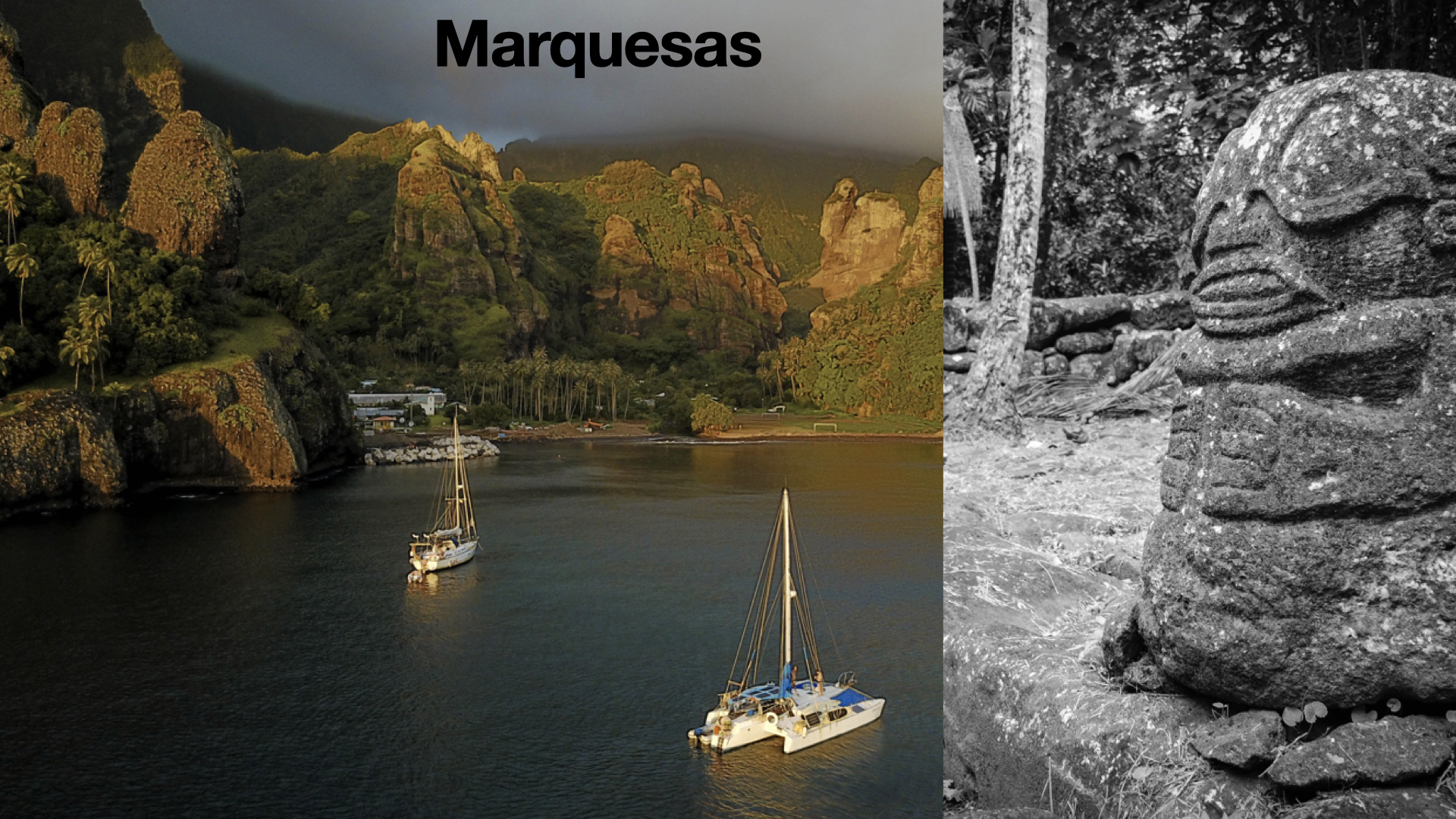
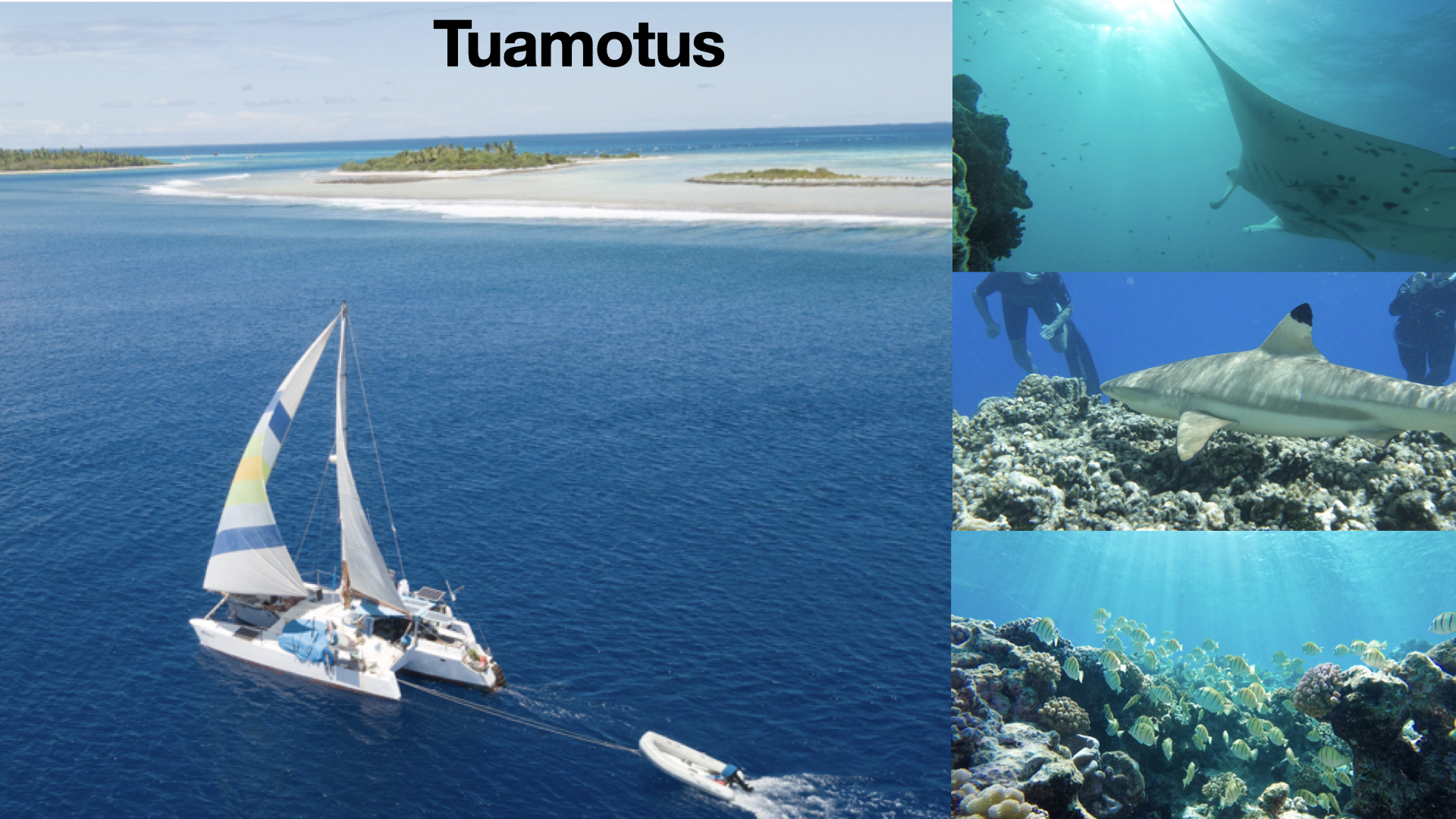
— Remainder of 2023: we have a boat manager taking care of Nesi’s maintenance. For Selaví, we are offering “Tuamotus Camp” in Fakarava late August and September, then we sail to Marquesas in October, where we are offering Marquesas trips through end of December.
— January 2024: transition Selavi to new ownership. We’re looking for a new captain for Selaví / new partner for Green Coco Tuamotus, with European passport 🙂 Check out the boat tour here.
— February 2024: we fly to Seychelles and move aboard Nesi. How long does it take, what does it cost? Read here about my first trip to view boats.
— March 2024: first shakedown cruises in Seychelles (view community posts about Seychelles)
— April 2024: maiden voyage to Madagascar (view community posts about Madagascar)
— May-August 2024: trips in Madagascar
— September 2024: trips in Mozambique
— October-November 2024: South Africa transit
— December 2024: Atlantic Crossing
— 2025: Brazil to Caribbean to Panama Canal to Isla Cocos to Galapagos to Mexico
Full dates will be available in our schedule next week, stay posted! Sign up for our newsletters if you’d like to get the inside scoop.
The Seychelles Islands — the only oceanic granite islands in the world.
Here’s the info to join the Green Coco Expedition — an innovative, family friendly around-the-world voyage, with a global itinerary for 15 years! We have enough pledged to purchase our 60ft Expedition Catamaran, just offering 2.5 more boat shares to help cover our operating expenses for year 1.
This is going to be a really unforgettable educational-adventure, open to all-ages: families with kids, couples, or groups of friends seeking adventure. Our trips include inspiring workshops on wellness & ocean sports; plus a built-in Ocean Camp for kids courtesy of an onboard teacher (starting with circumnavigation in 2027).
Visitors can join for 3-14 day trips. The itinerary is scheduled a year in advance, adapted for investor preferences. Reserve a private boat for your group with 3 cabins, or just book a cabin to share a trip with other guests. The costs include Cabin fees + Food fees. As an investor, you get free cabin days (just pay food) and lots of valuable investor perks.
How good is this deal? For Charter trips, our regular rates are $800/day double occupancy (see our charter prices), with cabin+food fees together. As an investor, you get trips for as little as $350/day; assuming a full boat share. You also get investor perks such as 10-50% discounts, free cabins on passages, big referral credits, and the possibility of cashing out boat shares if there are major Expedition issues.
Since we are a cooperative organization, we offer an even more affordable option: Co-op trips. The regular rate for our Co-op trips is $470/day double occupancy. For investors, this can be as low as $220/day; assuming a full boat share, and if you use your investor perk of 5 extra days for co-op trips (when schedule permits). See pages 5 and 7 of “Expedition Proposal”).
What’s the difference between Co-op and Charter trips? Co-op trips have full participation (everyone helps to cook, clean, and a little boat work) while Charter have some participation (just sous-chef rotation to help prep and clean up). We also offer Retreats for extra cost, with no obligations. Note, Co-op membership is required for Co-op trips, which requires coming aboard one Charter trip first (to ensure it’s a good fit for everyone). This step can be bypassed if you have a personal referral and/or you make an application based on financial need.
Green Coco offers a unique and authentic experience not found in other sailing charters. The essence of our trips is this: it’s like you’re coming aboard your friends’ boat, not aboard a floating hotel. We co-create true adventures as an ocean family. Green Coco is for those who love to learn, lend a hand, and get inspired!
See our BOAT TOUR below to get a sense of a typical catamaran’s layout, with private cabins in each hull. This is our existing 46ft boat, which we aim to keep, and continue offering trips in French Polynesia with a new captain & chef. It has up 4 double cabins, and 3 small single berths.
For the Expedition, we are purchasing a much larger 60 foot catamaran. This is a world-class ocean going vessel, with 5 cabins and 2 large single berths, plus spacious salon/cockpit areas. Investor funds are used to purchase Boat Shares in the Expedition, which will give them access to this new boat (and also our 46ft catamaran, assuming it is available). See more pics of the prospective new boat.
Your Boat Share investment gives you the best of “owning a world-cruising boat” — without all the liability, hassles, and costs. Help choose where the boat goes in the world, and when. You’ll join the boat, which is fully crewed by us. Come back over the years in different, exciting destinations. There are no surprise costs if the boat has issues, for example.
Investors get a certain number of free cabins — our lowest co-investment is $4,000 which gets you 20 cabin days. The full Boat Share is $30,000 for 200 cabin days. You’ll also get a ton of investor perks for the next 15 yrs:
10-50% discounts on regular rates
$100/day credit for referrals at full charter rate
free passage cabins
extra 5 free days for co-op members in port or convenient location (when schedule permits)
Investor using their cabin days only pay Food & Fuel fees, which are per day/person: $60 for Co-op, $100 for Charter, $175 for Retreat. Discounts available for families.
Read the Expedition Proposal below for more details, financial details in pages 4-7. Deadline June 1, extension until June 15 by request.
The sailing dinghy is like training wheels for guests to learn how to sail — one of the many included workshops we teach aboard. Other workshops include breathwork, freediving, homesteading at sea, star constellations, non-violent communication, RIE parenting, wing-foiling, and wake-surfing.
Below is our upcoming 5 year rough itinerary… starting with Delivery Voyage in ’24-’25. The Expedition lasts until 2039. We’ll be adapting it to Investor preferences with regular surveys.
Along the whole itinerary, there will be 3-14 day scheduled trips that visitors can join (investors or general public).
Traveling around the world to try to purchase boats was a very intense experience. A lot of money on the line (10% deposits, surveyor fees, travel costs), limited time, a ton of variables with fast decision-making. At least the scenery was exceptional!! Look at the incredible amounts of granite all over the beaches:
Seychelles are the only “oceanic” granite islands in the world
Why did I fly all the way to Seychelles (3 nights by plane), in the first place? There’s not too many 60 foot catamarans for sale in the world that we love. Our favorite model is the Eleuthera, which has both performance and comfort. It’s basically a big version of our existing catamaran, which is the Bahia model (all built by Fountaine Pajot). Most of the Eleutheras are in Caribbean and Europe at higher prices ($750-$1M). In the Seychelles there were two under market value, so it was worth the visit.
The elephant in the room, of course, is the delivery voyage back around South Africa. Many things normally break during these types of trips. Which means there are costs and risks involved, and the boat must be ready for going offshore. Which is a big IF.
tentative delivery voyage
After flying for 3 nights (Fakarava-Tahiti-San Francisco-Toronto-Ethiopia-Seychelles) I went to my first boat inspection at the marina: an Eleuthera owned by a global charter company. This was the more affordable one. Looked good in the pictures and descriptions, but alas, this was a total dud. Terrible maintenance and atrocious installations, and worse of all, rampant osmosis, an affliction that causes blistering in the hulls. I was especially bummed because I had put a deposit down on this boat! This was a big setback.
Over the Easter weekend, I gathered my thoughts and took a ferry in Mahé (the capital island) to another two islands, called Praslin and La Digue. That’s where I saw the giant coconut palms and beautiful granite formations on the beaches. They are both very cool islands — I can only imagine what the rest of the Seychelles is like by boat. There are over 100 islands in the archipelago!
Upon my return, I visited the second boat, Nesi. It is exactly the same model — the Eleuthera 60 — but this one is privately owned, and does boutique charters only part time. The difference was night and day: this boat was in vastly better shape! This is what I was hoping to find. Among the many improvements were a hard top bimini with solar panels, shade awnings, improved watermaker systems, and comprehensive osmosis treatment. The general level of care & maintenance was a thousand times better. The only catch is, of course, the boat is more expensive. “You get what you pay for…”
With the help of the surveyor we looked under every nook & cranny of the boat and felt quite satisfied. I left Seychelles feeling like Mission Accomplished.
Ah… how short-lived was my glory. Upon arrival in San Francisco, Sabrina let me know: “So, I found this other boat…” “No more boats,” I groaned. But this is a big deal, Sabrina is right. We need to be thorough, to look under every rock. The research began again — but for the time being, I rest content in knowing I found a great option in the Seychelles. We’ve got to keep moving quickly…
My journey began in Fakarava atoll, where we run many of our trips (an overnight sail to the east of Tahiti). I’m proud of Sabrina for standing in as Capitana! She’ll be running Selaví, taking care of the kids, with help from our awesome French friends Marie & Gautier.
In March, we had a successful 10 day haul out in Apataki. Since I had a 2 week break in April, I seized the opportunity. Using 85K United Miles, I got a ticket from SFO to Seychelles roundtrip for $100 in taxes. This deal brought the Seychelles within reach — otherwise, it is usually waaaay too expensive to get to! Plus of course, the cost of flying Fakarava to Tahiti ($400 RT) and Tahiti to SF ($550 RT). So the five flights cost me just under $1,000, all told — plus the miles, which I accrued thanks to a credit card bonus.
Why Seychelles? There are two boats for sale there below-market value, the ideal for our around-the-world Expedition: the 60 foot Eleuthera. It is basically a really big version of our current boat, Selaví. Both are built by by the French boat builder Fountaine Pajot (around 2000-2010). I’m a big fan of these boats because they are excellent sailboats, able to point upwind, yet also have enormous amounts of comfort for guest. See photos below.
For comparison, these boats are lower performance than Outremers and Catanas, but they have much more interior space & comfort. Meanwhile, they are higher performance than Lagoons and Leopards, which are renown for huge interior space and a focus on comfort.
Example of the Eleuthera 60ft CatamaranOur Bahia 46 foot Catamaran, Selaví
“You don’t know if you don’t go…” is the saying. So I grabbed the first flight in Fakarava on April 2… and only arrived in Seychelles on April 5.
I spent one night at my friend’s house, Leon and Soraya in Tahiti. They were excited about the name of one of the boat we’re looking at: Mata Fenua is a Tahitian for “Looking at the Earth”. Very strong name! they said.
The flight to SF was a piece of cake, daytime 8 hours and very enjoyable. The worst flight was probably the red eye 5 hours to Toronto which was crowded so I was stuck on the window. Luckily Leon & Soraya lent me a big pillow, which really helped a bunch for sleeping on the plane!
Every connection on my itinerary was perfect: 4 hours max, just long enough to make it mellow but not too long. The flight from Toronto to Ethiopia was the longest: 13 hours, overnight, but it was also the most enjoyable of all! I had my own row to stretch out, and I felt great upon arrival.
The final flight was from Addis Ababa, Ethiopia’s airport, to the Seychelles, about 5 hours. This archipelago is east of Tanzania, north of Madagascar, and comprises over 100 islands. The largest island is Mahé, where the capital of Victoria is located.
The taxis were absurdly expensive ($50 for 10 min?!) , so I just grabbed a bus ($1) and walked up the hill to an apartment I was renting above the marina. I could see the boats in the distance below me from my apartment door, with a Chinese restaurant nearby for dinner and grocery store for water and snacks.
I’d arrived! Now it was time for the boat inspections to begin.
Our investment period for the new Expedition runs until May 15th. Until then we have weekly Q&A zoom calls on Fridays 5:30pm PST to chat about the expedition. You’re welcome to join by RSVP’ing at community.greencoconutrun.com
PRESS RELEASE: They cast off their lines 8 years ago, with a goal to sail to Tahiti, bringing their friends along for the ride. Over 150 people joined. They had twins in the South Pacific, and are now planning to do it again — around the world.
Green Coconut Run wasn’t supposed to succeed. That’s what all the sailors said. “Schedules and sailing don’t go together,” the old salts said. But Sabrina and Kristian thought otherwise. This was the only way for their friends to visit during brief work vacations — and help fund a trip they couldn’t afford alone.
They created a sailing cooperative, and thirty people pledged $1000, in exchange for two weeks aboard somewhere in the voyage. Some joined in Mexico, others in Galapagos, some waited three years until the fifty year old, 42 foot trimaran finally made it to French Polynesia.
Kristian and Sabrina had only known each other for a year and a half when they left. They had some huge challenges — a broken eardrum that almost cancelled the voyage, delamination of the boat’s fiberglass after crossing the ocean, and dealing with major lightning threats. “No pirates though,” Sabrina says. “That’s one challenge we fortunately didn’t have to deal with.”
Along the way, visiting co-op members helped gather water samples for micro-plastic research. Sometimes they returned on the flight home with a suitcase loaded only with samples of salt water. “We wanted to do something good while having a fun adventure,” Kristian says. They partnered with a ‘crowd-source science’ organization called Adventure Scientists for the project, which compiled data on micro-plastics from adventurers around the globe.
An environmental science graduate from UCSB’s Bren School, Kristian dreamed of creating nature-based, educational expeditions. He was funded as a Rotary Ambassadorial Scholar to do a year-long series of magazine articles (published in Pacific Standard) in Mexico about climate adaptation while driving a Ford van all the way down the coast from California to Oaxaca. Yet his true ambition was to make an ocean voyage.
Once in the dreamy islands of the South Seas they wondered, “could we actually stay here and raise a family?” Famously, on their very first date, Sabrina asked Kristian whether he wanted to have kids. But nobody imagined she’d get pregnant with identical twins, while trying to launch a charter business in Tahiti.
They named their new business Green Coco Charters, and somehow got it running just after the pandemic hit in 2020. How did they fund their boat upgrade, a 46 foot catamaran, when they had no income for 3 years? Remember all those co-op members that joined them for their voyage, whose schedule wasn’t supposed to succeed? They raised $300,000 through their cooperative, via private loans and investments for their new charter boat.
For the last 3 years, Sabrina and Kristian ran their family-friendly, wellness focused sailing trips in the remote atolls of Tuamotus, an archipelago of pristine wilderness and authentic culture near Tahiti — with their twin babies growing up aboard. “Its definitely been a wild ride,” says Sabrina. “Our biggest issue has been getting reliable nannies to help us out. But honestly, the guests have all loved it. It’s a bonus to their sailing trip — like having baby TV in paradise,” she laughs.
So if things are going well with their charter company, why do an around-the-world voyage now? “Our girls are growing up. Where will they go to school?” Kristian asks. “We want to give them a real world education, by circumnavigating the globe on a sailboat.” Their first voyage 8 years ago was so memorable because they shared it with others, so they want to do the same thing again.
Their vision is to offer experiential learning for families who join 10 days trips during their around-the-world voyage. Onboard teachers will take kids of varying ages to daily beach classrooms and field trips. Meanwhile, parents and other visitors will have access to optional workshops, à la Nat Geo style, that weave together with the places they are visiting: with topics like ecology, history, mindfulness, and personal growth.
To find space for all these teachers in their educational circumnavigation, Kristian and Sabrina realized the perfect boat is… a bit bigger. With 5 cabins and space for voyage crew, a 60 foot catamaran is in their sights. For the third time, they are opening the doors for community investment in a new adventure. “Doing charter trips is super expensive – over $5000 per week, per couple. Our members get time aboard these fantastic trips in paradise, for a tiny fraction of the cost. And we get to run the boat,” Sabrina explains.
“Doing a circumnavigation takes a leap of faith,” Kristian says. “We know it takes time to prepare, so we are starting early. After purchasing the new boat, we plan to spend two years in the Channel Islands getting everything dialed in, sharing trips with interested visitors. It’ll be a really fun homecoming, and a great way to prepare for the next adventure.”
Just launched! Our Investor Proposal for the Green Coco Expedition is available: an around-the-world educational voyage for wellness and families. Excited to make this a reality!!
People keep asking us: “where will the twins go to school?”
During our time in the South Seas, we met many families home-schooling their kids. Cruising boats, it turns out, are an amazing platform for direct learning through adventures and global cultures. Kids growing up on boats tend to be remarkably mature, with curiosity, motivation, and love of learning.
Yet as we know, homeschooling is tough, especially when also managing a boat… Furthermore, the cruising lifestyle limits social relationships over time. We researched many existing programs, and began creating our own unique idea. An around-the-world educational voyage. Perhaps even with a fleet of other family boats. This could be an amazing family-friendly adventure — with onboard teachers for the kids, and visiting experts to help us keep learning too!
This is how the Green Coco Expedition was born. What began as a way to get our kids the best education we could imagine, turned into “hey, let’s make the best adventure we can imagine” for ourselves and others to share.
It’s true we just moved aboard Selaví three years ago. Yet Green Coco Charters has already developed into a unique wellness & family charter company. We’re ahead of schedule paying our investor loans and many have come to enjoy their investor benefits! Selaví will stay in French Polynesia running trips under a new captain and chef. This will allow us to sink our teeth into something new — not because we’re necessarily ready, but because it’s time, and we’re all super excited about it!
To realize our vision, we know it will take a bigger boat, likely requiring a year for the delivery, and two years of preparation. To complete a dream 10 year circumnavigation before our twins turn 18, we need to start now. The clock is ticking… We have the inspiration and the vision, so we’re going for it. Who’s in?
1ST BIRTHDAY — Kaiana and Naiyah celebrating with Grandma Susie and fellow cruisers Ryan, Cami and 3yr old Chloe. 2020.
2ND BIRTHDAY — Elmo Cakes were a HUGE hit. Celebrated with Auntie Erika and other cruisers. 2021
3RD BIRTHDAY — For several weeks, the girls requested… you know it… Elmo Cakes. Loved having Grandma Susie back with us! 2022.
It’s a lot of fun to create a special day for kids. But hey, it’s a celebration for us too! We’ve survived 3 years of parenting aboard a boat!
Congratulations girls on 3 years of great eating, sleeping, pooping, net jumping, floaty-swimming, respecting, learning, curiosity-ing, climbing, driving us slightly crazy, driving us deeper in love, and choosing us as parents .
Staying “in the flow” has helped me navigate the ups and downs of our expeditions. One of the things that has helped me ride these waves and keep it together is my meditation practice — although frankly, it doesn’t look like typical meditation.
We combine our yoga practice with InterSpiritual meditation aboard Green Coco. Phaeton Bay, Taravao, Tahiti.
Here’s a little back story on how I learned about this practice. I met Dr. Ed Bastian 20 years ago while running conferences about spirituality and environment. Nobody is keeping score… but honestly he’s more interesting than the Dos Equis beer commercial guy. He produced documentaries about India and the Dalai Lama; was saved by his famous Aspen neighbor Hunter Thompson (don’t die, goddamit!), ran cutting edge Smithsonian programs, launched a tech startup in the late 90s; and devoted his profits to start the Spiritual Paths Institute to give people a path to creating their own authentic meditation practice.
Dr. Bastian also lived aboard a 38ft sailboat for years, which is what originally brought us together! In 2013, we buddy-boated to the Channel Islands on a trial run for a meditation adventure retreat. Santa Cruz Island.
By working with other spiritual leaders, Dr. Ed Bastian (who has a PhD in Buddhism and decades of training) found the commonalities in different spiritual traditions and created a common language of contemplation. InterSpiritual Meditation was born.
Although I dabbled for awhile, I began to practice InterSpiritual Meditation in earnest once we embarked on Green Coconut Run, our cooperative sailing adventure from California to Tahiti. Initially, I gravitated to this daily practice as a stabilizing force during the adventures of our trip.
SCUBA gear, surfboards, solar panels, life on Aldebaran as we launched Green Coconut Run in 2015. Read more about the first leg of our journey in Baja here.
Every expedition has big ups and downs. In our case, being a cooperative trip, we scheduled an entire year at a time, to sail places we’d never been before, across thousands of miles in different countries, to pick up people along the way who didn’t know how to sail… On paper, this was a perfect recipe for disaster.
I love this photo, because it is backlit and could be anyone. What it captures though is the spirit — the fun loving, easy going, hard working attitude of our Co-op crew, that made the trip possible through the ups and downs.
Exploring by sailboat is an enormous joy, however. Waking up at idyllic anchorages, the freedom of sailing with the wind, watching sunsets after surfing and spearfishing with your friends — this incredible stoke fueled us to keep going. The highs were super high. But the lows were potentially very low… I had to manage my emotions from spiraling downhill.
Squalls and lightning were frying our nervous system by the time we got to El Salvador in July, smack in the middle of the rainy season. In retrospect, bad timing for weather……but good timing for surf! Besides meditation and yoga, what kept our heads together and let us stay in the flow was doing fun stuff that raised our energy level: harvesting stoke.
After all as captain, every day I faced a barrage of challenges from boat breakdowns, weather mayhem, bureaucratic dysfunction or crew turmoil. It would have been easy to say, “Enough of people and schedules! Let me enjoy this on my own!” Which a lot of sailors do, literally… even if they start as a couple, sometimes they end up solo, because managing each others’ emotions can be really tough in this wild rollercoaster. They call that “divorce sailing”, which we aimed to avoid at all costs!
Doing everything we could to keep our wonderful partnership in loving harmony. Kristian and Sabrina, Nicaragua in August ’15, where we moored the boat between seasons (read about our unique experience here).
The Interspiritual Meditation practice was one of the main tools I credit for helping me “keep it together”, both mentally, and as a community. It helped prevent the crash-and-burn I’ve seen with other sailors; and helped me stay in the flow so I could do a good job as captain.
Here’s how this practice is different, in my own experience. Meditation normally focuses on training the mind — to slow down, to become self-aware through attention and inquiry. InterSpiritual meditation does something slightly different — it elevates the mind. Through its 7 steps, it strengthens our character virtues. This gradually re-programs our idiosyncrasies, and leads to positive states of self-awareness.
Here are the 7 steps:
1. May I be happy & healthy
2. May I be grateful
3. May I be transformed
4. May I be compassionate
5. May I be mindful
6. May I be wise
7. May I be of service
Seems pretty straightforward? But let me offer a contrasting approach. If we focus daily on petty stuff, filling our mind with drama and angry, stressed emotions, that becomes the mindset we are reinforcing. Ever notice that if you’re around people who are constantly on a bummer, we become on a bummer too? Likewise, when my mindset was poor, I noticed I made more mistakes… whether it was fixing stuff on the boat, or dealing with crew members, little problems could spiral into big problems.
I’m fascinated about how to effectively deal with adversity, or whenever possible, avoid it… Here was a big problem that could have turned into a gigantic one. Marquesas Boatyard, 2017. Read more about it here.
When I kept a good mindset, our expedition seems to go better. I could resolve things more smoothly. I was able to follow intuition, and often (sometimes!) avoid problems. I was more in the flow, responding with creative agility and a playful attitude. I had fewer assumptions and judgments — which, in my opinion, are the root causes of mistakes, derived from having crystallized negative mindsets.
Here’s the way I see it: if we focus our intention on stuff we actually want, such as more love in our lives, harmony in relationships, fulfillment in career, that program permeates our state of mind. This is what InterSpiritual Meditation seeks to do; reinforce those universal spiritual expressions in ourselves, whether or not we practice a religious tradition.
A new course on InterSpiritual Meditation is starting next week on January 18, click here for details. I invite you to join Dr. Ed Bastian and co-instructor Alejandra Warden on an 8 week online course that will introduce you to InterSpiritual Meditation and guide you to create and refine your own authentic spiritual path.
I hope you find the same benefits as it brought to me, and the rest of our cooperative adventure!
Look closely… Ryan under an epic waterfall in the Nicoya Peninsula, during an overland trip in Costa Rica. May water in all its forms continue to bring us bliss!
There’s something that photos don’t typically capture. We ask people: “what’s your favorite thing about sailing with us?” They say, paradise beaches, epic snorkeling, gourmet food, and the twins(!). Then a surprisingly common thread stands out: the sense of connection aboard the boat.
Despite our instant access to everything, the feeling of ‘disconnection’ is becoming commonplace in our modern world. The busy-ness of life, constant tech distractions, superficial relationships at work… our attention jumps around, we’re hardly ever fully present with one another. This is one of the true gifts of doing a trip together — whether it’s camping, on an RV, or by boat. We remove all the distractions of life and get-fully-there.
When else do we have regular, meaningful conversations and get to know people deeply, after days of meals and play? I’ve had those moments while backpacking with friends, or riding a long train trip. The special part about a sailboat trip is getting this sense of connection… three times over.
Kalia and Allegra in Bora-Bora
First… our relationships are deepened by eating and playing together without the distractions of technology. We don’t have to coordinate many logistics; we can just go with the flow. It’s much easier than backpacking for example; and on the other extreme, it’s much more human size than cruise ships!
Shannon, Toby, and Serena in Fakarava this year
Second… our connection with Nature is deepened as we constantly tune into the weather. What are the winds doing, the stars, the moon, the squalls and sun? Each shift in Nature’s expression is immediately seen & appreciated. Sailing itself is a super satisfying, a moment-by-moment dance between the wind, our sails, and our steering.
Third… our connection with ourselves reaches a new level. Aboard a sailboat, together as a group for a multi day trip, we can’t hide behind TV shows or say “see you later” when we have ups and downs. We learn to feel our emotions and understand them. At first this can be intimidating, and many people think they can only handle 5 days of this “mirror of Life”. With journaling and our intentional check-ins, however, many people find this opportunity of self-reflection to be surprisingly liberating.
Huahine
If greater connection is one of your intentions for this year, organize a trip with friends or family…Rent a house for the weekend to gather people… Rent an RV for the week… and simply play together. And if an ocean adventure is calling you, we welcome you to join us aboard a Green Coco trip for that greater connection and experience what sailboat life is all about.
We’ve been silent this last year. Somewhere between changing baby diapers, changing engine oil, and hosting guests aboard our trips, we’ve been wrapped up in the moment. But now we are coming out of hibernation, and we’re ready to share a bunch of exciting news!
First a little recap about our last year. Thanks to the help of some super-nannies, we survived the “terrible twos” with twins. Our girls Kaiana and Naiyah have been thriving in the life aboard, enjoying the company of our guests and becoming strong little girls.
Kaiana and Naiyah, at 2 years of age. They are turning three, end of Jan ’23
We spent the first half of the year hosting guests in the atolls of the Tuamotus archipelago, which we love for their raw, wild nature and authentic feeling. Multitudes of fish, reef sharks, glorious empty beaches, and welcoming locals make this place super special.
One of the sweet families we hosted this year in Tuamotus, with Simon and Wesley aged 7 and 9from Michigan
The second half of the year was in the Society Islands — the dreamy islands of Tahiti, Moorea, Huahine, and Bora-Bora. They have a bit of everything: gorgeous lagoons, nice hikes, beach side happy hours, and comfy anchorages.
Great times in Bora-Bora with a SLO county family
The end of year was an intense rollercoaster of ups and downs, including some rough weather, COVID scares, and volunteer crew debacles. We survived, and had a glorious overnight sail to reach Tikehau atoll, in the northwestern corner of the Tuamotus archipelago, where we are now.
More stories coming.. stay posted! Feel free to ask questions in the comments, or just share if you’re enjoying our re-awakening from hibernation 🙂
At 70 feet deep, the groupers were packed like sardines, barely swimming side by side, waiting for their turn to spawn. We lay with them breathing on SCUBA. Calmly, the fish moved around and above us, like we were at a music concert with just standing room. But the real show was fish themselves.
We were there for a once-a-year phenomenon: the spawning of the camouflage grouper. They gather in the passes of the Tuamotus in humongous numbers, timing with the full moon closest to the winter solstice (June 21 in the southern hemisphere).
The mind-blowing part wasn’t just the sheer numbers of fish all around us — it was how intimate the experience felt. All the fish were incredibly relaxed, they swam up to us like they wanted to be petted. Then as a females made their move to release eggs, the males suddenly exploded in a flurry, trying get into the action, spiraling upwards in the water column at warp speed, followed soon by other fish and reef sharks hoping to eat eggs or hapless fish not paying attention.
Mind you, this is occurring during an outgoing current in really rough seas, so if we do it wrong, we drift out to sea in a flash.. There is a lot at stake as we then have to surface in the radical turbulence of 2 foot standing waves and currents, and hope our dinghy driver is there to pick us up.
Groupers waiting anxiously to spawnSabrina with a humphead wrasse
The day before the spawning… the camouflage groupers are congregating in huge numbers.
Everything starts with motivation… Here was my initial motivation for a breath work practice.
I thought that after years of living on a boat, I would naturally improve my ability to free dive deeper, longer. However, it seemed like I plateau’d. I could dive at basic levels, but I wasn’t improving. In particular, I was a little disappointed with my ability to catch fish for dinner reliably. I was pretty hit-or-miss.. It was kind of embarrassing!
Unlike the locals in Tuamotus who eat fish daily, for every single meal, we’re happy eating fish once or twice a week. We’re not avid hunters either. Yet, living on a boat, if all else fails, fish is what’s available to our family. So I decided to make a concerted effort to improve my free diving and spearfishing.
A good reason to dive deeper is to see fish at their level. These fish feed on the reef in huge schools, they are called Convict Surgeonfish.
I watched excellent spear fishermen like Josh in Ahe, and Bruno in Faaite, and saw they spent way more time underwater, holding their breath perfectly still, than I ever could. I read books on professional free diving and techniques, and that’s when I had the exciting realization: “Wow, it’s just an extension of of my yoga training.”
In particular, the training for free diving is essentially the same as the 8 limbs of yoga: moving from the disciplines of the body, stretching, breath control, withdrawal, concentration, and ultimately states of meditation. As such, the benefit and application for general well-being is widespread, not just diving deeper for longer.
My interest was piqued. I thought, “OK, so I can improve my free-diving and also my general well-being? Two-for-one, sweet!”
Sara’s family in the Tetamanu pass
I’ve found that breath work practice helps:
– my respiratory and circulatory systems;
– my ability to manage energy, by calming myself to reduce stress, or energizing myself when needed;
– my mindset, by enhancing mental and emotional stability, improving day-to-day performance
– and… it helps me catch more fish quickly, which makes my wife happy!
This was just a personal practice, until last year, when we had a charter trip that caught us off-guard. There were four seniors aboard, two of whom weren’t comfortable swimming off the back of the boat, and had mobility limitations. We couldn’t do our normal activities of snorkeling and beach landings. It was getting quite challenging, so I improvised. “Tomorrow we start breath-work at 7:30am,” I announced, with a little uncertainty. Nevermind my doubts… we needed something to do as a group.
Golden Trumpetfish under the pier in Fakarava
For those seniors, beside the beautiful cruise around Moorea, the breath work ended up being a highlight of their trip. They appreciated the feeling of “aliveness” that comes from active, focused breathing. Since then, I’ve shared our breath work practice with many other Green Coco visitors, from young kids to retirees. Everyone lights up with it, and it’s a joy to see their rapid improvements in free-diving too. “Follow the stoke” I say!
Our visitors have asked me for materials so they can continue to practice at home. That’s how our Ocean Yoga Breathwork was born.
Eric with a African Pampano, a type of Jack fish, outside of Faaite
Video originally posted to our Patreon page, which includes some fun facts about Mantas. Thanks for supporting us our videos!
I have incredible admiration for Manta Rays. How many huge creatures remain calm and comfortable as you swim 3 feet away? (The Whale Shark is another incredibly graceful animal).
Mantas are the ballet dancers of the sea; voyagers of the oceans; playful and delightful beings. Since we arrived in French Polynesia we’ve had the great fortune to spend hours watching Mantas.
We often swim with Mantas in “cleaning stations” where they circles slowly as tiny wrasse fish clean them of parasites (this is a common practice by many large fish, including sharks and groupers).
I remember taking my parents (age 80 and 74) swimming with Mantas while a squall was dumping rain on us, and underwater it was perfectly calm and beautiful!
Occasionally we see Mantas in less predictable places: roaming around Reef Passes, or feeding on plankton… sometimes right under our boat! Such as this unforgettable day, video originally posted to our Patreon page.
It was really lucky to see them. I once told a friend, admiring her ability to attract great things to her life, “You are so lucky.” She responded, “Nah, I just go outside the house with positive vibes. Good things are bound to happen!”
This was the case here. Effort is needed for luck. From the surface we saw nothing. Thanks to Sabrina and our crewmate Erika going swimming to the beach (instead of taking the easy option, the dinghy), they saw the Mantas feeding right in front of the boat! Lucky are those who make the effort.
Some interesting information about Manta Rays. There are actually two types: the Oceanic Manta Ray and Reef Manta Ray. All the Mantas we show here are Reef Mantas. Note that the main differences are:
Size. Oceanic Mantas are much bigger with wingspans up to 29feet, while Reef Mantas are plenty big with wingspans up to 15feet.
Habitat. Oceanic Mantas roam the open ocean, Reef Mantas stay close to coasts
Coloration. Oceanic Mantas have more dark areas but fewer spots on their underbelly, compared to Reef Mantas.
Mantas have the biggest brains of any fish studied so far (in terms of brain mass to body mass ratio). One manta asked a freediver for help to remove hooks from her under-belly: watch it in this video!
Manta Rays are phenomenal creatures and we feel so blessed to spend time with them.
Since we’re in Fakarava’s World Heritage Site, the south pass is a defacto reserve. The fish have lost their fear, and grown used to swimming with humans. This was the case with this beautiful Napoleon wrasse underneath Selavi, chomping on our food scraps.
It is remarkable to see this big fish so close, its facial markings are distinctly beautiful, its wandering eyes quizzical and captivating, not to mention its sheer bulk.
In other atolls, the Napoleon (or Humphead) wrasse is often seen from a distance, wary about swimmers, because many locals consider the fish a delicacy. They are a target, and they know it. This is despite the fact that ciguatera risk (a neuro-toxin present in tropical coral reefs) is actually quite high if eating this fish.
In fact, we once went to a BBQ with locals that were adamant the fish was safe to eat, and everyone got sick! Turns out it was a Napoleon. Never again!
If only this neuro-toxin risk were consistent enough to prevent people from eating it. The Napoleon is actually endangered, according to National Geographic because of over-fishing for seafood restaurants in Asia.
They are really important for the reef ecosystem, as they eat crown-of-thorns starfish (which if left unchecked, fiercely attacks coral reefs).
The Napoleon grows to nearly 6 feet long, weighing a massive 400lbs at its largest size… truly a magnificent fish.
Learning to Kite-foil was my dream! Two and a half years in the making.See the video here.
We celebrated my 41st birthday by going to a new island (for us). Toau. Ah I love the fresh excitement of exploration.
My wonderful wife Sabrina made our crew a dinner of delicious tuna sushi rolls and chocolate mousse; and hid 41 strips of paper around the boat reminding me why I’m awesome. She’s the one who’s awesome!
My gift to myself? Fulfilling the dream of kite-foiling.
When our girls were born, we told friends: we would raise our twins on a boat while hosting people on trips through deserted islands. Many eyebrows were raised. Indeed, we can admit to being squeezed to the max.
It’s worth it. Guests say the babies are a highlight for them. And seeing the girls running like wild turkeys on the rocking boat, I know it’s amazing for them, too.
What about myself ? One of the unspoken challenges of parenting is that we lose ourselves, replaced by being the servant of our babies, of our family unit. We lose our time to recharge, we lose ready access to our passions, we are spread thin like the last dregs of a peanut butter jar. Which you know I love in abundance.
Sabrina and I always said, “Let’s have kids but not stop what we’re doing. They’ll go on our backs, we’ll take them with.” Ok we didn’t stop. But with twins, we had to sloooow down, stop playing as much, sadly neglect some friendships. Work-feed-clean, work-feed-clean. Repeat.
After one year of slaving, we said, we can do better. We hired nannies to help. We enrolled in Kite boarding classes. We’d kite while the girls napped.
So I’m really proud of this. It’s a dream that started in mid-2019, when we first found our new catamaran Selavi in the Fakarava lagoon, just a month before we discovered Sabrina was pregnant.
That’s when I saw Adrien, the instructor at Tuamotu Kite Camp, kite-foil easily between the sailboats, while everyone else was kiting 1/2 mile away (because they needed better wind on regular boards). He was floating on air like a genie on a magic carpet. I thought: “That’s it! I want to do that.”
So my dream became to kite-foil off the boat and back. In light wind. At a sheltered anchorage.
I could already kite board at a basic level. But kite-foiling is a different animal. We committed, and did a boat time – exchange for all the equipment with Murrays Marine in Carpenteria (thank you guys!)
We learned behind the dinghy, practiced, did kite-foil lessons, all while juggling the babies and guests on trips, which made it very sporadic.
The effort slowly paid off. Finally I could return to the boat on my own, which let me practice more regularly. Then nearly everyday.
For my birthday, we were anchored next to shore in 8 feet of turquoise water. Very light wind. I had a gorgeous session, finally dialing in the “kite loops” needed to power up, and sailed my way back to the swim step of Selavi. Two-and-a-half years in the making, I realized my dream!!
Sometimes you just see the end result, and think geez, I wish I could do that. The reality is that it’s a journey full of ups and downs, a journey of perseverance and dedication. I’m proud that as I parent of twin babies I was able to actually do something new & fun! It gives me hope that’ll I’ll also be able to fulfill my other aspirations, with patience. Writing a book, staying in touch with friends, expanding our business.
Huge gratitude for Sabrina’s support. (Meanwhile her kite-boarding is also improving leaps and bounds which brings me lots of joy)
Kite-foiling isn’t going to solve the world’s problems. But it gets me fired up, I harvest stoke big time. I shine with enthusiasm the rest of the day.
Question for you is, what can you dream of doing, if you gave yourself two-and-a-half years? Let’s get after it 🙂
Much love to you all-
Capt K
The video here has a description of the trip to Toau. Thank you Patrons for your support of our video production!
For those interested in details about kite-foiling.
Some reasons why kite-foiling is awesome:
– Like snowboarding on the silkiest powder. Float like a butterfly above the water, no bumps to hurt knees.
– Go upwind like a banshee. The foil’s ability to go upwind is revolutionary. I’m so excited for sailboats to get this technology (outside of America’s Cup boats)
– Fluky light wind is fine. 8-10 knots is great. This means I can kite-foil at many of our anchorages, which are typically not possible to kite-board.
– Unlike surfing, it’s a nearly limitless resource. Plus there’s the potential cross over of wind-foiling in waves.
Downsides must be mentioned:
– Very expensive. The foil and boards are all super pricey.
– Fairly dangerous. I always wear a helmet. But kite-foiling in smooth water is safer than on waves. Going slow is ironically more dangerous, it’s easies to get knocked by the foil.
– Gear intensive. A simpler option is a new sport called wing-foiling, which has no bars, lines, or harness.
– Difficult to launch kites on monohulls. Much easier on a boat with swim steps, like a catamaran.
– Hugely addictive. Easy to get sucked in to a new sport!
How to learn kite-foiling:
– Learn to kite board first. Go somewhere (ideally) with warm water and consistent wind. French Polynesia is great 🙂 Baja California is the closest spot to California with those conditions.
– After you’re confident on the twin tip, ride a strapless surfboard, and practice in light wind. Learn to do loops.
– Learn to foil behind a dinghy; like wake-boarding but on a foil. Then you’re ready to kite-foil!
– Regardless of your skill level, take a few classes, it helps your progress a ton. I made big advances after taking two classes with Adrien (see Kite Tuamotus). Green Coco can take you there during our Fakarava trips. Another good learning option is in Tahiti.
Want to learn more information about our trips in French Polynesia?
It’s been an eventful last few months… from traveling to California with the twins, hosting Mermaids and Seniors stoked on this ocean wilderness, to searching for a Nanny to help us. We even forgot to share our newsletter here!
So just in case you missed it… click here to see our wintertime newsletter.
Click here if you’d like to Subscribe or see the Newsletter Archive
The girls call this their “hot tub” ! See more photos at the bottom of this article.
Raising kids is the greatest of joys, and frankly, also a big challenge for mental sanity! Here are thoughts on maintaining sanity with twins on a boat.
When the girls lost their cribs & pacifiers, on their second birthday, they had a big cry for an hour. It’s understandable. So it was easy to stay supportive. But oftentimes they cry desperately and it’s NOT understandable. All that’s in my mind is, what is going on, how do I fix this, and make the chaos stop??
Personally, I have found that a crying baby can completely short-circuit my brain. The wailing noise at high pitch is like crashing thunder: a force of nature. I can’t think, I can’t do anything! My default response is to immediately try to “fix” the situation. Hungry? Thirsty? Poopy diaper? Tired? What do you want??
If they are upset enough, even if you give them what they want, it doesn’t resolve anything. They are simply upset about being upset! Unfortunately, this just makes me more frustrated and mad because I feel out of control, and I can’t make the situation better. Try holding an over-tired baby at 2am wailing their head off, when sleep deprivation is devastating your brain, and you’ll understand what I mean by this being “kryptonite for calmness” (!)
The RIE parenting philosophy has been the guiding light to help me navigate these tough moments.
The RIE approach is to constantly describe to the babies what is happening, which is referred as ‘broadcasting’. In simple situations, describe out loud what is happening (the facts). Don’t just put on the baby’s shoe while mindlessly talking about breakfast. Instead, broadcast the facts by saying, “I’m putting on your shoe on your left foot, now your right foot. After this, we will have breakfast.” This helps the babies understand what is happening right now, and what to expect soon. This helps them stay calm and empowered. If they don’t know what’s going on, they will feel insecure.
When a difficult situation comes up, RIE recommends doing the exact same thing. Don’t try to resolve the problem right away. Just keep describing, out loud, what is happening (broadcasting the facts); and ask them about their action/emotions with genuine curiosity. If they suddenly start crying, the tendency as parents is to say “Oh it’s OK, you’re OK! You need some food? Here’s some food,” In the baby’s mind, though, it’s not OK! So why are you saying that?! Instead, RIE encourages us to say it how it is: “Wow, sounds like you are upset. You must be really bothered, I wonder if you are hungry. Is that it?” This is more in alignment with the baby’s actual experience.
By broadcasting the facts (and asking non-judgmental questions) this paints a picture of shared reality between parent and baby. You clearly see each other. This is compassionate connection: the babies feel like they are being heard, which is actually the first step to resolving any issue they have. It also helps the babies understand, because they don’t actually know why they feel terrible.
Importantly, this RIE approach helps me as a parent stay calm. When my brain is short-circuiting with crying babies when I’m tired, logic doesn’t work, and I just get frustrated & upset that I can’t resolve the situation.
But awareness always works. By broadcasting the facts, speaking calmly about what is happening, there is no charge, I can remain calm. I just describe what I see and what I’m doing. Of course I want to help ease their pain, and I try things like checking diapers or offering milk/water. My logic has shifted to the background. My awareness is now in the foreground. The peculiar side-effect of this is my brain doesn’t short-circuit. It is busy expressing what is happening.
I am no longer in default “fix it” mode. I am in “observation” mode. I don’t take the situation personally any longer, it is what it is. The wonderful benefit is that I’m more effective at resolving the situation. By being unattached to the outcome, ironically, the outcome can become more favorable. Most importantly, I don’t get angry and upset, which I really try to avoid as it’s completely counter-productive.
After running a sailboat across 9 countries with countless visitors, I thought I had refined the “art of staying cool” when things are going wrong. Parenting has taught me I still have much to learn. Babies are so vulnerable, with fast emotional spikes of energy. The effort of managing daily life is constantly de-railed. Not to mention with twins, it’s more than double the fun! Usually in normal life, uncomfortable situations happen every so often, where you need to work at “staying cool”. With babies, it’s quite frequent, so it makes for excellent practice 😉
The RIE philosophy is based on the principle of Mindfulness: observation without judgment. Just as this approach is effective between parent and baby, it is effective elsewhere in life. It allows me to stay grounded in what is happening, instead of trying to logically change things and make “the pain stop”. After all, the tragedy of trying to stop the pain, is that the pain just keeps morphing; it is then fed by power struggles and damaging emotions.
The only thing that stops that cycle of pain is awareness. RIE uses “broadcasting”. We are also big fans of Non-violent Communication, which is basically the same thing, but for more complex adult interactions. For example, NVC teaches us to express and understand the facts and the others’ perspective before trying to change the situation. Both these excellent tools are gateways to mindfulness and harmony in relationships.
For the opportunity to practice this, I’m grateful for my babies and the RIE philosophy for showing me this new approach to awareness.
Sailing with 15 knots of wind, soap bubbles flying in their eyes as Kaiana (left) and Naiyah (right) bathe in Rubbermaid bins in the cockpit. A glorious dinner sunset with the whole crew (minus photographer Ian). See video of Napoleon wrasse, a big fish in Fakarava we befriended during this trip. Why the towel?? Our cockpit has a hard roof and side windows that is pretty much sheltered from most rain storms… except when the wind is howling and rain dumping. Then a towel is needed to shield from the rain sprinkling in sideways! Sabrina super momma paddling the girls to the beach in Tikehau. Check out our Manta Feeding video from this atoll.
Want to learn more information about our trips in French Polynesia?
We left Tahiti and sailed to Tikehau, one of our favorite little atolls. At the end of January, our twins Kaiana and Naiyah were turning two years old. They started the day eating Elmo banana cakes (I didn’t know Sabrina was such an artist!) and then we threw a beach party with Erika, who was aboard with us, and other sailors from the anchorage. We played at the heavenly hoa (the channel between the motus), same place as we celebrated their 1st birthday. It’s a tradition !
Big changes were afoot. Both their cribs and pacifiers got put away for good on their second birthday. Momma Sabrina unveiled the “big girl room” to the girls’ astounded eyes. For the first nap, there was a painful hour of crying, but then they clutched their new stuffed animals and never looked back. Their resilience is inspiring. It is delightful to see them become strong little human beings.
I am reminded of the importance of milestones in life…. they define who we are, and allow us to embrace a new, better version of ourselves. This felt like their first conscious milestone.
Sabrina’s life-like Elmo cakes…. They love Elmo, simply because he’s in a sunscreen bottle that a guest left for us. Amazing how they pick up on those things.Kaiana stoked, Naiyah pensive.They are identical twins, but their personalities are different, here captured in a snapshot. Going to the Hoa with Erika and SabrinaBig girl room… no more cribsNew dresses gift from GrandmaThe view from the hoa, which is the channel between two motus. Motus are islets located on the barrier reef.Hermit crabs on the coral-strewn beachFrom beautiful calm sunny day to a big black squall… the weather changes quickly around here!
Can you imagine helping teach twin girls (almost age 4) as we cruise and explore dream places around the world like French Polynesia, Seychelles, and spots in between? You might be in luck 🙂
We have identical twin girls who are completely amazing and would love a new mentor-teacher-friend to guide them in their daily journeys. We are launching a world schooling expedition and aim to have a superb full-time pre-school teacher aboard who appreciates Nature-led and Place-based learning (teaching experience not necessary, but very helpful). We run an adventure cooperative and host groups of 3-6 people, usually people we know, including families, couples and singles.
There is a 2 month minimum commitment. All expenses covered while aboard. Travel expenses covered if staying 3+ months, with potential stipends for very qualified individuals. We also accept couples if the second person has deckhand/mechanic/electrician qualifications, or if with high levels of teaching experience.
How to apply:
1. please read below, especially Parenting Philosophyand Qualifications
3. send us a simple intro video about yourself (selfie is fine, 2 min max) and resume (doesn’t have to be fancy, just a summary write up of your experiences is ok too). Send both the intro video and resume to greencocosailing@gmail.com
about us:
in 2015 we left our jobs in California and over the next 4 years, sailed south with our Green Coco sailing cooperative to Galapagos, and across the Pacific ocean to French Polynesia. We fell in love with the country and decided to stay, start a family and a business.
In 2020 our twin girls were born and we upgraded to a 46 foot catamaran, Selaví (pronounced C’est la vie). We continue to run trips that are focused on wellness and family friendly adventures. For example, we teach wholesome cooking, freediving, breathwork, yoga, meditation, and sailing. We’ve hosted families with babies as young as 8 months.
Late 2023 we will be in Marquesas, and in 2024 we move aboard our new 60ft catamaran in the Seychelles to begin a world schooling expedition back to California. We aim to have a full-time teacher for this period. Read about it on our blog: http://www.greencoconutrun.com
We live aboard the boat 24/7 and are never at a marina, always at anchor. We are really active with swimming, snorkeling, free diving, surfing, kitesurfing, and SUPing. We try to bring the twins along with us in activities whenever possible.
During the past years, we’ve cruised between Tahiti, Leeward Society Islands, and Tuamotus (a wild place with atolls where we will spend most of our time in 2022, see our schedule). See our latest newsletter for a sampling.
our parenting philosophy:
We feel that children are special beings that choose their parents to guide them in this life. As their guides, we do our best to lovingly & securely offer them choices so they can fulfill their highest potential.
We follow the RIE parenting model which focuses on treating infants with respect (ie. the golden rule… act like you would like to be treated yourself by a friend) and honoring their ability to make choices (based on their current level). This post offers a good summary of RIE.
Whereas some parents focus on “raising good kids” and “keeping their kids safe and comfortable”, our focus is to #1 respect and #2 empower our kids.
It might help to understand what we try to avoid:
Saying No. Instead, we say: “we can’t let you do this, because it is unsafe for these reasons…”
Being overprotective. Instead, we say ” this is dangerous, watch out”
Serious injury or trauma.
Being over-comforting. Instead of “you’re ok baby, don’t worry”, we say. “you look scared, what happened?” . We don’t dismiss their experience for the sake of comfort.
Doing things mindlessly, without their consent. We act and communicate with presence.
Sugar (white & brown), with the goal to promote wholesome nutrition
Screen time, with the goal to promote creative imagination (the exception is engaged learning activities)
In a parallel way, RIE is for infants as Non-Violent Communication (NVC) is for adults. Both are methods for overcoming our judgments and instead focusing on observation, presence, and empathy. Learn more about NVC here.
As our onboard teacher and crewmember, we would ask you to practice RIE and NVC principles . It’s ok if you’re not familiar with these concepts. The most important thing is intention and interest in these principles. We will offer you further training in the form of basic materials to read beforehand, and more in-depth while onboard.
qualifications:
pre-school teaching experience is not mandatory, but it is very helpful. Waldorf & Montessori particularly welcome.
child care / nanny experience is not mandatory, but it is very helpful
RIE / NVC knowledge is not mandatory, but interest is required and advance study before coming aboard.
Skills desired: cooking for groups (up to 12 people with diverse diets); ocean competency (strong swimmer, confident in ocean); and being an amazing host/hostess.
expectations:
What can you expect from working as an onboard teacher on Green Coco?
The work commitment is 8 hours per day, 7 days per week with 4 days off per month if you’d like to go on independent excursion on land (we are flexible and love empowering people to do things they are excited about).
We’ll have “pre-school” hours such as 9-2pm and a few extra hours of helping around the boat or with the girls in the afternoon/evening, depending on activities of the day.
In addition, we take turns cooking meals & cleaning, so you can expect to make one meal each day or every other day (depending on your activities, #of people aboard, etc) as your contribution to the meal schedule aboard the boat, about 1.5 hrs total.
We work really hard and play hard. This is best suited for those super eager to learn to spend time in the ocean, learn sailing, and are able to play independently (go for a swim or paddle on your own to shore). You’ll be in some of the world’s most beautiful islands, but also expected to work just as hard as we do
Time with the girls is more than just child care. To the extent possible, we allow them independent play time, during which time we also fold laundry, prep food, clean dishes, etc. We also try to include the girls in these daily activities of life. Like a parent, you’ll be juggling multiple things to get life tasks done.
As we usually have other guests on board, you’ll be helping when possible as a crew member.
You’re only on call during the day, not nighttime, except on occasional evening for date nights 🙂
accommodation
When there is space, you can sleep in your own cabin with private bathroom (labelled Aft Cabin below).
When there are guests aboard, you’ll take the single berth and share bathroom with the girls (labelled Single Berth below)
Once you’re aboard the boat, all your costs are covered (food and accommodation, beer & alcohol not included).
The places we visit and take guests are world-renown and absolutely stunning. We try to include you in as many activities as possible so your stay can be super memorable.
As part of your stay, we offer you basic training in sailing, off-grid cruising skills, breathwork, and non-violent communication.
If you have experience as a chef, RIE parenting, or whole child teaching like Waldorf, Montessori, or Reggio Emilia, we may be able to offer you additional stipends.
3. send us a simple intro video of yourself (selfie is fine, 2 min max) and also a resume (or summary of your relevant work experience in writing). Send both the intro video and resume to greencocosailing@gmail.com
We didn’t expect it would become a race against time, as the coronavirus Delta surge approached!
Going the wrong way.. at the right time
For sailors, the steady, refreshing tradewinds from the east are a godsend. But when you want to sail east, that means going upwind — which in open ocean conditions is really rough.
We spent a quick three days in Bora-Bora because we had a brief weather window of northerly winds. Then it was time to go.
The Start: Bora-Bora
This island is pure eye candy. The stunning rocky peak. Turquoise sandbars. Manta Rays. Frollicking with stingrays… it is touristy, yes, but our co-op crew (Jessica, Bret, Al, and Alexandra) had a great few days here, even meeting up with our traveling friends (Marie & Gautier). See more👇
After the overnight trip from Bora-Bora, we dropped off our crew in Moorea. We were following the news closely: a surge of Delta cases was rocking Tahiti. Increasingly strict measures came into place. By chance, another northerly wind was forecast that week. We thought: “you know what? let’s go remote while we can.”
Thanks to Alexandra for taking care of the babies, we were able to do a whirlwind 4 days of provisioning. Think multiple shopping carts of groceries being pushed 1/4 mile, loaded into a dinghy, transported onto Selaví, labeled and stored into the boat’s 1001 compartments.
Our first anchorage in Tahanea. We saw nobody else for 3 weeks.
Isolation: Tuamotus
Two nights sailing, a stopover in Faaite, and an upwind 7 hour bash: finally we arrived in Tahanea, a gorgeous uninhabited atoll with no cell service. Soon, we heard via satellite messenger that Tahiti had entered lockdown. We felt fortunate to be isolating in paradise!
What did we do? This place is heaven for our new favorite sport, kitesurfing! The three weeks were delightful, making bread, playing with the babies, and exploring Tahanea’s surreal underwater world and her beaches, without a soul in sight… Check out the videos of highlights 👇
Thanks to our friends at Murray’s Marine in Carpenteria, we now have quality kitesurfing equipment on board (along with a trainer kite for learning). Kiting from the sailboat is perfect! It takes technical skills, from launching off a boat, to dinghy rescues. We were really happy to take classes with Adrian at Fakarava Kite Tuamotus. When you come visit, you should take classes too — it’s so fun! Watch the video of Sabby’s class👇
We’re so grateful for our time with Alexandra, she is truly a nanny-extraordinaire! She has such a calm and loving presence with the babies, and they love the “spa time” with Auntie, combing hair and getting massages :)Being a naturalist guide in Galapagos, Alexandra is passionate about the underwater world. Alexandra is always eager to jump in the water, and stoked about finding cool little creatures.
We will miss Alexandra’s ever-present smile, wonderful presence, and delicious stir-frys!
Hi friends, it’s Naiyah and Kaiana here. We’re a year and half old, and can’t speak many words besides “moon” and “more” and “please”, but we babble pretty good. And we just learned to walk. Sea gypsies say that us mermaids must learn by ‘walking the planks above shark infested waters’… Et voilà. This is just what happened. I’ll tell you what, that’s one way to learn FAST. Come play with us when you can! Big hugs, N & K
Since 2019, sailors are only allowed to take moorings in Bora Bora, or anchor for less than 24hrs (anywhere but “red zones”).
This means that you have to move around every day and anchor, or pay a daily rate for moorings. People say that anchoring is not allowed, but based on my interpretation of the Official Regulations, anchoring is allowed for less than 24hrs. (*see copy of Official Regulations below)
Normally, moorings are helpful because they prevent damage to reefs with the anchor chains. In the aerial photo, the dark spots are coral bommies or little reef outcroppings. In the case of Bora Bora, there are substantial sand bars without coral. Coral damage is a justification for moorings in some locations, but not as an island-wide policy.
The main reason appears to be aethetic and financial– keeping sailors from posting up for weeks on end for free, where ever they like. Which is totally understandable.
However — sailors dislike using moorings because they can fail. There are dire consequences when their boats run aground into reefs, hotels, or docks, as has already happened (Example, this 50ft Outremer‘s mooring failed and they crashed into a hotel).
Question: Why don’t officials institute an anchoring permit, to the avoid the hassle and liability of installing and maintaining moorings? Just keep moorings for areas where reef damage needs to be avoided, and offer an affordable anchoring permit everywhere else.
An anchoring permit would ensure sailors check in when arriving at an island, and be savvy to the latest regulations and boat -related information about that island. The permit could be registered & paid for online or at a tourism office. The permit could even be free of charge up to a certain number of days, then have a fee. This would resolve the problem of derelict boats being left in the lagoons, which end up causing damage to reefs and buildings when they wash up during storms.
In terms of setting up a model for the rest of French Polynesia, the all-or-nothing mooring approach of Bora-Bora seems to have shortcomings. I prefer the dual approach of anchoring permits (with temporary free stays) AND mooring fields.
What do you think?
*OFFICIAL REGULATIONS (entire text available here).
ARRETE No. 2442 CM of November 22, 2018 regulating the mooring of ships in the inland waters of the island of Bora Bora.
Art. 2.— Object
Unless otherwise stated, in the inland waters of the island of Bora Bora, the mooring of vessels of a length greater than or equal to ten (10) metres or whose stay is greater or equal to a duration of twenty-four (24) hours is strictly prohibited outside dedicated to authorized mooring areas.
As sailors we have the follow the weather, and whenever a north wind shows up (which is fairly rare during May-October in French Polynesia) it is beneficial to head east, against the prevailing easterly tradewinds, and “gain ground”.
In this case, we had just 3 days to visit Bora Bora before the north wind came up, as we had to head east back to Tahiti. Should we even bother or just hang out somewhere else?
On Green Coco our motto is Harvest Stoke. If people are ambivalent about going somewhere, we prefer to just chill and relax. It’s good to rest and rejuvenate. But if people are STOKED to go, excited and willing to do whatever it takes to make it happen, then we always GO.
Aboard Selavi, our friends (Al, Alexandra, Jess & Bret) were stoked to go see what Bora Bora was like. By chance we could meet up with other friends visiting on shore (Marie, Gautier, and sister Sophie). These french travelers are bundles of joy. So all the merrier!
Some places are over-rated, but Bora-Bora sure isn’t! The views when arriving by plane may be astounding, but arriving by sea under sail is like gentle unfolding magnificence…
Entering Bora-Bora with Selaví, having left the large island of Raiatea to the east 5 hours before. As seen from the angle of the honey bee. The towering basalt peak commands your attention at all times, while the colors of the lagoon pop like neon signs, advertising the different depths through the shades of turquoise.
The reason it has all these colors is the age of the island. Bora Bora is older than most of the large Society islands, creating a bigger lagoon and vast areas of shallow sand; while it is younger than the atolls of Tuamotus, whose main islands have eroded away, leaving only the coral ring on the periphery. Truly a special place.
We swim with eagle rays and sharks, manta rays, and explore gorgeous sand bars.
We plan to visit Bora Bora next year, check out our 2022 schedule on Green Coco Charters.