Bay of Virgins, one last view…

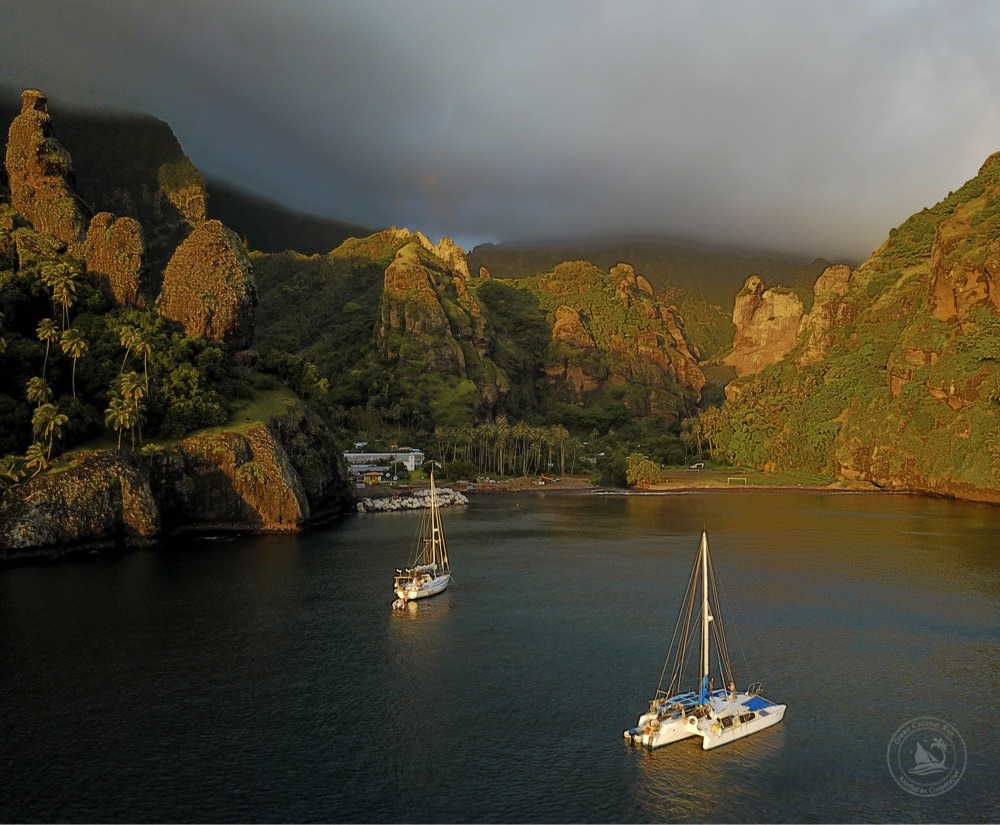
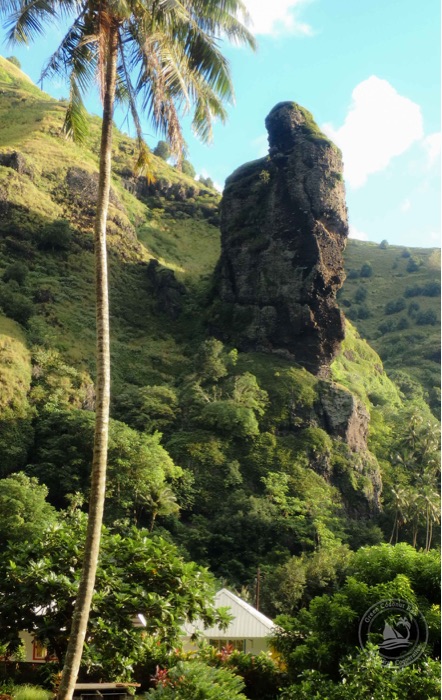
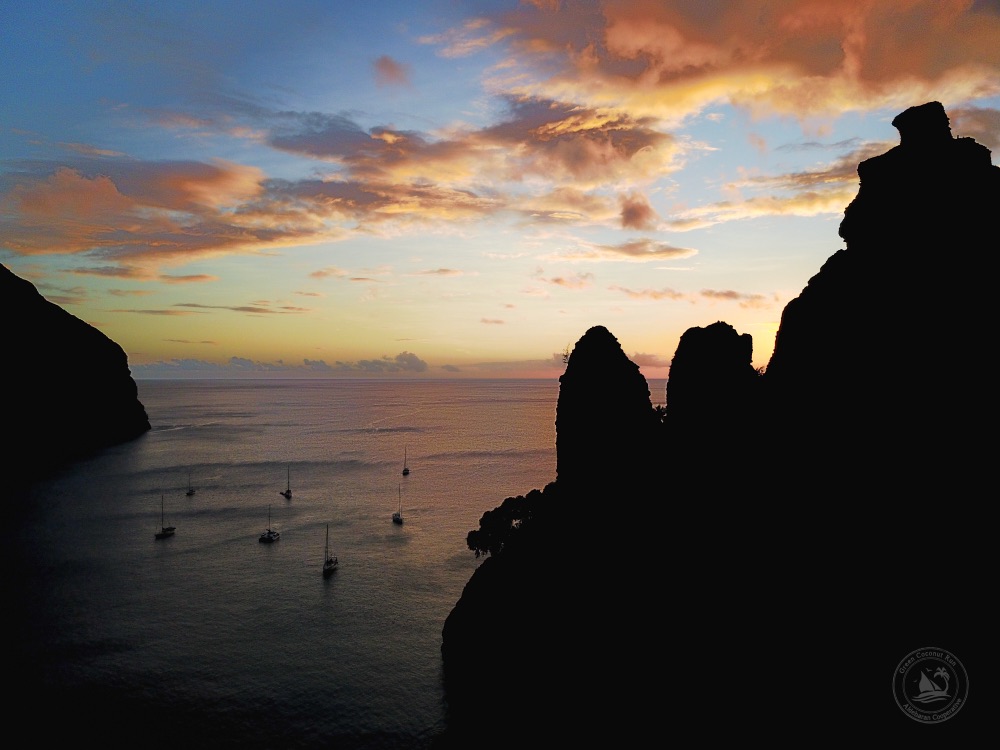
Around the end of the day, with the sun low in the sky, the famously ‘phallic’ rocky pinnacles light up, creating a stark contrast against the dark backdrop of the mountains and grey clouds.

Despite its challenges, the astounding bay of Hanavave is a must-see, given the opportunity. Goodbye for now… or as they say in Tahitian, “Naná!”

Artists of Fatu Hiva

A few decades ago, the revival of Marquesan arts and culture began.

Several artisans we met had gone to a school in Hiva Oa (the capital of the southern Marquesas) to “re-learn” the forgotten arts of wood etching, bone carving, and tapa cloth creation.

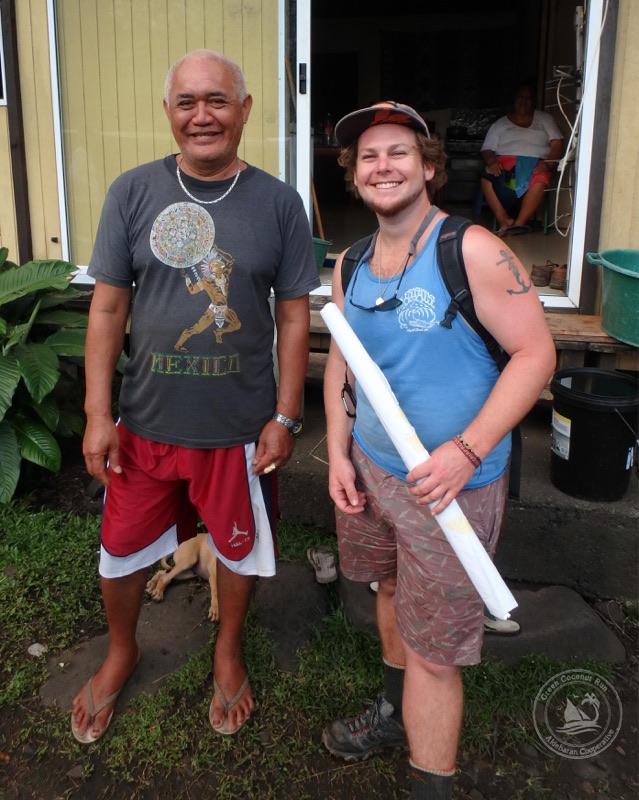
Now nearly everyone in Fatu Hiva makes art. They sell to the cargo ship that brings tourists every two weeks; or direct to souvenir markets in Tahiti; or to the sailboats that visit the island – such as Spencer, who purchased a tapa of a Polynesia paddle from this friendly guy.

Dragon Ridges

We had heard that Marquesas is “powerful” and indeed, there is no better word to express both the landscape and the people.

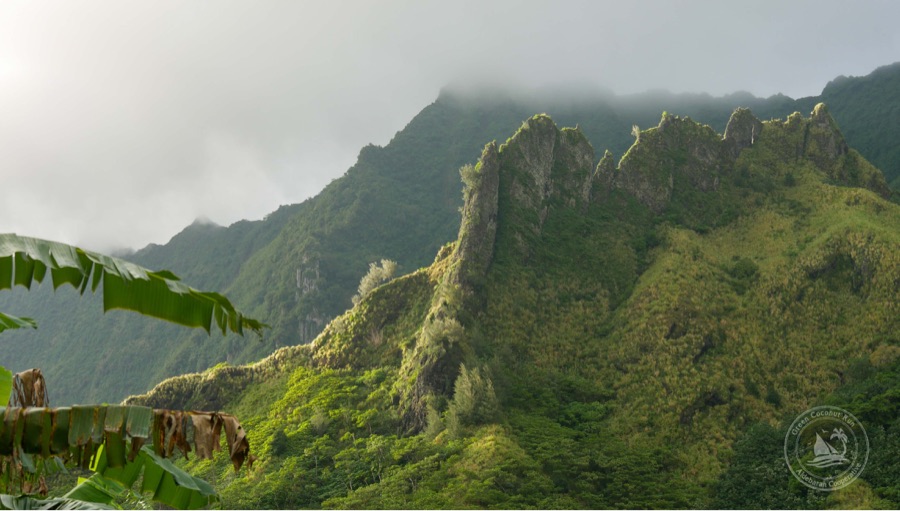
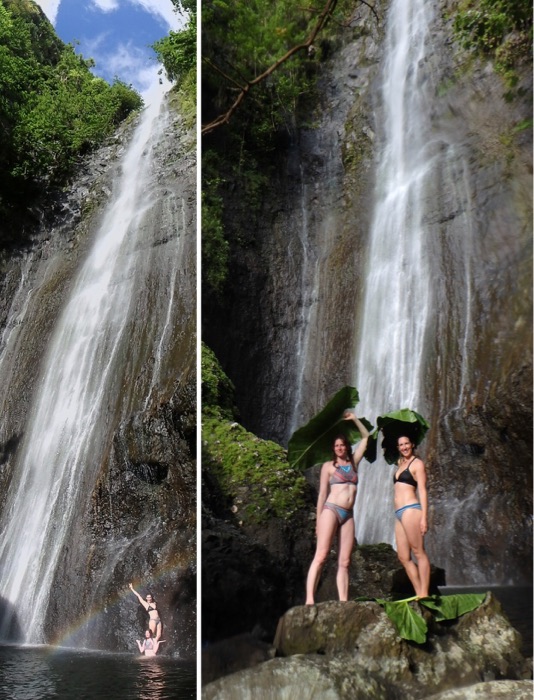
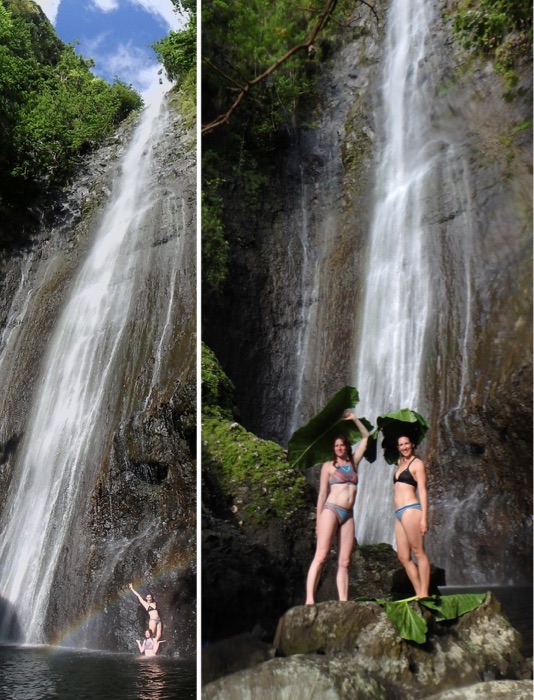
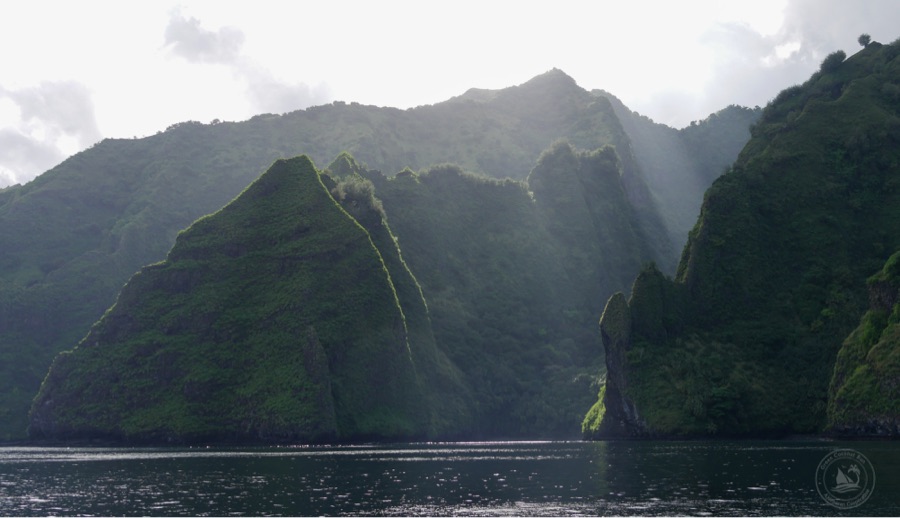
Hiking to the waterfall, each gain in elevation gives us new views at the ridge lines which cut through the valleys like jaws of a buried dragon.

The thick coconut trees and red hibiscus flowers keeps things “soft” and pleasant; until the next turn in the trail, when your eyes widen at the vista once again.

Damage Control

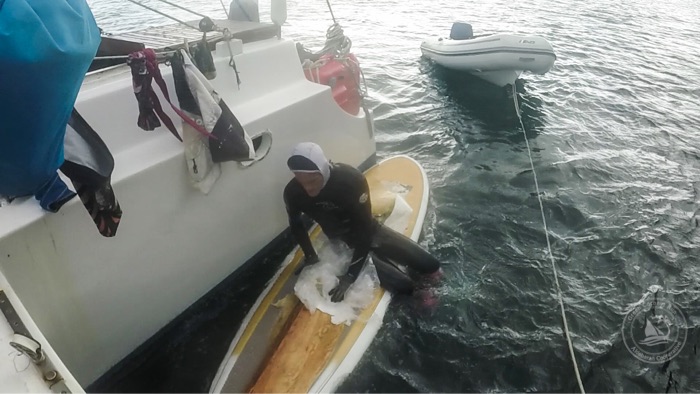
Although I would rather forget our tribulations with the boat, and just soak in the scenery of Bay of Virgins, I had to dive and evaluate the extent of the fiberglass damage that we sustained enroute to Fatu Hiva.

A lot of fiberglass had delaminated from the powerful jets of water that hit the boat underway, including a section below the waterline. Delamination is a slippery slope: it can accelerate quickly. You must get rid of all the poorly attached fiberglass so that the good pieces have a chance of staying on the hull.

The bottom line: we’ll need to haul out to repair the hull. If they aren’t able to haul our trimaran in Hiva Oa, the larger island to our north, then we’ll have to come up with a “bandaid” to cover the exposed wood, until we get to a larger haul out facility in the Society Islands. This would be non-ideal, and could possibly compromise the wood foundation of the boat, if left for long.

So we need to do our best to fix and seal the wood, as soon as possible.

The Origin of Tiki?

It’s easy to see how the ancient Polynesians developed a religious tradition around the god Tiki, and became famous for carving stone statues to represent their deity.

Just one look around the valley of Hanavave and you’ll see many faces in the rocks, carved by Nature’s forces. It is enchanting and bizarre!

Who wouldn’t worship and try to emulate such a power; which manages to make life-like human figures out of massive stones in steep cliffs?

The Astounding Bay of Hanavave

Many sailors have called Hanavave bay the “most beautiful bay in the world.” I disagree…

‘Beautiful’ suggests it is pleasant to look at. But this understates its sheer, wild intensity.

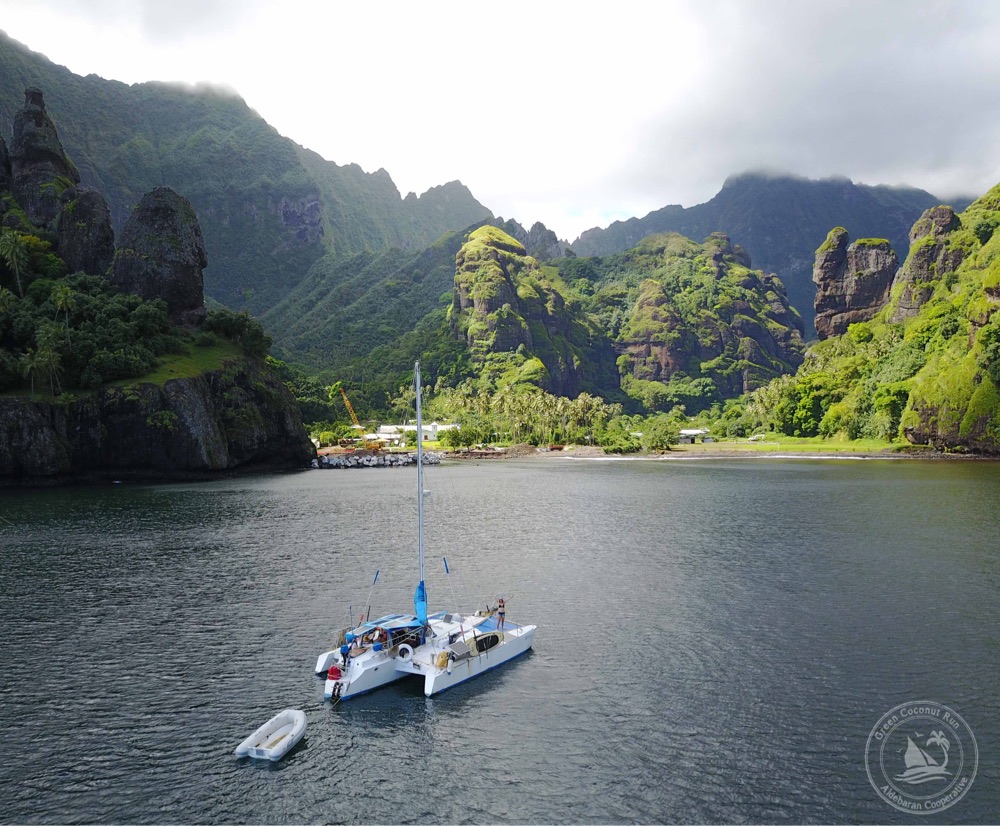
It is transfixing. The valley is full of the most improbable rock pinnacles, sprouting like organic skyscrapers in a mad urban planner’s dream.

Yet it is the elemental power of the place that elevates it to another level. A perpetual black cloud hangs over the mountain crests, and the sun acts like a pinpoint torch, lighting up different rock outcroppings as it peaks through the shadowy clouds, constantly shape-shifting and powered by the tremendous gusts that blow through the valley, smothering the coconut trees (and the yachts).

Beautiful is one thing. This bay is ‘simply astounding’… it is in a class of its own!

Sunset in the Bay of Virgins

Ever since seeing Fatu Hiva from 5 miles away, our jaws were down by our chins, mouth agape in awe.

Then we pulled into Hanavave, the Bay of Virgins. It was simply too much. We just sat staring at it all day.

At sunset, we regained our senses and flew the Honey Bee to photograph the anchorage.

Photo: Aldebaran in the middle of the front row of boats, Hananave sunset.

The play of light

Cruising along the sheltered, east coast of Fatu Hiva, the light keeps alternating: from being shadowed by dark clouds one moment, to bright sun rays splashing down on the valleys. Thick clouds constantly linger over the islands’ peaks, and the sun plays hide and seek on the dramatic topography.

Wondering where we are, and from where we came?
See our Map of Marquesas Passage:
http://greencoconutrun.com/2017/06/06/map-of-marquesas-passage/

Approaching Fatu Hiva

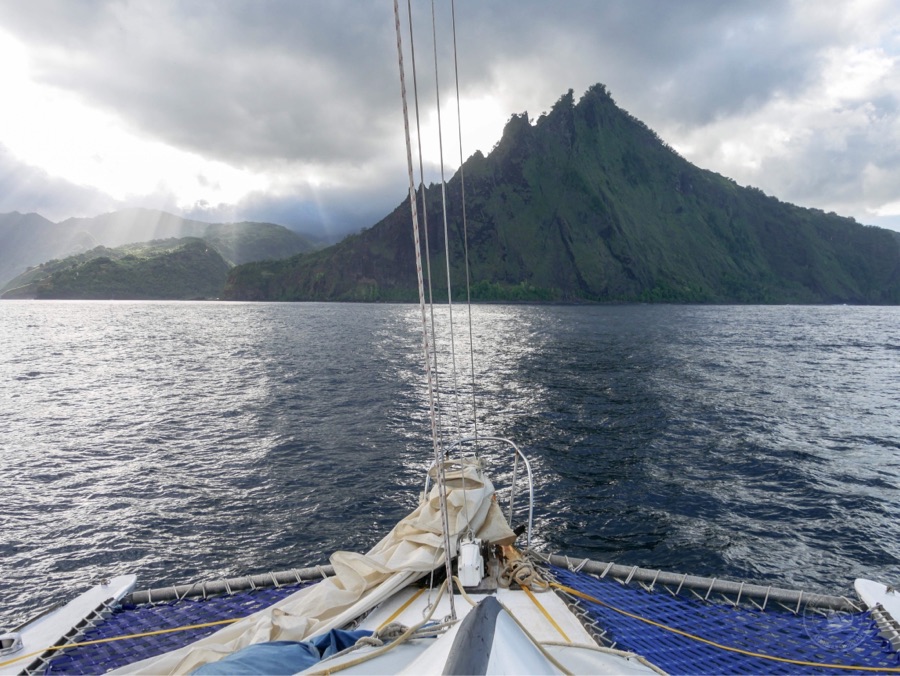
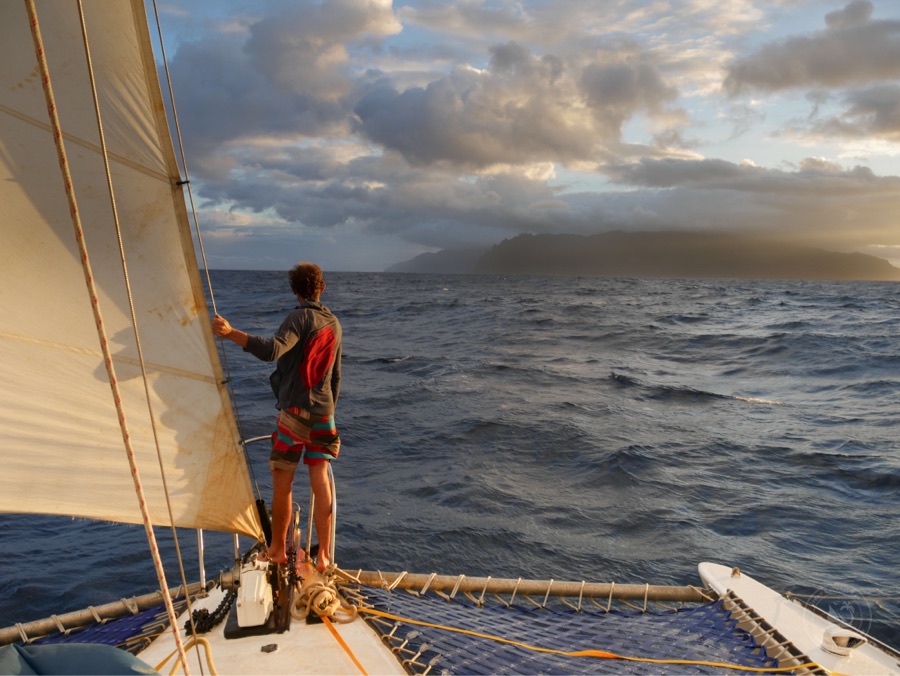
6:30am. The rising sun lit up the sky around us. Up ahead, a dark mass loomed like a sentinel: the incomparable island of Fatu Hiva. Arriving here is a long time dream!

Fatu Hiva’s powerful nature starts from afar. The fluffy clouds from the easterly trade winds, that truck steadily across the ocean, are lifted by this sudden topographic barrier, with its peaks over 3000 feet tall; they morph into charcoal grey, rain sodden pillows of air, spilling into the lush western valleys.

As Aldebaran sailed herself well-balanced, we watched the approaching island from the deck. “I’ve been waiting 15 years to see this,” said Spencer. “I’ve had a picture of it on my wall, ever since I first looked at a sailing magazine.”

We savored every minute as the island grew larger. Its vertical bulk, in the middle of this ocean expanse, was awesome to behold. But most impressively, it acted as a meteorological phenomenon, affecting the weather for miles around. Like a supernova exploding in the sky, Fatu Hiva is the black hole; a minuscule land area of 8 x 3 miles, in comparison to the Pacific’s enormity, exerting a disproportionate gravitational pull.

Everything felt intensely alive. The headsail pulsated under the gusts as I held onto the forestay, the boat arcing under the swells.. Eons of tradition are weaved into this moment; from early Polynesian navigators and European explorers, to the modern community of international sailors.

Approaching this island via sailboat – instead of arriving by ship, or if it were available, by airplane – is a truly special experience. We are going 7 miles per hour, the speed of a slow bicycle, yet it still feels too fast to digest it all!

Especially after a multi-day passage, the gamut of emotions are vast… and in our particular case, with Aldebaran wounded as she is, having suffered bad damage, this is the epitome of Yin-Yang. We are in that white circle of blissed out excitement, yet there is a dark spot of lurking uncertainty. It is good beyond good, and it is bad… how bad? We are not sure yet. Living in harmony with these wildly opposing feelings was our reality as we approached the supernova of Fatu Hiva.